
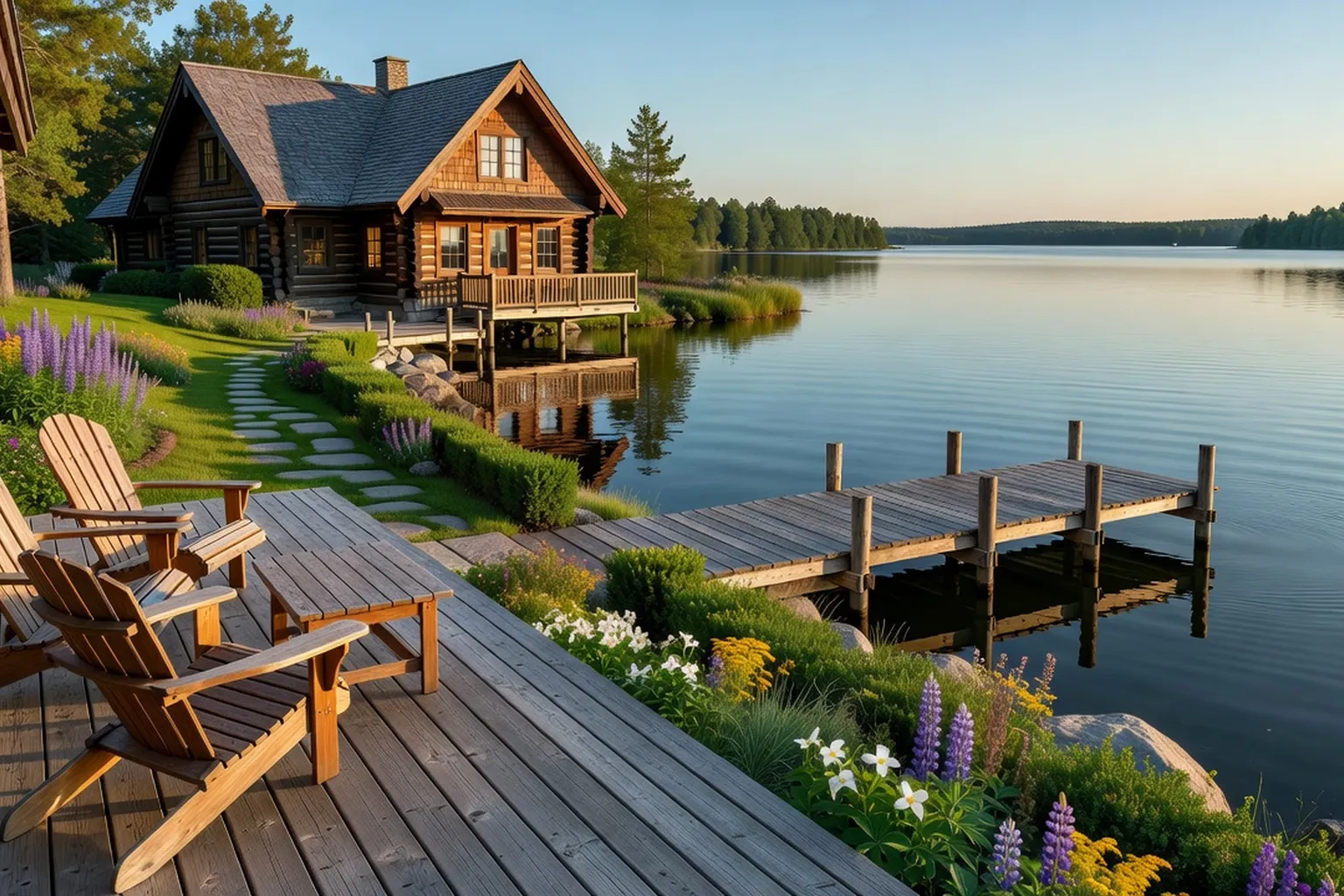
In Quebec, owning a cottage is much more than a simple real estate investment; it is a gateway to a profound reconnection with the wilderness. Whether you are located in the Laurentians, Charlevoix, or the Eastern Townships, your property’s outdoor space is the natural extension of your indoor living area. In 2026, landscaping is no longer limited to a simple lawn and two wooden chairs; it is about creating a truly functional, attractive, and, above all, sustainable ecosystem capable of withstanding the rigours of our northern climate.
The outdoor design of a Quebec cottage requires strategic thinking that goes beyond aesthetics. Between snowy winters, muddy springs, and humid summers, every material and every plant must be chosen for its resilience. This comprehensive guide takes you through planning your deck, dock, and garden while taking current budgets and Quebec’s increasingly stringent environmental standards into account.
Why outdoor design changes everything at a Quebec cottage
The outdoor design of a cottage in Quebec is not just a matter of “looks.” In an increasingly competitive short-term rental market in 2026, it is often the outdoor space that determines the occupancy rate. Travellers are not merely looking for a roof over their heads; they are looking for an experience: having coffee on a deck facing the sunrise, heading down to the dock for a kayak outing, or gathering around a safe outdoor fire pit. A well-designed outdoor area multiplies the perceived living space of your property.
From a structural standpoint, a successful outdoor project also protects the integrity of your building. Proper rainwater management and a well-drained deck prevent water from seeping into the foundations, a crucial point often emphasized in every interview with an architect specializing in cottages we have conducted. Harmony between the building and the land’s topography helps minimize environmental impact while maximizing the view. It is also a decisive criterion for owners considering a long-term work-from-cottage stay, where the outdoor area becomes a daily extension of the home office.
Finally, the psychological aspect should not be overlooked. The cottage is a refuge from urban stress. A garden that blends into the boreal forest, with marked trails and strategically placed rest areas, promotes immediate relaxation. By investing in the outdoors, you are investing in the long-term value of your property and in your guests’ satisfaction, while respecting the wilderness that has made Canadian landscapes renowned.
Choosing decking materials suited to a northern climate
Choosing materials for your deck is one of the most important decisions. In Quebec, the temperature variation between summer and winter can span 70 degrees (from -35°C to +35°C). This freeze-thaw cycle is unforgiving on structures. For 2026, three main options stand out for their durability and aesthetics.
Pressure-treated wood remains the most economical option, but it requires regular maintenance. Western red cedar, although more expensive, offers natural resistance to rot and insects, in addition to giving off a highly prized characteristic scent. For those looking to minimize maintenance, high-density composite has become the standard. New models perfectly imitate wood grain while remaining impervious to moisture and UV rays.
Expert advice: Never neglect the structure beneath the deck. The use of screw piles is strongly recommended in Quebec to prevent ground movement from warping your deck in the spring.
Comparison of decking materials (2026 data)
| Material | Estimated durability | Maintenance required | Cost per square foot (installed) |
|---|---|---|---|
| Pressure-treated wood (Pine) | 10-15 years | Annual (stain/sealant) | 25$ - 35$ |
| Red cedar | 20-25 years | Every 2-3 years (oil) | 45$ - 65$ |
| Premium composite | 25-30 years+ | Minimal (washing with water) | 70$ - 95$ |
| Aluminum | 40 years+ | None | 85$ - 110$ |
It is also worthwhile to compare these choices with what is done elsewhere. For example, for the outdoor design of a mountain chalet in France, larch is often preferred for its natural resistance to the extreme cold of the Alps, a species that shares similar properties with our local tamarack.
Building or renovating a dock: regulations and options
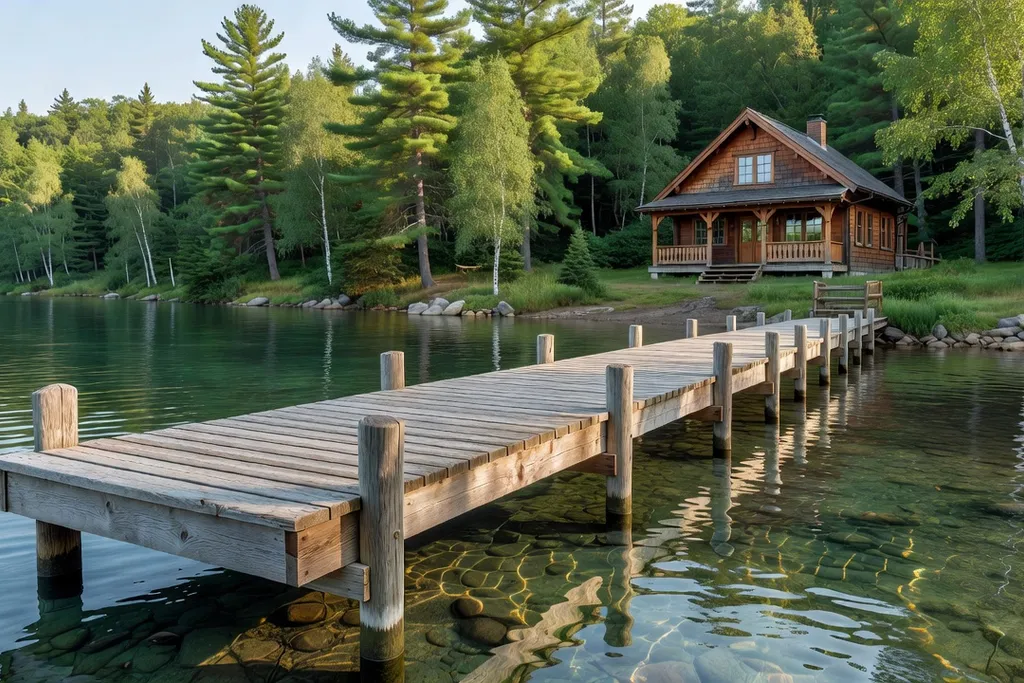
The dock is the focal point of summer life at the cottage. However, in Quebec, you do not build a dock the way you build a birdhouse. Environmental regulations are strict to protect the shoreline buffer and aquatic wildlife. Before undertaking any project, it is essential to consult your municipality. In 2026, the trend is toward floating docks or docks on posts that minimize their ground footprint and preserve the lakebed.
Floating docks are particularly popular for lakes with fluctuating water levels. They adapt to variations without structural stress. Materials must be environmentally friendly: gone are the days of old metal barrels or chemically treated wood that contaminates the water. Aluminum is preferred for the structure, with cedar or composite for the walking surface.
When designing it, think about how it will be used:
- Swimming area: Plan for a sturdy ladder and a non-slip surface.
- Mooring: Install high-quality cleats to secure watercraft.
- Relaxation: If space permits, a wider area for Adirondack chairs is a major asset.
Remember that in many regions of Quebec, docks must be removed from the water in the fall to prevent them from being crushed by ice. A modular aluminum dock makes this exhausting annual task much easier. For a cottage intended to accommodate a large group, these outdoor facilities must also account for guest capacity: our guide to renting a cottage for a large family details the specific outdoor living space requirements for twelve or more people.
Designing a garden that withstands harsh winters
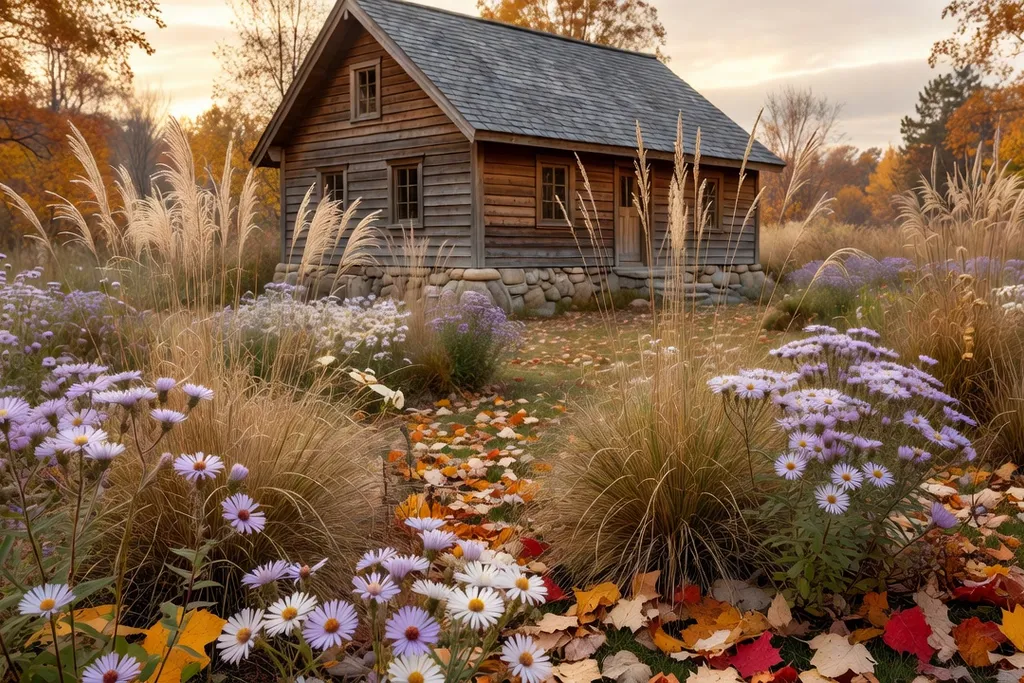
Gardening in hardiness zone 3 or 4 (typical of the Laurentians or Mauricie) requires humility in the face of nature. The goal is not to recreate an English garden, but to enhance the local flora. A successful cottage garden in 2026 is a “low-maintenance” garden that uses native plants. These plants have evolved to survive our winters and require less water and fertilizer.
Incorporating perennials such as asters, echinacea, or milkweed promotes biodiversity by attracting pollinators and monarch butterflies. For shrubs, red osier dogwood and serviceberry provide visual interest in all four seasons: flowers in spring, berries in summer, vibrant colours in fall, and decorative branches in winter.
For a design that is consistent with the interior, do not hesitate to consult the advice of an interior designer specializing in cottages, because the transition between the living room and the garden should be seamless. Using local natural stone for low walls and pathways strengthens this sense of belonging to the land.
Warning: Avoid invasive plants such as Japanese knotweed or common reed. Not only do they harm the ecosystem, but they can also reduce your property’s value and result in severe municipal fines.
Average budget for a complete outdoor project
Planning a budget for a cottage’s outdoor areas in 2026 requires foresight. Construction material costs have stabilized, but skilled labour remains a significant expense. A complete, professionally executed project should be viewed as an investment that increases resale value by 10 to 15 %.
Here is a breakdown of the estimated costs for a medium-sized lot (approx. 20,000 sq. ft.):
2026 budget breakdown (in Canadian dollars)
| Expense category | Economy range | Prestige range |
|---|---|---|
| Deck (250-400 sq. ft.) | 8,000 $ - 12,000 $ | 25,000 $ - 45,000 $ |
| Dock (Aluminum/Cedar) | 5,000 $ - 8,000 $ | 15,000 $ - 25,000 $ |
| Garden and plantings | 3,000 $ - 6,000 $ | 10,000 $ - 20,000 $ |
| Lighting and fire pit | 2,000 $ - 4,000 $ | 7,000 $ - 12,000 $ |
| ESTIMATED TOTAL | 18,000 $ - 30,000 $ | 57,000 $ - 102,000 $ |
It is possible to reduce these costs by doing some of the work yourself, particularly planting and maintenance. However, hiring professionals for the deck structure and dock installation ensures compliance with building codes and environmental standards. To discover more examples of remarkable outdoor properties in Canada, observe how landscapes are incorporated into tourism development budgets.
Seasonal maintenance: preparing the outdoors for winter
The Quebec winter is the ultimate test for your outdoor installations. Poor preparation can turn a beautiful investment into a nightmare of costly repairs in the spring. The key lies in a rigorous routine beginning at the end of October.
Here are the essential steps for protecting your outdoor areas:
- Draining water systems: Drain all outdoor faucets and irrigation systems to prevent pipes from bursting due to freezing.
- Protecting furniture: Clean and store your patio furniture or cover it with sturdy covers designed for a northern climate.
- Dock management: Remove the dock from the water or install bubblers (de-icers) if regulations and the type of dock permit it.
- Pruning plants: Prune perennials and protect young shrubs from deer and the weight of snow using fencing or plastic spirals.
For a more detailed guide to managing your entire property throughout the year, read our article on the four-season cottage and its maintenance in 2026. Meticulous preparation reduces stress and allows you to enjoy the pleasures of winter from the first snowfall.
Common mistakes made by first-time owners
Many new cottage owners make mistakes out of enthusiasm or a lack of knowledge about the land. The first mistake is underestimating the power of nature. Installing a deck without proper foundations (such as piles) inevitably leads to subsidence in less than three years.
Another classic mistake is using urban materials in a wilderness setting. Interlocking pavers, very popular in the suburbs of Montreal, can look out of place in the middle of the boreal forest and require constant maintenance to combat weeds growing between the joints. Natural stone or crushed gravel is preferable for a more organic look.
Finally, excessive lighting is an increasingly criticized mistake. At the cottage, people want to see the stars. Lighting that is too bright diminishes the nighttime experience and disturbs local wildlife. Choose low-intensity solar lights directed toward the ground to mark pathways without creating light pollution.
3-year outdoor project checklist
A successful project is not completed in a single summer. It is better to spread the work out to let the land “speak” and adjust your plans according to your budget.
Year 1: Structure and Safety
- Have a professional landscaping plan prepared.
- Install the screw piles and build the main deck.
- Secure lake access and install a basic dock.
- Manage drainage to direct water away from the foundations.
Year 2: Vegetation and Atmosphere
- Plant structural trees and shrubs (hedges, standalone specimens).
- Set up the outdoor fire pit area (in compliance with SOPFEU standards).
- Install low-voltage pathway lighting.
- Create walking areas with natural stone or mulch.
Year 3: Finishing Touches and Comfort
- Add beds of perennials and native flowers.
- Install permanent accessories (outdoor kitchen, hammocks, pergola).
- Enhance the dock with additional sections or a relaxation platform.
- Apply the first maintenance treatments (oiling the cedar, etc.).
FAQ
Q: Which decking material best withstands the Quebec climate? A: Pressure-treated wood or high-density composite withstand freeze-thaw cycles well, with annual maintenance recommended for pressure-treated wood compared with less frequent maintenance for composite. Composite is particularly advantageous for owners who do not live on-site year-round.
Q: Is a permit required to build a dock in Quebec? A: Yes, building or modifying a dock generally requires municipal and sometimes provincial authorization, depending on its proximity to the body of water and local environmental regulations. It is crucial to verify the minimum distance from the shore and the permitted materials.
Q: Which plants withstand harsh winters in a cottage garden? A: Native perennials such as asters, echinacea, and certain ornamental grasses withstand hardiness zones 3 and 4, typical of Quebec cottage regions. Shrubs such as ninebark and viburnum are also excellent choices.
Q: What budget should be planned for a complete cottage outdoor project? A: A complete project including a deck, modest dock, and low-maintenance garden generally costs between 15,000 and 40,000 Canadian dollars, depending on the size of the lot and the materials selected. For high-end projects with an outdoor kitchen and composite deck, the budget can exceed 60,000 $.
Q: How should a cottage’s outdoor areas be prepared before the Quebec winter? A: Outdoor furniture should be protected, dock water lines drained if applicable, perennials pruned, and the condition of the deck checked before the first snowfall. It is also advisable to remove the dock from the water to prevent damage caused by expanding ice.