
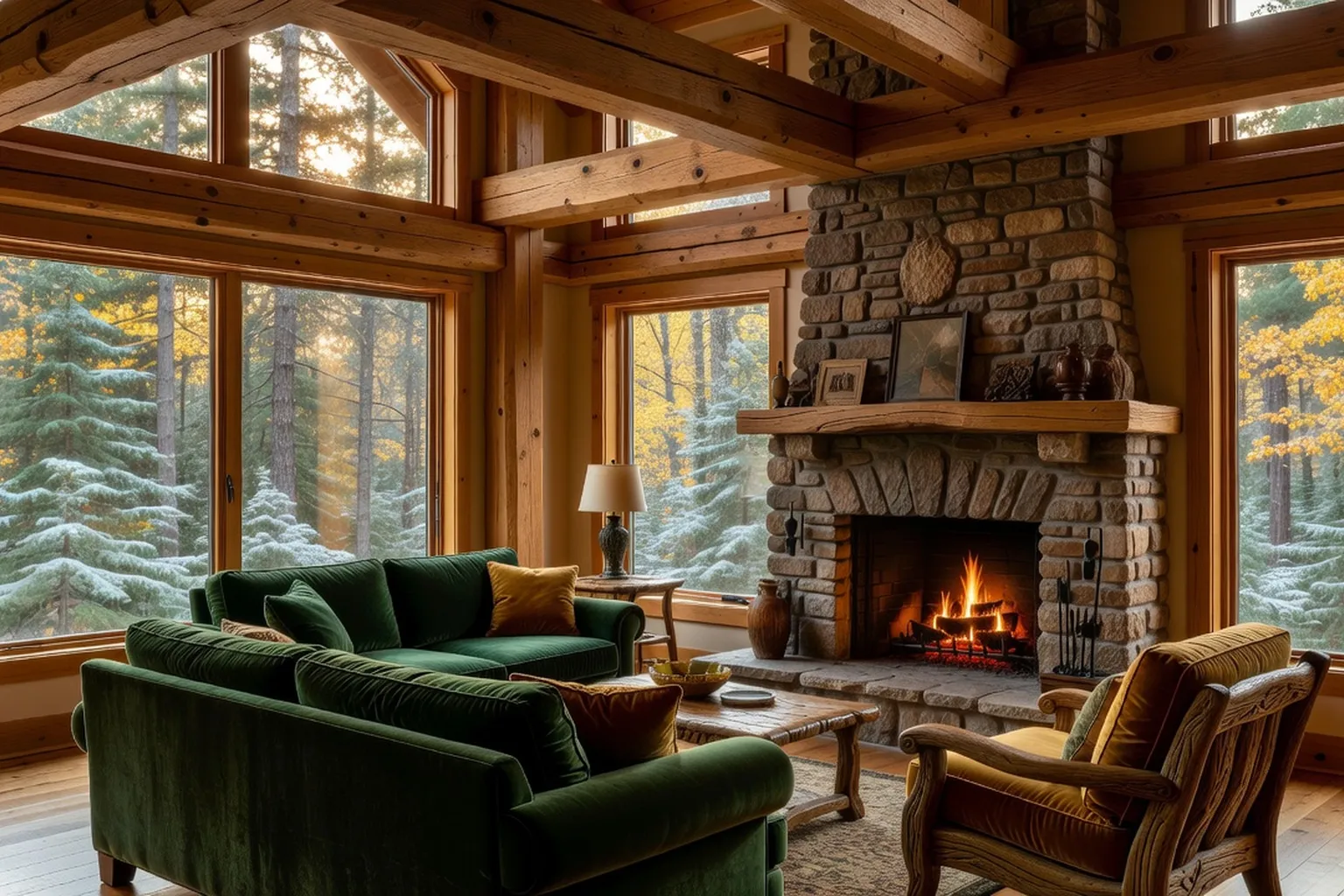
In this exclusive interview, Marie-Eve Bouchard, a journalist specializing in architecture and design, meets Sophie Marchand, a renowned interior designer from Sainte-Adèle. Drawing on her 16 years of experience, Sophie sheds light on the subtleties of designing Quebec chalets. From choosing materials to decor trends for 2026, discover her expert advice for transforming your chalet into a true haven.
Introducing Sophie Marchand, interior designer
Marie-Eve Bouchard: Sophie, thank you for agreeing to this interview. Could you tell us a little about your background and what led you to specialize in designing Quebec chalets?
Sophie Marchand: Of course, Marie-Eve. In fact, I began my career 16 years ago after earning my degree in interior design. I very quickly developed a passion for second homes, and chalets in particular. Quebec has a rich chalet tradition, with these homes often nestled in magnificent landscapes such as the Laurentians, where I primarily work. Specifically, I love the idea of creating spaces that allow people to reconnect with nature while enjoying modern comforts. My work involves bringing these two aspects together harmoniously. Working with local materials, such as Laurentian stone, and incorporating modern features such as low-energy LED lighting solutions are integral to my approach to creating spaces that are both aesthetically pleasing and functional. To understand the entire process, our interview with an architect specializing in Quebec chalets offers interesting insights into similar projects.
The fundamentals of successful chalet design
Marie-Eve Bouchard: In your opinion, what are the keys to successful chalet design?
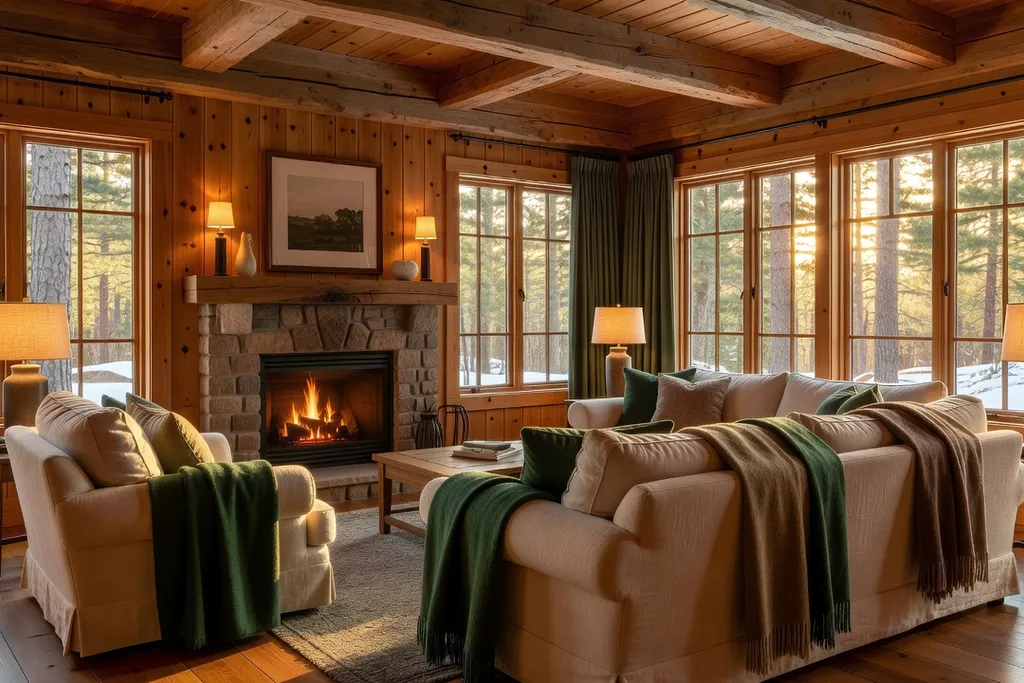
Sophie Marchand: Good design begins with understanding the space and its surroundings. In fact, you need to consider the chalet’s orientation to maximize natural light and the view. Choosing materials that resonate with the exterior is also essential. For example, I like to use raw wood and local stone so that the interior harmonizes with the surrounding landscape. The idea is to create a space that is both functional and warm. Another crucial aspect is not overcrowding the space with too much furniture. I see it very often: simplicity is usually the key to giving a room space to breathe. In addition, it is important to plan smart storage solutions that keep the space tidy without compromising the design. Built-in storage systems or dual-purpose furniture, such as window benches with integrated storage, are practical and aesthetically pleasing solutions. This not only frees up space but also creates relaxation areas where you can admire the surrounding nature. Moreover, efficient space management is crucial for chalets that are often used by several generations of the same family.
Materials and color palettes suited to Quebec’s climate
Marie-Eve Bouchard: What materials and color palettes do you recommend for withstanding Quebec’s climate?
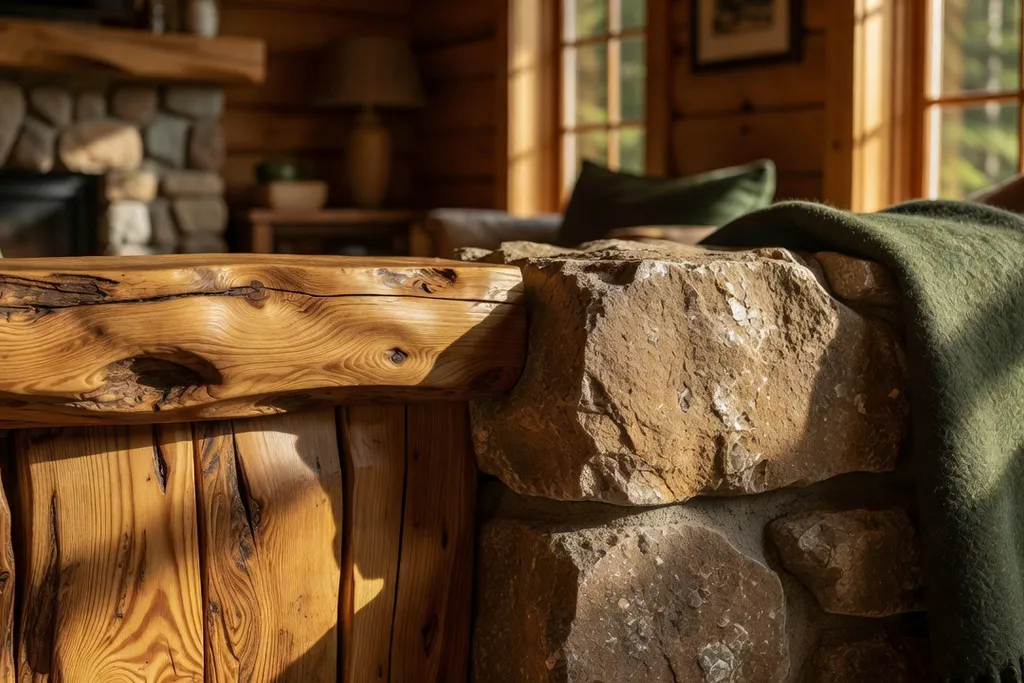
Sophie Marchand: Quebec’s climate is unique, with its harsh winters and hot summers. For this reason, we favor durable materials such as solid wood and stone, which provide excellent thermal insulation. As for colors, I recommend warm, natural shades such as forest green and terracotta. These colors not only create a welcoming atmosphere, but also blend very well with the surrounding landscapes. Specifically, these choices help create a space that remains pleasant to live in throughout the year. For concrete examples, you can see the Mont-Sutton chalet designed with this approach. Using these materials and colors also contributes to the chalet’s durability by reducing the need for frequent renovations caused by extreme weather conditions. In addition, these materials improve the home’s energy efficiency, which is crucial in a context of rising energy costs. For a different perspective, it may also be interesting to compare it with vacation rentals in France.
The most common design mistakes
Marie-Eve Bouchard: What mistakes do you see most often when chalets are being designed?
Sophie Marchand: One common mistake I see very often is the tendency to overcrowd the space with furniture that is too bulky. In a chalet, every square meter counts. It is better to choose multifunctional pieces that do not take up too much space. Another mistake is neglecting the integration of the interior with the exterior. A chalet should be an extension of its natural surroundings. Finally, many people overlook the importance of materials. It is crucial to choose materials that withstand climatic changes and blend harmoniously with the natural setting. This integration is particularly crucial for chalets located in remote areas, where access to repair materials may be limited. In addition, it is essential to consider the maintenance of the materials used, as a poor choice can lead to high long-term maintenance costs. To explore the various possible options, you can discover our chalets with private spas.
Designing a small chalet: optimization tips
Marie-Eve Bouchard: What advice would you give for designing a small chalet?
Sophie Marchand: In small spaces, optimization is essential. I recommend using modular furniture that can easily be moved or transformed, such as sofa beds or folding tables. Built-in storage is also an excellent way to save space while maintaining a streamlined appearance. Making use of the rooms’ height to create mezzanines can provide additional areas without encroaching on the floor space. Finally, using mirrors can help make the space appear visually larger. Thinking vertically by using floor-to-ceiling wall shelves is also an effective strategy. In addition, using light colors on the walls and ceilings can create an impression of greater depth and brightness in confined spaces. It is also worthwhile to incorporate skylights to maximize the amount of natural light entering the space, which can transform the atmosphere of a small area. These strategies make the chalet not only functional, but also aesthetically pleasing and comfortable.
Chalet decor trends for 2026
Marie-Eve Bouchard: What are the major chalet decor trends for 2026?
Sophie Marchand: For 2026, we are seeing a return to deep natural shades such as forest green and terracotta. Quebec-made artisanal furniture is gaining popularity, with a preference for unique pieces that tell a story. Recycled and sustainable materials will also be at the heart of the trends, with particular attention paid to projects’ environmental footprints. Finally, integrating technology while maintaining a natural aesthetic will be a challenge, but also a defining trend. Technology will take the form of home automation systems that make it possible to manage energy consumption efficiently while preserving an authentic and warm atmosphere. However, technology must be integrated thoughtfully so as not to detract from the traditional appearance of chalets. For those who wish to explore different vacation options, it is worthwhile to plan a complete trip to Canada to discover Quebec chalets.
Marie-Eve Bouchard: We will now move on to a series of quick questions. True or false: these elements are crucial to a successful chalet.
5 quick questions—true or false
Marie-Eve Bouchard: A chalet should always have a large central fireplace.
Sophie Marchand: False. Although this is traditional, modern stoves can be just as effective and take up less space. They often provide better energy efficiency and can be incorporated into more compact designs, which is essential in small chalets.
Marie-Eve Bouchard: Bright colors are ideal for a chalet.
Sophie Marchand: False. Natural, soothing shades are preferable for a harmonious environment. They create visual continuity between the chalet’s interior and the outdoor landscape, which is fundamental for total immersion in nature.
Marie-Eve Bouchard: Using only local wood is essential.
Sophie Marchand: True. This allows the chalet to blend into the landscape as effectively as possible and supports the local economy. In addition, local wood is often better suited to the region’s specific climatic conditions, making it a sustainable and environmentally friendly choice.
Marie-Eve Bouchard: A chalet should have a uniform style in every room.
Sophie Marchand: False. A little variety can add character, as long as overall harmony is maintained. This makes it possible to personalize the space while following a guiding principle that ensures consistency throughout.
Marie-Eve Bouchard: Good natural lighting is enough for a chalet.
Sophie Marchand: False. Good artificial lighting is also crucial for long winter evenings. LED lighting, for example, makes it possible to create varied atmospheres while remaining energy-efficient, which is ideal for chalets used throughout the year.
Your final tips for designing a Quebec chalet
-
Harmonious integration: Always seek to integrate the chalet into its natural surroundings by choosing materials and colors that blend into the landscape.
-
Functionality first: Choose multifunctional furniture to maximize space, especially in small chalets.
-
Environmental responsibility and sustainability: Opt for sustainable, environmentally friendly materials to minimize environmental impact.
-
Planning and consultation: Before beginning any design project, it is essential to plan every detail and consult professionals to ensure that all building and safety standards are met.
-
Contact us: For any questions or to begin a chalet project, feel free to contact us regarding your stay plans.
Design budget: where to start based on your means
When it comes to the interior design of a Quebec chalet, budget is often one of the main factors to consider. Whether you have a limited budget or greater financial flexibility, it is essential to define your priorities so that every dollar is well spent. According to Marie-Louise Tremblay, an interior designer specializing in Quebec chalets, “it is crucial to start with the structural elements and main rooms that define the chalet’s overall atmosphere.” For those who need to watch their spending, the emphasis should be placed on essential renovations that ensure comfort and functionality, such as insulation and heating, especially with harsh winters in mind.
With a limited budget, the key is to focus on improvements that will offer the greatest visual and functional impact without necessarily incurring major expenses. For example, repainting the walls in shades inspired by the surrounding nature can instantly refresh the space and give it a new feel. Investing in warm textiles, such as wool blankets or faux-fur cushions, can also transform a space without breaking the bank. Marie-Louise emphasizes the importance of incorporating decorative elements that reflect Quebec heritage, such as local antiques or artisanal artwork. These pieces add not only character but also a touch of authenticity.
For those with a more comfortable budget, the design can be approached from a bolder perspective. This may include installing large windows to maximize views of the surrounding nature or adding a stone fireplace to create a focal point in the living room. “A larger budget makes it possible to experiment with high-end materials and custom designs,” Marie-Louise explains. Kitchens and bathrooms can be equipped with modern appliances and luxurious finishes that combine style and efficiency. In this context, high-quality furniture and designer light fixtures can be considered to create an atmosphere that is both elegant and warm.
In all cases, whether your budget is limited or ample, it is essential to plan every stage of the design process to avoid unnecessary expenses. “The success of an interior design project depends on preparation and planning,” Marie-Louise insists. By establishing a list of priorities and remaining true to your initial vision, you can create a space that reflects not only your personal taste, but also the timeless charm of Quebec chalets. The expert advice of an interior designer can also prove valuable in optimizing every aspect of your project, thus ensuring a harmonious and welcoming result.
This interview with Sophie Marchand has given us a wonderful perspective on designing Quebec chalets. For those who wish to learn more, feel free to plan a complete trip to Canada and experience the unique harmony of Quebec chalets for yourself.
FAQ
Which materials should be favored when designing a Quebec chalet?
Raw or lightly weathered wood, local stone, and wool or linen textiles are the most highly recommended materials: they withstand temperature fluctuations and age well in a rustic environment.
What is the most common design mistake in chalets?
Overcrowding the space with too much bulky furniture. A chalet benefits from being furnished with multifunctional pieces and warm lighting rather than oversized furniture that weighs down small spaces.
What are the chalet decor trends for 2026?
The return of deep natural shades (forest green, terracotta), Quebec-made artisanal furniture, and Scandinavian touches blended with rustic Canadian style dominate recent projects.
What are the essential elements to incorporate into the interior design of a Quebec chalet?
When designing a Quebec chalet, it is essential to incorporate natural materials such as raw wood and stone. Use warm, earthy shades for textiles and accessories. Adding a stone fireplace, solid wood furniture, and wrought-iron light fixtures reinforces the rustic, authentic charm sought in a traditional chalet.
How can you optimize space in a small Quebec chalet?
To optimize space in a small Quebec chalet, consider using multifunctional furniture, such as a sofa bed or folding table. Installing wall-mounted shelves frees up floor space. Favor light colors to make rooms look larger, and use mirrors to reflect natural light. Opt for vertical storage solutions to maximize every available corner.