
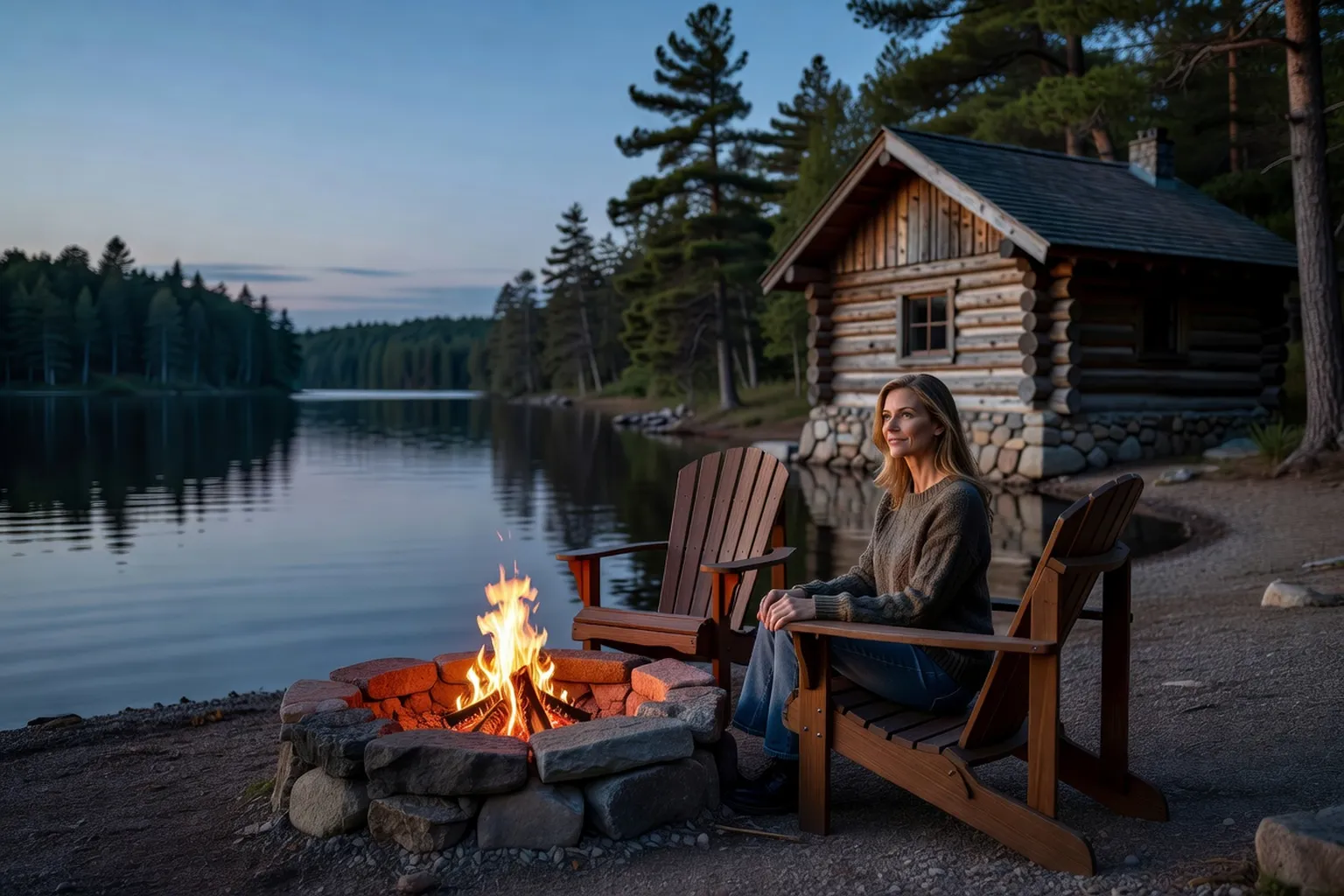
Yes, you can have a campfire at a cottage in Quebec, but not anytime or anyhow: an open-fire ban, a municipal bylaw or an owner’s rule may prevent it that very day. And if you arrive with your own firewood, you could unknowingly be violating a federal regulation on the emerald ash borer. Here is what to check before you leave and once you are there, in roughly 15 minutes of reading.
Why campfires are so tightly regulated in Quebec
Nothing says cottage getaway quite like an evening around the fire, but this romantic image has a downside. According to the Société de protection des forêts contre le feu (SOPFEU), about 60 forest fires each year in Quebec originate with a campfire that was not properly controlled or fully extinguished. The organization also states that about 80% of forest fires are human-caused, which means they are preventable.
This reality explains the logic behind the rules: fire is permitted, but within a specific framework, with an installation designed to contain it, vigilance and, sometimes, a total ban. This framework does not come from just one place. It results from three overlapping levels:
- provincial measures (an open-fire ban ordered when the forest-fire risk warrants it);
- municipal bylaws (permits, permitted types of fire pits, hours, distances);
- host rules (whether a fire pit is provided, insurance requirements, property-specific prohibitions).
Renters or passing visitors rarely think to check all three. Yet doing so is what prevents a fine, a ruined stay or, in the worst case, a fire.
Open fires, outdoor fire pits, stoves: what are we talking about?
The terms matter, because the rules do not apply in the same way to everything that burns.
An open fire is a fire lit outdoors, without a chimney or enclosed structure: a traditional ground campfire, a clearing fire or a bonfire. These are the fires most often targeted by bans.
An outdoor fire pit is an installation designed to contain a fire: a stone or metal fire pit, a fire bowl or a portable fire pit. Many municipalities distinguish it from an open fire and subject it to specific conditions, such as having a spark screen in good condition.
A wood stove or indoor fireplace falls into a different category: flue, chimney and ventilation safety, discussed below. It is not covered by open-fire bans, but it has its own requirements.
Finally, some appliances run on propane gas or ethanol. They are often treated differently from wood fires, including during a ban period, but this is not automatic: only the local rule decides.
SOPFEU bans: how to spot them
When conditions become dry and dangerous, preventive measures may be ordered under the Fire Safety Act. SOPFEU describes the main levels: an open-fire ban in or near forests and, in more serious situations, a ban on access to certain forest areas.
During an open-fire ban, any fire that burns freely or could spread in a forest setting is covered, including campfires, fires in a regular fire pit and fireworks. There is, however, an exemption, which SOPFEU describes as follows: a solid-fuel fireplace or stove lit in an installation intended for that purpose and equipped with a spark screen whose openings do not exceed 1 cm, or a gas- or ethanol-fuelled appliance. The installation must rest on mineral ground, meaning a paved surface or ground cleared to soil or gravel, not dry grass or moss.
Two simple habits will help you avoid making a mistake:
- Check the status of restrictions on the same day, on the SOPFEU website or in its app, which also displays the fire-danger index. Conditions can change within a few hours.
- Never assume the exemption applies: municipal bylaws may be stricter than provincial measures. A municipality may ban wood fires even when the province allows them.
One point for owners and property managers to remember: a burn permit issued by a municipality becomes invalid as soon as a ban is declared, whether by the municipality or SOPFEU. You therefore cannot rely on a permit obtained the day before.
Municipal bylaws and host rules: the second filter
Quebec has hundreds of municipalities, and each adopts its own rules for outdoor fires. Read the regulations published by several of them and you will see the same structure recur: a definition of an open fire, fire-pit requirements, a supervision requirement, a possible permit to request in advance, and penalties.
What truly varies from place to place:
- The permit: some areas require one for an open fire, while others allow one in a compliant fire pit without formalities.
- The permitted fire pit: a fixed fire pit made of non-combustible material, a portable fire pit with a spark screen, or a gas fire pit only.
- Periods and hours: some municipalities prohibit fires during certain times of the year or at night.
- Areas: a fire near a forest or a high-risk area is not treated like a fire in the middle of a village.
Your best source remains the host. Before booking, ask whether a fire pit is provided, where it is located, whether wood is included, and whether the contract or insurance imposes specific rules. Our interview with a property manager about what to check before booking a cottage also reminds us that these practical questions prevent many unpleasant surprises upon arrival.
Lighting, supervising, extinguishing: the routine for a safe fire
Most common-sense rules come down to a few steps. The goal is not to turn every evening into a ritual, but to get used to following the same sequence.
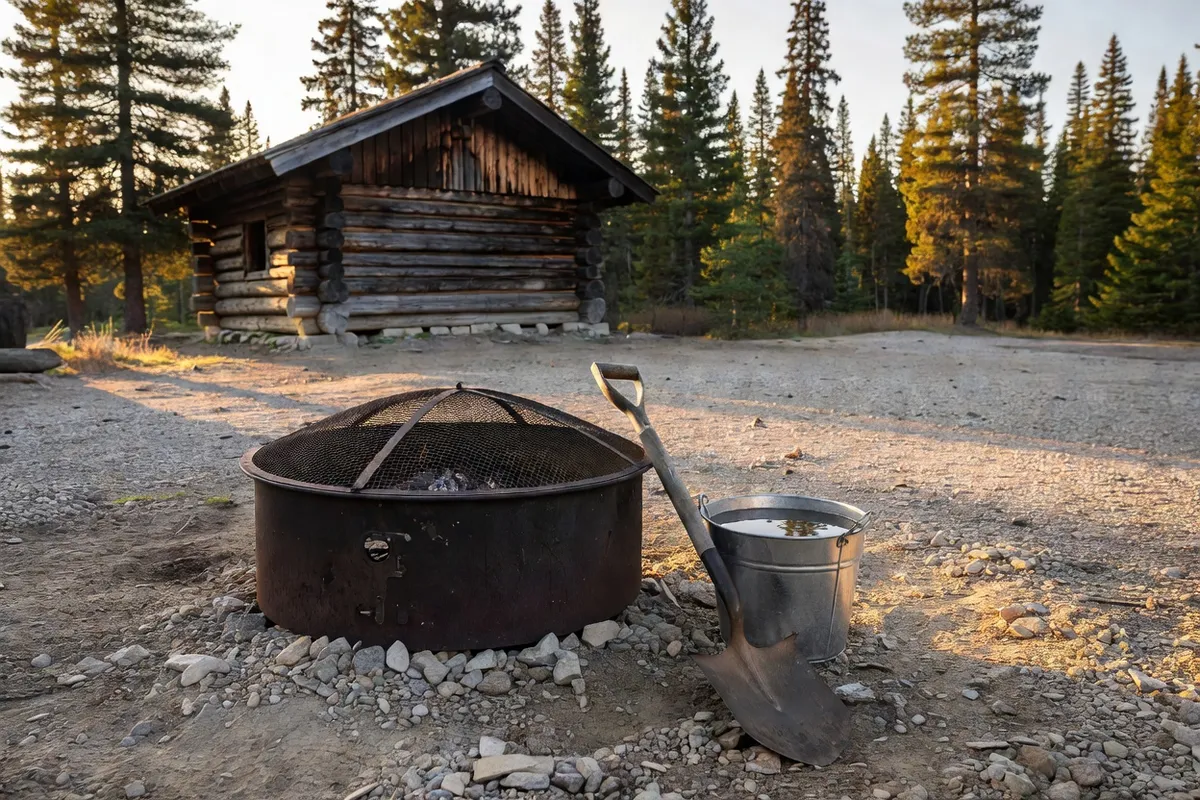
Before lighting. Choose the designated location, well away from the cottage, deck, trees, tents, woodpiles and vehicles. Clear leaves, conifer needles and dry branches from around the fire pit. Keep a bucket of water or a connected garden hose, as well as a shovel, within reach. Check the wind: as soon as it picks up, sparks travel, and it is better to postpone the fire.
During the fire. Never leave a fire unattended, even for a few minutes. Keep the fire to a reasonable size: a large flame adds nothing to the atmosphere and multiplies the risk of flying embers. Do not use gasoline or any other flammable liquid to start or revive it: serious accidents often begin there. Watch children and animals especially closely, and remind everyone not to let young people handle embers.
To extinguish it. This is the step people most often rush through, even though SOPFEU attributes a notable share of fire starts to poorly extinguished campfires. The method is well known: thoroughly soak the embers, stir the ashes to reach hidden embers, then soak them again, until everything is cool to the touch. If the ground is still warm when you hold your hand over it, you are not done. Anyone who goes to bed and lets the fire “die out” is taking an unnecessary risk.
For the next day. Ashes from a fire pit or stove can remain dangerously hot long after a fire appears to be out. Let them cool, then transfer them to a lidded metal container placed on a non-combustible surface and away from the cottage. Never put them in a plastic bag, cardboard box or kitchen garbage bin.
Bringing your own firewood: the ban that surprises people
This is the rule almost no one knows about, and it directly affects vacationers. To slow the spread of the emerald ash borer, an exotic insect that attacks ash trees, the Canadian Food Inspection Agency (CFIA) restricts moving firewood out of regulated areas (ash firewood is prohibited, and the rules for other species depend on the area). The restriction is not limited to commercial uses: it also applies to private travel, for example someone bringing wood to a cottage or campground, so check the CFIA rules for your area.
Specifically:
- If you live in a regulated area, you should not load your trunk with logs to take them to the cottage, even if it is located in another region.
- Ash material (logs, branches and wood chips) is subject to the same ban on leaving the area without CFIA authorization.
- To move wood or ash when an exception is warranted, you must request written authorization from the CFIA regional office.
The regulated area covers many of Quebec’s regional county municipalities (RCMs), including the Montreal and Longueuil agglomerations. It was expanded in March 2025 to include the RCMs of Saguenay and Charlevoix, following the detection of the insect outside areas already regulated during 2024 monitoring. The exact map and list change: check the CFIA page on the emerald ash borer before you leave, rather than relying on a fixed list.
The simplest solution: buy locally
The safest way to comply with this rule is to bring nothing. Many cottages include a supply of wood or sell it by the cord or bundle. In small communities, you can also find wood at convenience stores, hardware stores or from neighbouring producers. One practical tip: ask the host where the wood comes from and whether it is dry enough, since green wood smokes, heats poorly and dirties the chimney. For more detail, see our guide Cottage and Toddler Safety: Complete Checklist Before Booking.
The same precaution applies in reverse: do not leave with leftover cottage firewood to take home.
Wood stoves and indoor fireplaces: the basics of safety
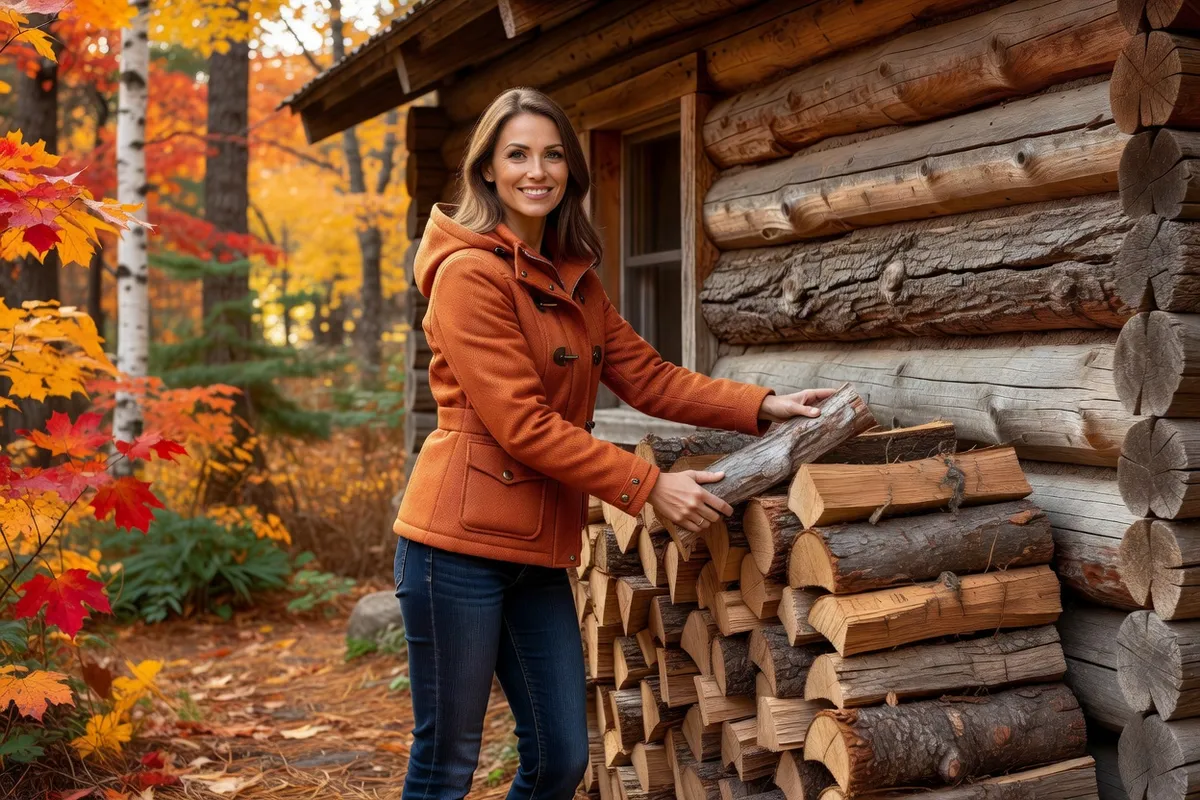
In a cottage heated or brightened by a wood stove, the question is no longer about a ban, but about proper use. Here are a few points to check or ask the host about when you arrive:
- The condition of the flue and chimney. A dirty flue increases the risk of a chimney fire. The owner should ensure it is regularly cleaned; as a renter, you can ask when this was last done.
- The fireproof surround and clearances. Furniture, curtains and clothing must not be placed close to the appliance. A protective floor plate is a good sign.
- Detectors. Working smoke and carbon monoxide detectors are essential in any cottage with a combustion heating appliance. If one is missing or giving a false alarm, report it to the host.
- The wood itself. Use dry, split wood. Never burn treated wood, plywood, garbage or packaging.
- Opening the damper. Do not fully close the flue damper while embers remain: carbon monoxide builds up quickly in an enclosed space.
These rules also apply to living-room fireplaces and fireplaces in high-end cottages. They take on special importance when travelling with a group or young children: our cottage safety checklist for young children reviews the points to check, including the wood-burning fireplace and smoke and carbon monoxide alarms.
Campfires, children and animals: plan for everyone
A fire draws people in. Children want to get close to it, dogs want to circle it, and adults eventually relax. A simple reference point is better than repeated instructions: mentally mark out a perimeter, designate one adult to be responsible for the fire, and decide in advance how it will be extinguished.
With a dog, think about flying embers and hot ashes it may step on; also consult our guide to dog-friendly cottages for rules specific to this type of stay. With a group of friends, be mindful of fatigue and alcohol, which do not mix well with a fire and a nearby lake; our comparison of a cottage for a group of friends or a family helps you choose a suitable layout.
What about cottage owners and managers?
If you rent out a cottage, the rules that protect you also protect your guests. A few good practices:
- Provide a compliant fire pit installed on a non-combustible surface, away from the building and trees, with a spark screen whose openings meet the SOPFEU limit.
- Post instructions in the cottage: where to light fires, how to extinguish them, where to put ashes and what to do during a ban.
- State where the wood comes from and remind guests that firewood must not be moved outside a regulated area.
- Provide an accessible bucket, shovel and fire extinguisher, and check detectors before every season.
- Check your insurance obligations: some policies set conditions for wood-heating appliances and outdoor fire pits. Ask your insurer to confirm the exact requirements.
Our guide to designing the outdoor area of a Quebec cottage offers ideas for arranging the fire-pit area while taking these constraints into account, and our interview about the four-season cottage shows how an owner plans cottage maintenance throughout the year.
What should you do during a fire ban?
A ban does not mean there is nothing left to do around a cottage in the evening. A few ideas:
- Switch to gas if the host provides a propane fire pit, after checking that local rules allow it.
- Grill another way: before using any barbecue, check the local rule during a ban period.
- Enjoy the sky: an evening without a fire is also one when you can see the stars better. A good excuse to bring out the blankets.
- Postpone it without regret: a fall or spring stay, when fire risk is lower, often offers a better compromise. Our guide to choosing the right time to book can help you decide.
For a wilder getaway, our neighbour in the voyage-canada.com network also details wild camping regulations in Canada, which is useful if you extend your stay in a tent.
Summary before you leave
- Check the status of fire bans (SOPFEU) on the day you leave and on the day you light the fire.
- Ask the host which fire pits are permitted, what wood is provided and which rules apply.
- Do not bring firewood from home; buy it locally.
- Use the designated fire pit, with a spark screen, on mineral ground and away from buildings.
- Extinguish it completely: soak, stir, soak, check by touch.
- Store ashes in a lidded metal container, away from the cottage.
- Never use an accelerant and never leave a fire unattended.
These steps do not take away any of the magic of a campfire: they ensure it lasts all season, for you and for the next renter.
FAQ
Can you have a campfire at a cottage at any time in Quebec?
No. An open fire may be prohibited by SOPFEU or by the municipality when the forest-fire risk is high, and some municipalities require a permit or limit fires to a compliant fire pit. Check the status of bans on the same day and ask the host which local rules apply.
Is a fire pit with a spark screen allowed during a fire ban?
According to SOPFEU, a solid-fuel fireplace or stove lit in an installation intended for that purpose and equipped with a spark screen whose openings do not exceed 1 cm, as well as certain gas or ethanol appliances, may be exempt on mineral ground. Municipal bylaws may nevertheless be stricter: check before lighting.
Can I bring firewood from home to the cottage?
Not without checking first. The Canadian Food Inspection Agency prohibits moving firewood outside a regulated area because of the emerald ash borer, including bringing it to a cottage or campground. The simplest option is to buy wood locally or from the host.
How do I properly extinguish a campfire?
Thoroughly soak the embers, stir the ashes to reach hidden embers, then soak them again until everything is cool to the touch. SOPFEU notes that about 60 forest fires a year result from a campfire that was poorly controlled or poorly extinguished.
What should I do with ashes from a fire pit or wood stove?
Let them cool for a long time, then place them in a lidded metal container set on a non-combustible surface and away from the cottage, deck and woodpiles. Ashes that appear cool may retain embers for several days.