
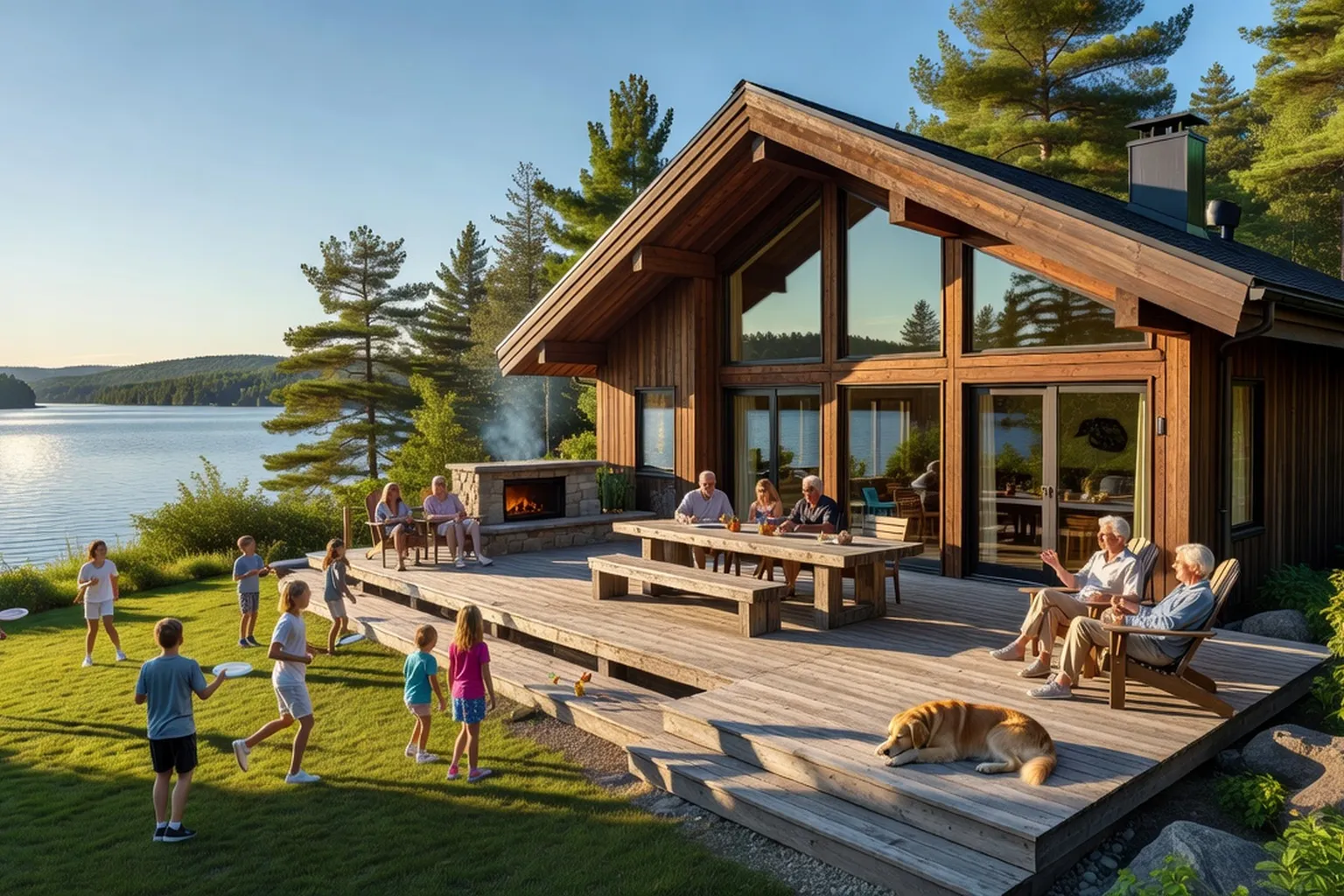
Bringing three generations under one roof is as much a logistics project as a holiday: how many people does the chalet really sleep, how do you split the bedrooms, who pays for what, and what do you do all day when participants range from 5 to 75 years old? A chalet advertised for “16 people” does not necessarily have 16 real beds, enough bathrooms, or a kitchen able to feed that many. This guide offers concrete criteria for choosing a high-capacity chalet in Quebec, sharing the budget without hurt feelings and avoiding unpleasant surprises on arrival. It relies on no booking statistics: rates and capacities vary too much from one chalet to the next, and the right method is to check everything in writing with the owner before paying a deposit.
How many people can a family chalet really accommodate?
The capacity shown in a listing is a contractual maximum, not a comfort level. To know what a chalet really sleeps, count the actual beds (not the “sleeping spots” that include sofas or air mattresses), the number of bathrooms, the size of the kitchen and dining room, and the number of parking spaces.
A few practical benchmarks: plan a chair for everyone at the main table, otherwise schedule meals in two sittings; count at least one full bathroom for four to six people, and more if the group has many children or older relatives; check that the fridge, oven and dishes are sized for the group (ask for the number of plates and cutlery sets).
The contract usually states a maximum number of occupants, sometimes with fees per extra person and rules on day visitors. Respect it: exceeding it can mean extra fees, cancellation of the stay, or even a refused claim in the event of damage or a loss. Also ask how the contract counts children and babies, as the rule varies from one owner to another.
Bedrooms, beds and bathrooms: the criteria for real capacity
How beds are distributed matters as much as how many there are. A high-capacity chalet often combines closed bedrooms, mezzanines and bunk beds. Here is what to check:
- Bed types: double, queen or king beds for adults, bunk beds for children. Adults generally prefer a real bed to a sofa bed.
- Mezzanines: check the ceiling height and safety (guardrails, stairs or ladder) before placing children or tall adults there.
- Accessible room: if a grandparent has trouble with stairs, ask whether there is a bedroom and bathroom on the entry level.
- Linen: ask what is provided (sheets, towels) and what you need to bring. For a large group, linen can become a significant cost or logistics item.
- Bathrooms: beyond eight people, a single bathroom quickly becomes a morning bottleneck.
A good practice is to draw the bedroom plan before booking: who sleeps where, which couples, which groups of children, which room for older relatives. The exercise often reveals that a “14-place” chalet is actually too small for a group of 14 people with different needs. For more detail, see our guide Chalet for a Group of Friends vs Family Chalet in Quebec.
Shared budget among several households: how to split costs fairly
Amounts vary widely by region, season and chalet size: rather than quoting an average rate, here is a method for splitting fairly whatever the price.
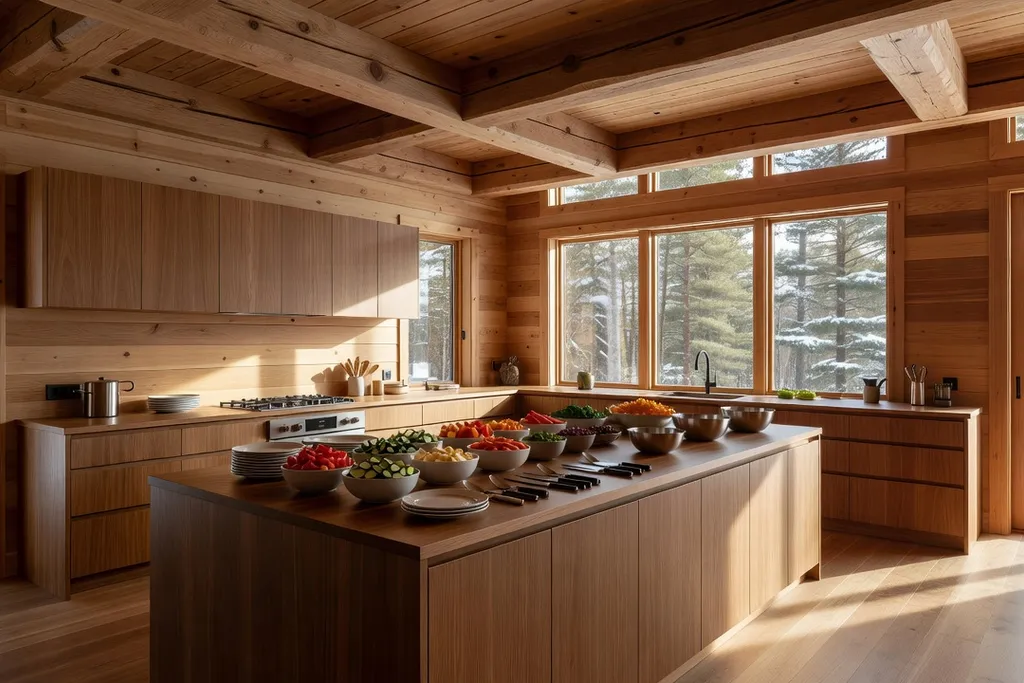
- Get the final all-in price: rent, lodging tax (generally 3.5% for a stay of 31 nights or fewer in a participating tourist region), cleaning fee, security deposit, any per-extra-person fees.
- Choose a split rule before booking: equal shares per household, or per adult with a reduced or zero rate for young children. What matters is that the rule is clear and accepted by everyone.
- Set up a common fund for meals, firewood, supplies and shared activities. A shared spreadsheet or an expense-sharing app avoids end-of-stay arguments.
- Decide who books and pays the deposit, and how the others reimburse them: it is better to have a single person in charge of the booking, with a clear email trail.
- Plan for cancellation: if one household drops out, who absorbs its share? Cancellation insurance or a flexible cancellation clause in the contract can prevent a dispute.
Our guide to the real cost of a chalet stay details the fees added to the listed rate.
The Quebec regions best suited to large groups
Large chalets are found in most resort regions, but two profiles come up often. The Laurentians, close to Montreal, concentrate a dense rental offer around Mont-Tremblant, Sainte-Adèle and Saint-Sauveur, with services (groceries, restaurants, activities) nearby: our guide to Laurentians chalets details the sectors. The Eastern Townships offer rolling landscapes, villages and outdoor activities for all ages.
Our Eastern Townships and Laurentians comparison helps weigh distance, activities and atmosphere. For a group that wants a more secluded setting, the Outaouais, Mauricie or Charlevoix offer spacious properties, but trips are longer and services more spread out: plan the groceries ahead. In every case, check the real driving time from each family’s starting point.
Activities that appeal to all ages: from 5 to 75
The goal is for everyone to find something without the group scattering. A few simple ideas, by season:
- Summer: swimming and canoeing on the lake, short hikes, cycling on easy trails, campfire (following the safety rules in force), outdoor games.
- Autumn: a walk to admire the colours, apple or pumpkin picking, board games around the wood stove.
- Winter: snowshoeing, skating, sledding, cross-country or downhill skiing for the most active, and for the others a good fire and a spa if the chalet has one.
- All year: game nights, group cooking, movie screenings, stargazing.
Plan one “gathering” activity per day and leave the rest free. Teenagers and grandparents do not keep the same pace: a shared dinner in the evening is often enough to bring everyone together.
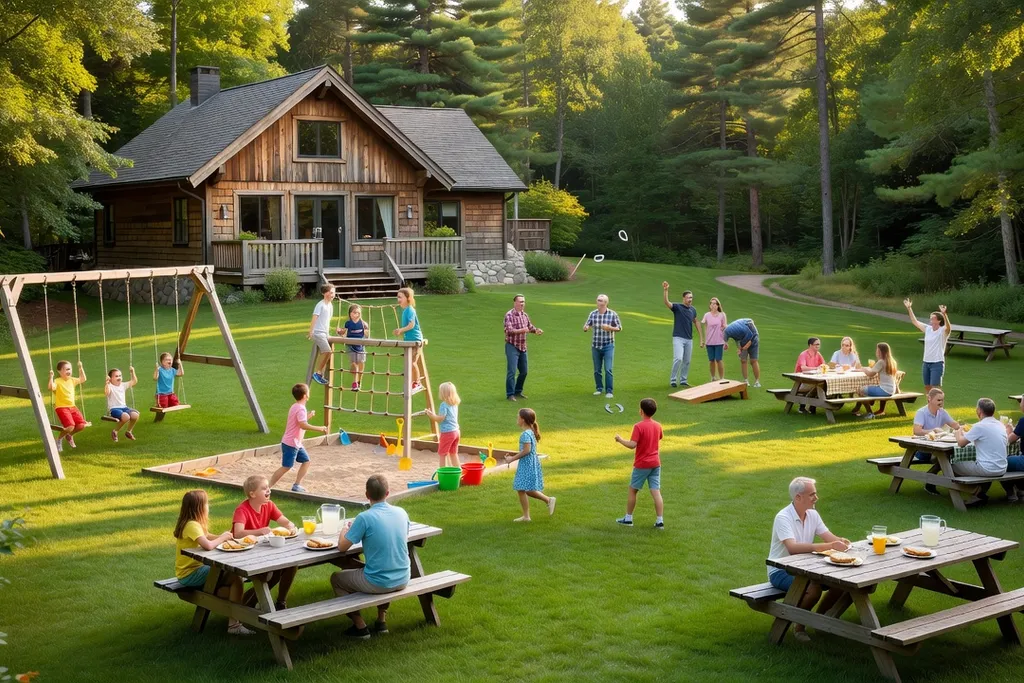
Organizing meals and chores for a group of 12 to 20 people
A large group without organization quickly turns into a permanent kitchen for two people. A few rules lighten the load:
- A meal schedule: each household is responsible for one or two meals, with groceries planned ahead.
- One big order before leaving: the nearest grocery store may be tens of minutes away by road.
- Rotating chores: dishes, wood stove or fireplace, waste and recycling, following the chalet’s rules.
- An equipment list to check: large pots, serving dishes, freezer, coolers, barbecue.
- A place for children: indoor and outdoor play space, with adult supervision, especially near water or a fireplace.
For the safety of young children near a lake, dock or fireplace, see our dedicated checklists before booking.
Regulations and insurance for large groups
In Quebec, a chalet rented to tourists for 31 days or fewer must in principle be registered with the Corporation de l’industrie touristique du Québec (CITQ) and display its registration number: ask the owner for it and check it in the public registry before paying a deposit. Municipalities may also impose their own zoning, noise and safety rules, which vary from place to place: ask the owner what applies, notably regarding the number of occupants and day visitors.
On the insurance side, the tenant’s liability for damage may be engaged: check what your home insurance covers, what the contract provides, and whether cancellation insurance suits you. For an isolated chalet, also find out about the electrical installations and the generator: our interview with an electrician specializing in isolated chalets gives the right reflexes.
Common mistakes to avoid when making a family booking
- Trusting the advertised capacity without counting the real beds, bathrooms and seats at the table.
- Not checking the mezzanines (ceiling height, guardrails) for tall adults and young children.
- Signing without an inventory: ask for photos of the equipment and of the chalet on arrival, to avoid disputes over the condition of the premises.
- Forgetting the cancellation clause: a large group is more likely to see a household drop out.
- Not setting the cost-sharing rule before leaving.
- Underestimating the trip: with several families leaving from different cities, a shared arrival time needs planning.
Pre-departure preparation checklist
- CITQ registration number checked and contract signed, with capacity, final price and cancellation policy.
- Bedroom plan drawn up, bed linen and towels shared out.
- Cost-sharing rule agreed and common fund organized.
- Meal schedule, big grocery order placed, kitchen equipment checked.
- Stay activities chosen, suited to the participants’ ages.
- First-aid kit, flashlights, firewood and backup heating if needed.
- Emergency numbers and the owner’s contact details shared with the whole group.
FAQ on renting a chalet for a large family
How many people does a family chalet sleep? It depends on the chalet: some sleep around ten people, others many more. Count the real beds, bathrooms and seats at the table rather than relying on the advertised figure.
How do you share costs between several families? Choose a clear rule before booking (per household or per adult), get the final all-in price and use a shared spreadsheet or an expense-sharing app.
Which region should you choose for a large group? The Laurentians and the Eastern Townships offer many high-capacity chalets and nearby services; other regions suit groups looking for a more secluded setting.
Do you need a special permit or insurance? A chalet rented to tourists for 31 days or fewer must in principle be registered with the CITQ. Check the registration number, municipal rules and your insurance coverage.
Which activities suit all ages? Favour flexible activities: swimming, easy hikes, snowshoeing or skating depending on the season, board games and shared meals.