
Reading time: about 14 minutes. Interview by Pierre Boisvert for Soleica Chalets.
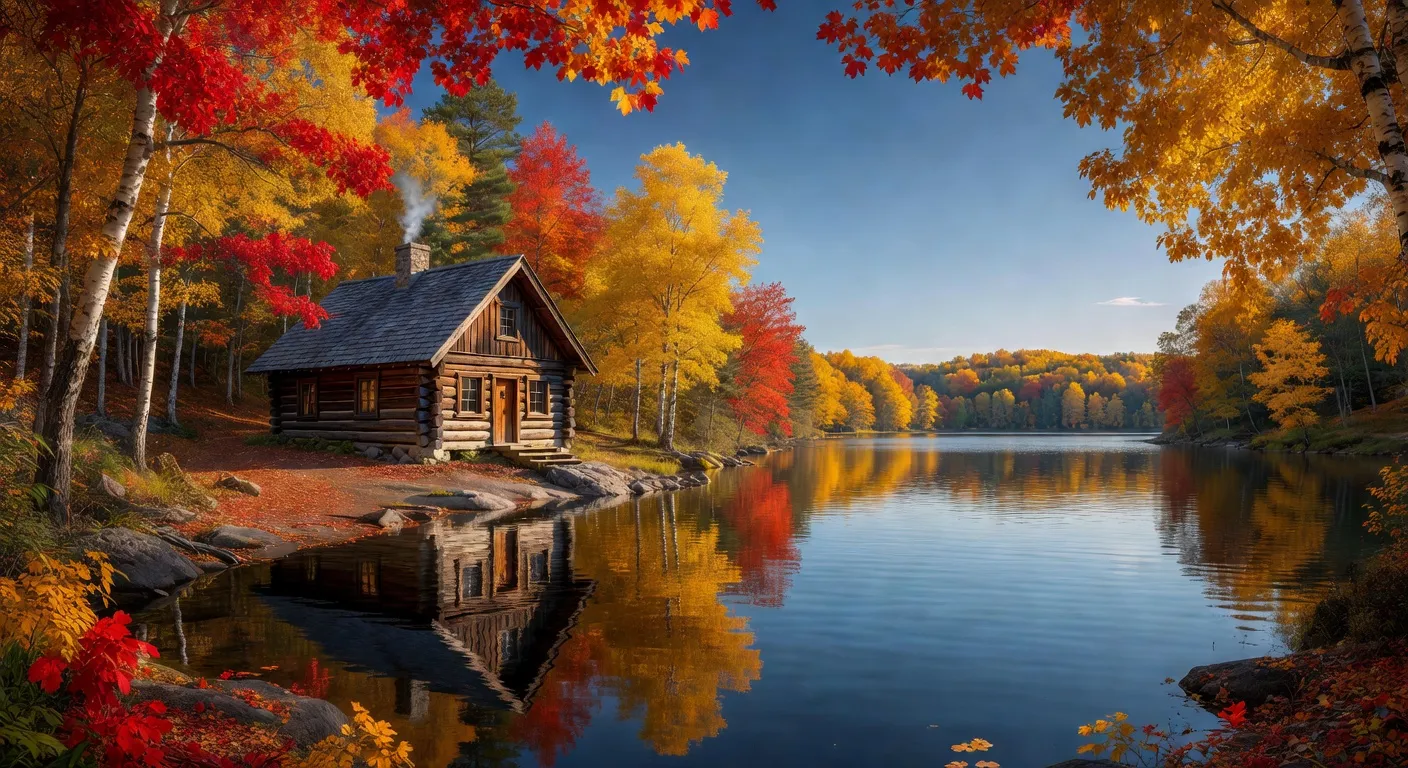
In her chalet in Wakefield, Isabelle Fortier has a picture on the wall: Quebec’s four seasons in photos, a pink sugar bush in May, a turquoise lake in July, a blazing forest in October and a frozen river in February. “People often think of Quebec as a summer or a ski destination. They forget two whole seasons that are often the most beautiful.”
Isabelle has guided families, amateur birdwatchers, nature photographers and athletes since 2013 in the Outaouais and the Laurentians. For anyone considering a fishing chalet stay in Quebec or a nature retreat, her advice is valuable.
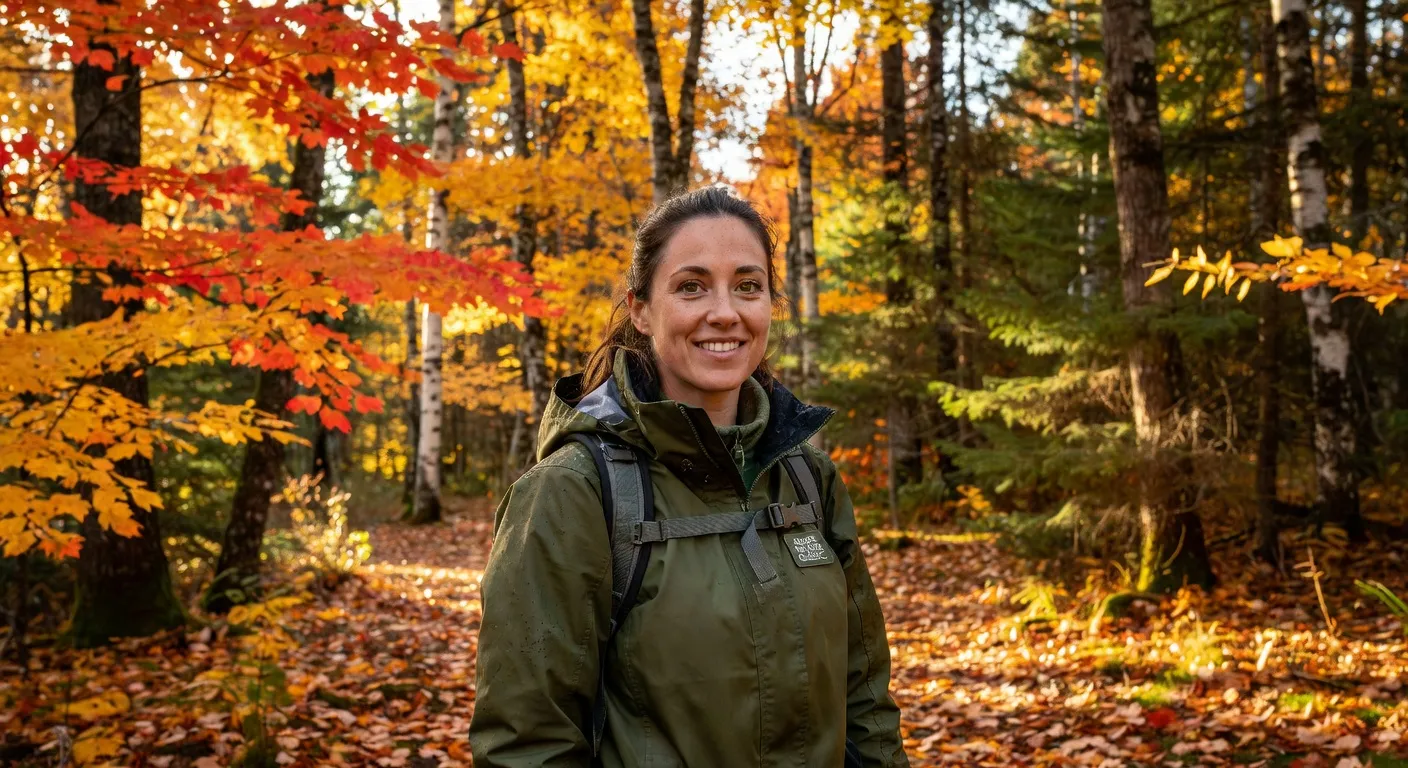
Nature guide based in Wakefield, Outaouais
Thirteen years of experience, specialising in boreal wildlife and Quebec's mixed forest. She guides in the Outaouais and the Laurentians.
Why Quebec is an exceptional four-season destination
Pierre Boisvert: Isabelle, what makes Quebec stand out as a four-season destination for a chalet stay?
Isabelle Fortier: The diversity of our seasons is extraordinary. In most holiday destinations around the world, you have one main season surrounded by two transition periods of little interest. In Quebec, every season is a complete, distinct experience.
Spring is renewal: loons returning to the lakes, bears leaving their dens, the pastel colours of buds on the mixed forest. Summer is abundance: clear lakes, ridge hikes, active wildlife, insects and birds everywhere. Autumn is dramatic: Quebec’s colours are among the most spectacular in the world, and the mixed forests of the Outaouais and the Eastern Townships are hard to beat for foliage. And winter is the absolute silence of the forest under snow, ice fishing, glade skiing and sometimes the northern lights in the north.
A four-season chalet in the Laurentians or the Outaouais gives you access to four radically different experiences with the same basic infrastructure. That is extraordinary value.
Spring in a chalet: what people do not know
Pierre Boisvert: Spring is often underrated as a chalet season. What do we miss by avoiding it?
Isabelle Fortier: Spring is the most alive season of the year in the forest. Animals come out, birds migrate, vegetation restarts at high speed, and you witness a natural show with no equivalent in summer.
In April and May the forests are still open (the leaves are not out yet), so you see animals at a distance that you would not see in July. Deer, bears and foxes are much more visible. It is the birdwatchers’ favourite season: the migration of shorebirds and songbirds is spectacular in May.
The downside is the black flies from late May to mid-June. They are unavoidable in forested areas. A good repellent (30% DEET) and a head net make all the difference. But in April and early May, the insects are not there yet, and nature is magnificent.
And then there are the sugar bushes. A chalet stay in March or April with a visit to the local sugar shack, with hot syrup on snow, maple taffy and spring water in the woods, is a fundamental Quebec experience that summer visitors never have.
Underrated summer activities around a chalet
Pierre Boisvert: In summer, which activities around a chalet are the most underrated by holidaymakers?
Isabelle Fortier: Fishing, first. Many holidaymakers rent a lakefront chalet and never fish: they swim, kayak and read on the dock. All excellent activities, but fishing at sunrise, with the loons singing and the lake still steaming, adds another dimension.
Then, beaver watching. Beavers are mostly active from dusk to dawn, and a lake with a beaver colony offers a fascinating show: building the lodge, carrying wood, diving. You stay quiet, sit at the end of the dock and watch. It is free, suitable for all ages, and children are invariably fascinated.
Finally, night walks and astronomy. Far from city lights, Quebec skies are extraordinary in summer. From 10 p.m. on a clear night you can count shooting stars, spot the Milky Way and hear nighthawks call. A walk with a headlamp in the forest at night is an experience few city dwellers have had.
Autumn in Quebec: why it is an exceptional season
Pierre Boisvert: Autumn seems to be your favourite season for a chalet. Why?
Isabelle Fortier: Yes, without hesitation. Quebec’s autumn is one of the rare things in the world that truly exceeds expectations. Even photos do not do justice to reality: the colours are more saturated, more varied and more changeable through the day than you imagine.
For a chalet in the Eastern Townships or the Laurentians, the ideal window runs roughly from late September to the third week of October, depending on the sector. The maples are red and orange, the birches golden yellow and the conifers stay green, an extraordinary patchwork on the hills. At dawn on a calm lake, the colours reflect in the water. It is the postcard image, but real.
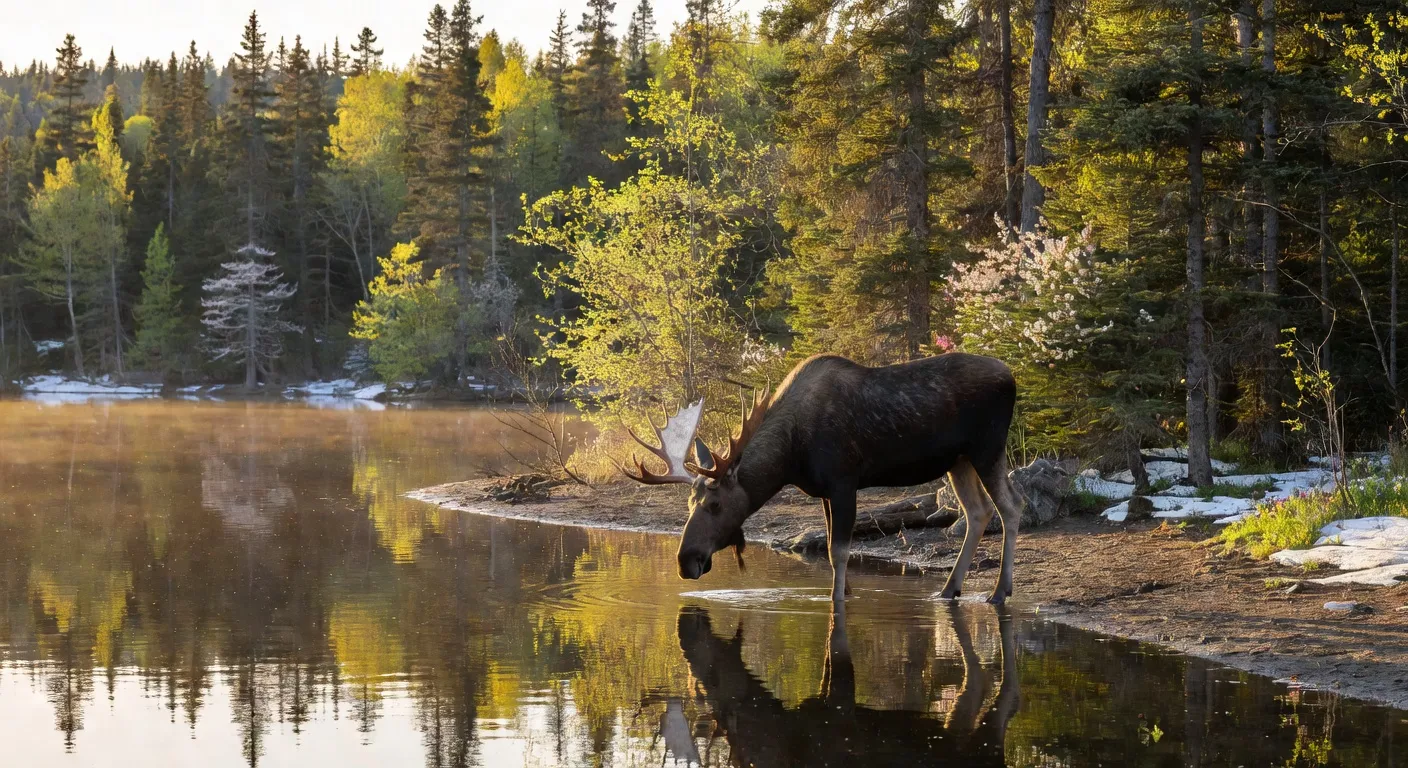
Autumn is also the season of the rutting moose. The males bellow at night, a deep guttural sound that carries for kilometres. If you are discreet and get up early, you may be able to see moose in wetlands at sunrise. Keep your distance, because rutting males can be aggressive.
For the Eastern Townships specifically, our guide to activities in the Eastern Townships also covers the autumn season, which is extraordinary in that region.
How to prepare your chalet for -30°C
Pierre Boisvert: For visitors who want to come in winter, what preparations are essential?
Isabelle Fortier: Quebec winter cannot be improvised. -30°C with wind is like nothing visitors from Europe or the southern United States have experienced. But with the right preparation, it is an absolutely magnificent and very accessible season.
For clothing, the three-layer system is non-negotiable: a merino wool thermal base (no cotton, since cotton is dangerous in damp cold), an insulating layer (down jacket or wool), and a waterproof, windproof outer layer. Winter boots rated to -40°C for outdoor activities. Mittens rather than gloves for activities that do not need fine movements. And above all, protect your head and face, because you lose a lot of heat through them when they are exposed.
For the chalet itself: check that the heating is reliable before you arrive, that the pipes are frost-protected, that there is backup firewood if the main system fails, and that your vehicle has winter tires (mandatory in Quebec in winter). Keep a shovel in your car and a set of jumper cables. For more technical questions on winter electrical safety, our interview with an electrician specialised in remote chalets details how a backup generator works and what to do in a prolonged outage.
Animals to watch by season from a chalet
Pierre Boisvert: Which animals can you hope to see from a chalet in Quebec, depending on the season?
Isabelle Fortier:
Spring (April-June). Black bears leaving their dens as early as April, often visible at the forest edge. Loons in courtship display on the lakes. Kingfishers, great blue herons and loons. The great songbird migration in May.
Summer (July-August). Beavers very active at dawn and dusk. Raccoons around docks at night (secure your food). Red foxes with their kits. White-tailed deer in clearings at sunrise.
Autumn (September-October). Rutting moose, the largest deer in North America, up to 700 kg. Canada jays and black-capped chickadees at the feeder.
Winter (January-March). Lynx, fox and snowshoe hare tracks in the snow, a fascinating way to read the territory. Chickadees and nuthatches at the outdoor feeder. Very rarely, from an isolated chalet, you may see the northern lights on nights of strong solar activity.
Eco-responsibility at the chalet: advice for renters
Pierre Boisvert: Which eco-responsible gestures do you recommend to chalet holidaymakers?
Isabelle Fortier: The first is not to feed wild animals. A bear that gets used to human food often ends up having to be relocated, or even killed by the authorities. That is a pity for everyone. Secure your garbage, and bring in your bird feeders at night if bears have been reported in the area.
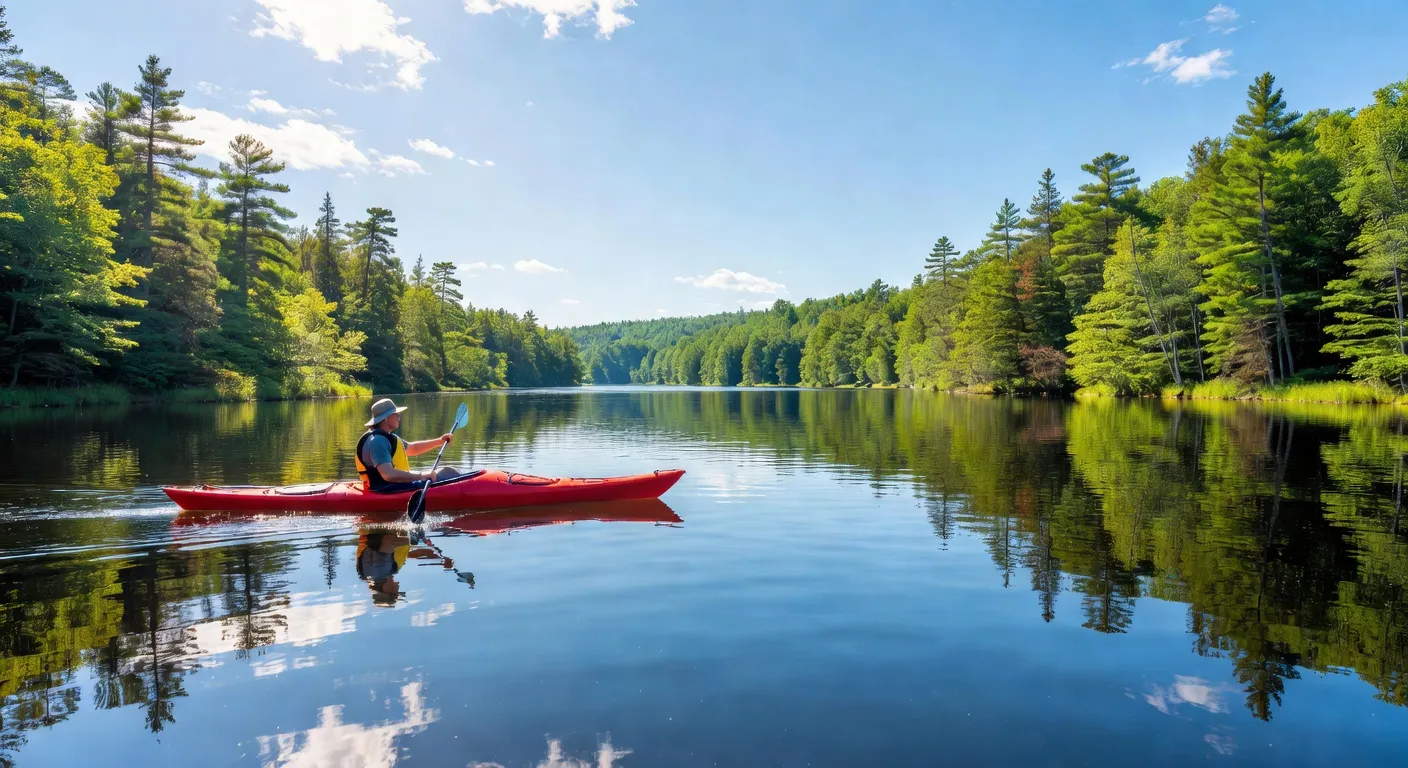
The second is the use of boats. Always clean your boat or kayak between two different lakes to avoid carrying invasive species (such as the zebra mussel or Eurasian water milfoil). It is not only a matter of regulation; it is a question of survival for Quebec’s lake ecosystems.
Third: campfires. Use local wood, not wood imported from another region, because imported wood can carry invasive insects such as the emerald ash borer. Put the fire out completely before going to bed. And in dry periods, check local warnings and refrain completely.
The Laurentians versus the Outaouais in four seasons
Pierre Boisvert: You guide in the Laurentians and the Outaouais. Which of the two regions do you recommend for a four-season chalet?
Isabelle Fortier: They are very complementary. The Laurentians have the advantage of infrastructure: restaurants, shops, major ski resorts and more chalet choice. For families who want comfort and a variety of activities, the Laurentians are hard to beat.
The Outaouais, around Wakefield, Gatineau and the lakes of the back country, offers something wilder and less crowded. Gatineau Park is beautiful in every season, especially in autumn for the colours. For cross-country skiing and snowshoeing, the Gatineau Park network is among the best in Quebec.
My advice: if you come for the first time and want to maximise your options, start with the Laurentians. If you come back for the second time and want quiet, try the Outaouais. They are two very different ways of experiencing Quebec.
Tips for families: a memorable four-season stay
Pierre Boisvert: One last piece of advice for families who want a real four-season chalet stay in Quebec?
Isabelle Fortier: Choose a transition season, spring or autumn, for your first four-season stay. These are the seasons when nature is most spectacular, prices are more affordable than in high season, and you avoid the summer crowds and the deep winter cold.
Disconnect. A chalet stay only makes sense if you put the phones away. Set a simple rule: no screens after 6 p.m. Children invariably find things to do in nature without screens, and they remember it 20 years later.
Do something a little difficult together. A hike that pulls a little, a night of camping in the yard, an introduction to fishing at 6 a.m. The strongest family memories never come from comfort; they come from challenges overcome together.
For families who also want a ski activity, our Mont Sutton skiing and lodging guide presents an ideal resort with family chalets nearby.
Quick questions: 7 myths about Quebec’s seasons
Pierre Boisvert: To finish, a few myths about Quebec’s seasons: true or false?
Isabelle Fortier:
“Quebec’s mosquitoes are unbearable.” Partly true. In June in some forested areas they are numerous. But with a good repellent and the right clothes it is entirely manageable. Mosquito numbers fall noticeably toward the end of summer.
“It is too cold in winter to enjoy a chalet.” False. -15°C with sun is magnificent. The key is the right clothing. Quebecers spend four months outdoors in winter by choice; they know something others do not.
“Quebec’s summer is short.” Partly true. The warm season lasts about three months, depending on the region. Less than in the Mediterranean, but with extraordinary luminosity, and days approaching 16 hours in June.
“Autumn only lasts a week.” False. The autumn foliage moves from the north and higher ground (mid-September) to the south of the province (mid to late October). If you choose the right region at the right time, it is an experience lasting several days at most.
“Spring does not exist in Quebec.” False. It arrives late (April-May) and is often rushed, but it is there, spectacular and alive.
“Moose are dangerous.” Partly true. Outside the rut (September-October), moose are generally shy and run off when people approach. During the rut, males can be aggressive: keep your distance and never come between a female and her calf.
“You get bored at a chalet after three days.” Completely false. Those who get bored have not tried getting up at 5 a.m. to watch animals, sitting on the dock for an hour at sunset, or reading a whole book in two days. Nature is never boring.
Conclusion: the 3 keys to a successful four-season chalet stay
Isabelle Fortier:
1. Choose your season according to your favourite activities. Winter for skiing and ice fishing. Spring for wildlife and sugar bushes. Summer for lakes and hiking. Autumn for colours and calm. Every season deserves to be experienced at least once.
2. Truly disconnect. A chalet stay without a phone, notifications or social media is an increasingly rare experience. Give it to yourself and to your children.
3. Observe before acting. Whether it is fishing, watching animals or simply contemplating the landscape, the best experiences in nature reward patience. Slow down.
To live this four-season experience in the Outaouais or the Laurentians, read the winter chalet family testimonial. To book with a specialised team, Soleica offers four-season chalet stays suited to every profile. And to understand what goes on behind the scenes between two rentals, our interview with a chalet property manager in Quebec lifts the veil on cleaning, seasonal emergencies and the owner-renter relationship.
FAQ: Four-season chalets in Quebec
Is Quebec really a four-season destination for a chalet?
Absolutely. Each season has a strong identity: spring with sugar bushes and waking wildlife, summer with the lakes, a spectacular autumn, and winter with skiing and ice fishing. A well-equipped four-season chalet lets you enjoy every period.
What is the best season to rent a chalet in Quebec?
It depends on your activities: summer for lakes and hiking, autumn for the colours (September-October), winter for skiing, spring for wildlife and low prices. Autumn is often the connoisseurs’ favourite.
Which animals can you watch from a chalet in Quebec?
Spring: bears, loons, herons. Summer: beavers, foxes, deer. Autumn: rutting moose. Winter: lynx and fox tracks, chickadees at the feeder.
How do you prepare for a chalet in a Quebec winter?
Three-layer system (merino, insulation, waterproof shell), boots rated to -40°C, mittens, a headlamp. For the chalet: check the heating, the backup firewood and the winter tires on your vehicle.
Are there risks from wildlife around a chalet?
Risks are limited with basic precautions: secure food and garbage against bears, and keep your distance from rutting moose (September-October).