
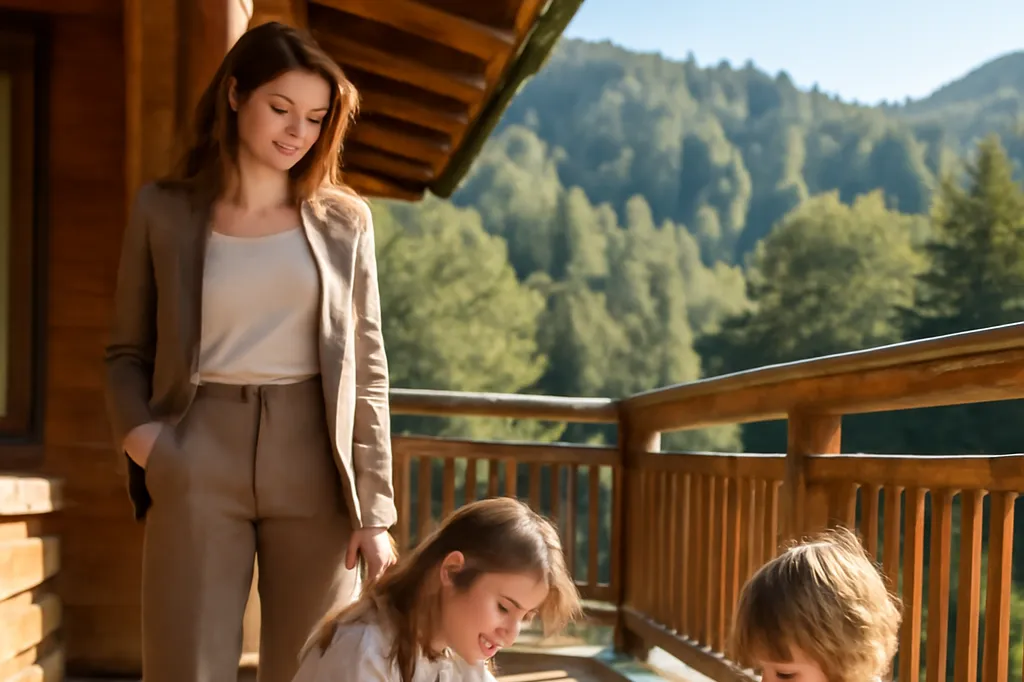
A family chalet holiday can be wonderfully simple with young children when safety is checked before the bags are unpacked. Ask the owner about stairs, fireplaces, water access, heating, smoke alarms and emergency access before booking; then do a room-by-room inspection on arrival. Quebec chalets often offer more space and freedom than a city home, but they can also include wood stoves, steep decks, unfenced land, icy paths, private docks and rural roads. This practical checklist helps parents prepare for those differences without turning a relaxing stay into a constant worry.
For larger groups travelling with grandparents, cousins or several children, start with this guide to renting a chalet for a large family in Quebec. More people can mean more help—but also more doors, bags, stairs and changing routines to manage.
Ask These Questions Before You Book
A beautiful lakeside view or a secluded forest setting does not tell you whether the property is appropriate for a crawling baby, an adventurous toddler or a preschooler who wakes before everyone else. Before confirming a booking, ask direct, specific questions. “Family-friendly” can mean a high chair and a travel crib, or it can mean a truly considered setup with gates, outlet covers and secure outdoor areas.
The owner or property manager should be able to describe the layout clearly. If answers are vague, request current photos of stairs, fireplaces, decks, water access points and sleeping areas. This is especially important for international visitors, who may not be familiar with the construction styles, heating systems and rural settings common in Quebec cottage regions.
Ask about the following points:
-
Stairs and sleeping levels
- Are there indoor stairs, open risers, spiral steps or loft ladders?
- Are stair gates provided, and do they fit securely at both the top and bottom?
- Are bedrooms on the same floor as the main living area?
- Does the property have balconies or mezzanines with railings a child could climb?
-
Fireplaces, wood stoves and heating
- Is there a wood-burning fireplace, pellet stove, wood stove or gas fireplace?
- Is a fixed fireplace screen or child guard installed?
- Are portable space heaters ever supplied or needed in bedrooms?
- Are carbon monoxide alarms installed near sleeping areas and fuel-burning appliances?
-
Water and outdoor boundaries
- Is the chalet on a lake, river, pond, beach or steep shoreline?
- Is there a dock, and is it removable, gated or accessible directly from the property?
- Is the land fenced, partially enclosed or entirely open to woods and roads?
- Are there hot tubs, pools, boat launches or retaining walls nearby?
-
Kitchen, bathrooms and storage
- Are cleaning products, knives, medication supplies and alcohol stored in locked or high cabinets?
- Is there a dishwasher latch, stove knob cover or oven lock?
- Is the water heater temperature adjustable?
- Are bathroom cabinets and laundry areas childproofed?
-
Emergency access
- What is the precise civic address, including road name and municipality?
- How far is the nearest emergency department, urgent care clinic and pharmacy?
- Is mobile reception reliable at the chalet?
- Does the access road remain plowed in winter, and can emergency vehicles reach the property?
For a wider pre-booking approach, consult this property manager interview checklist for Quebec chalet rentals. It can help you identify practical details that may not appear in a listing description.
Understand Why a Chalet Is Different from a City Home
Families often arrive at a chalet expecting a larger version of home. In reality, a rural rental can work very differently from an apartment, townhouse or suburban house. The very features that make a Quebec chalet memorable—firewood stacked by a stove, a wraparound deck, a private shoreline, snow-covered woods—can require added supervision.
A city home may have enclosed yards, predictable sidewalks, nearby neighbours and quick access to services. A chalet may have gravel driveways, uneven terrain, wildlife, dark nights, limited phone coverage and substantial distance between the front door and the nearest store or clinic. Even a modern upscale chalet can have a dramatic slope behind it, a dock below the deck or a staircase without the configuration needed for standard baby gates.
The Canadian Paediatric Society advises caregivers to use layers of protection around water rather than relying on supervision alone. For families renting a cottage with lake access, this means treating the shoreline, dock, hot tub and any watercraft as separate hazards. A life jacket is not a replacement for an adult within arm’s reach of a young child.
The table below helps distinguish common chalet risks from the risks parents may be used to managing at home.
| Chalet feature | Why it can be challenging with young children | What to check or do |
|---|---|---|
| Wood fireplace or stove | Hot glass, sharp hearth edges, accessible fire tools and ash | Use a fixed guard or portable hearth gate; keep tools and lighters out of reach |
| Open deck or balcony | Gaps in rails, stairs, furniture that can be climbed | Inspect railings, move chairs away from edges, supervise every outdoor moment |
| Lake, river or dock | Unfenced access, slippery surfaces, cold water, boats | Keep doors secured, use properly fitted life jackets, establish a no-dock-without-adult rule |
| Unfenced forest land | Children can wander quickly, especially at dusk | Set a visible play zone, use bright clothing, carry whistles or lights |
| Gravel driveway | Moving vehicles may be hard to hear or see | Make the driveway a hand-holding zone; designate parking and play areas |
| Rural well water | Families may be unfamiliar with the property’s water information | Ask the manager about potable water and any local instructions |
| Generator or utility equipment | Noise, fuel, electrical hazards and restricted access | Identify equipment locations and explain that they are strictly off-limits |
| Winter paths and steps | Ice, snowbanks and hidden changes in level | Bring traction footwear, clear entrances regularly and use lights after dark |
Quebec’s tourism regions are wonderfully varied. A Charlevoix chalet can sit above a dramatic river or the St. Lawrence; a Laurentians property may have a steep, wooded driveway; an Eastern Townships cottage may be close to a lake; a Gaspésie retreat may feel more remote than visitors expect. Safety planning should match the site, not just the child’s age.
Do a 20-Minute Safety Check When You Arrive
The first minutes after arrival are busy: luggage, snacks, tired children, grocery bags and excited exploration. Before letting young children roam freely, assign one adult to unpack essentials and another to inspect the property. This small pause can prevent a surprisingly large number of avoidable problems.
Walk through the chalet before nap time, before dinner preparations and ideally before darkness falls. Test—not just observe—the things that matter. A gate that looks present may not latch. A smoke alarm may be installed but have no visible test function. A deck door may lock from the inside but not automatically close behind a curious toddler.
Use this arrival checklist:
- Confirm that smoke alarms and carbon monoxide alarms are present and functioning. Health Canada recommends carbon monoxide alarms in homes with fuel-burning appliances, fireplaces, attached garages or other potential sources of carbon monoxide.
- Locate fire extinguishers, first-aid supplies, flashlights and the electrical panel.
- Check that stair gates are stable and correctly positioned. Pressure-mounted gates should not be used at the top of stairs unless specifically designed for that placement.
- Look for accessible cords, blind pulls, chargers, lamps and extension cables.
- Cover outlets within a child’s reach if outlet covers are not already fitted.
- Move fragile objects, candles, matches, lighters and decorative items away from low tables.
- Check kitchen cupboards, especially those holding cleaning products, dishwasher pods, knives, alcohol or glassware.
- Test deck, patio and dock doors. Keep keys or locking mechanisms out of children’s reach.
- Inspect bathrooms for medicines, cosmetics, razors, hair tools and accessible hot water taps.
- Look under beds, sofas and side tables for forgotten items from previous guests.
- Identify doors leading to garages, basements, utility rooms, hot tubs, waterfronts or outdoor staircases.
- Set up a child-safe sleeping area away from blind cords, heaters, windows and unsecured furniture.
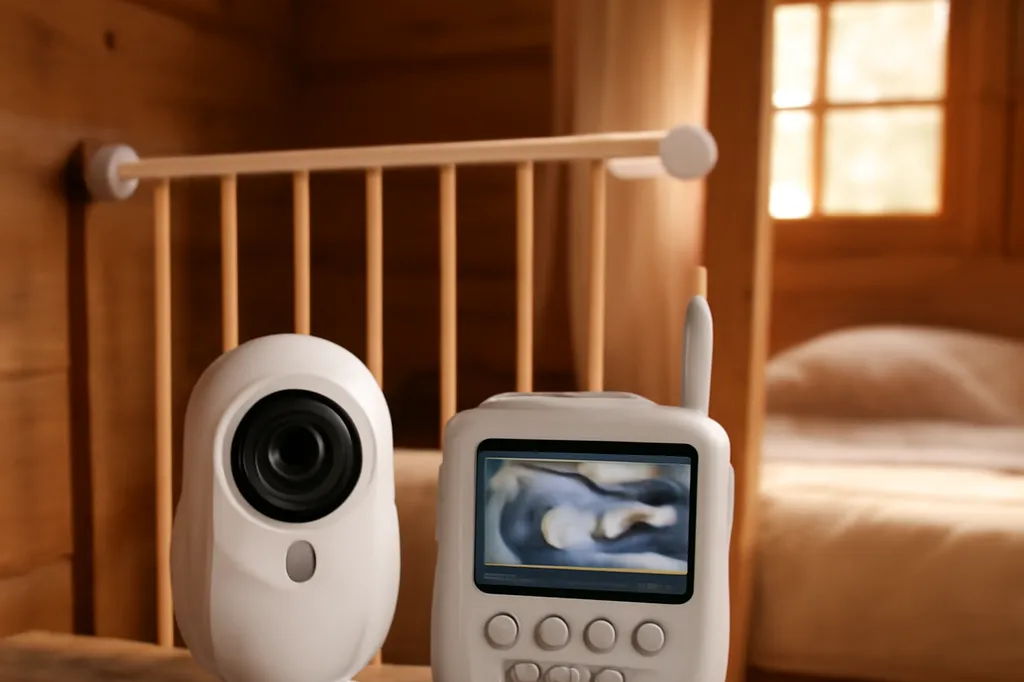
If the property has a crib, playpen, high chair or booster seat, inspect it as carefully as you would your own equipment. Check for loose parts, missing straps, damaged hardware, recalls indicated by the owner or manufacturer, and a stable placement away from windows and heating sources. The Government of Canada provides guidance on safer sleep and consumer product safety; its recommendations are useful references for families using unfamiliar baby equipment.
Do not assume that a listed “baby crib” includes a fitted mattress or suitable bedding. Many families prefer to bring their own portable sleep solution, especially for infants. Avoid makeshift sleep arrangements on sofas, adult beds or cushions.
Pack a Small Child-Safety Kit From Home
Even an excellent chalet may not stock every item your family uses every day. Bringing a compact safety kit reduces the pressure to improvise once you arrive in a rural area, where the nearest pharmacy or big-box store may be a considerable drive away.
A safety kit does not need to fill a suitcase. Choose lightweight, familiar items that work across several rooms. If you are flying into Quebec, consider buying bulky basics after arrival or confirming with the property manager which items are already available.
Useful items include:
- A portable safety gate suited to your child’s age and the doorway dimensions you expect to encounter.
- A portable baby monitor, ideally one that works without relying entirely on Wi-Fi.
- Outlet covers and a few cabinet latches.
- A portable night-light for unfamiliar hallways, bathrooms and stair landings.
- Corner guards for a low stone hearth or sharp coffee table.
- A compact first-aid kit designed for family travel.
- A digital thermometer and any child-specific medication.
- A properly fitted personal flotation device for each child who may be near water.
- Indoor slippers or grippy socks, plus outdoor boots with reliable traction.
- A headlamp or small flashlight for evening walks, power interruptions or rural driveways.
- A child carrier or stroller suited to uneven terrain, depending on your destination.
- A door alarm or simple travel door chime if a child is prone to wandering.
- A printed card with the chalet address, local directions and emergency contacts.
For waterfront stays, a life jacket should be selected for the child’s current weight and fit, not simply borrowed because it is available at the property. Transport Canada offers guidance on choosing and wearing lifejackets and personal flotation devices. In practice, young children need adult help with fit, fastening and consistent use near docks, boats and shorelines.
Families travelling with a dog should add another layer of planning. Children may leave gates open, drop food, approach unfamiliar animals or walk too close to water with a pet. Review these tips for pet-friendly cottages in Quebec if your family holiday includes a dog.
Manage Fireplaces, Wood Stoves and Indoor Heat Safely
A crackling fire is one of the pleasures of a Quebec chalet, particularly after skiing, snowshoeing or a winter walk. It is also one of the most important features to manage around young children. Fireplace glass, metal stove doors and hearth stones can remain dangerously hot long after flames are no longer visible.
Before using any wood-burning appliance, ask the owner for written or clearly explained operating instructions. Not every fireplace is designed for frequent guest use, and not every stove accepts the same type of fuel. Never burn household garbage, treated wood or unfamiliar materials. Keep firewood, paper and kindling away from the appliance, and make sure fire tools and lighters are stored well above a child’s reach.
Create a “no-go zone” around the fireplace or stove. A freestanding fireplace gate or wide hearth guard is often more effective than repeated verbal reminders for toddlers. If the chalet does not have a suitable barrier, decide whether the fire can be skipped during your stay. The answer may be yes, particularly when travelling with an infant who is pulling to stand or a toddler who is fascinated by doors and buttons.
Space heaters require particular care. Avoid placing them in children’s bedrooms unless the manufacturer’s instructions and the property manager’s guidance support their use. Keep heaters clear of bedding, curtains, clothing and toys, and never run cords under rugs or through high-traffic areas. If a room is too cold for comfortable sleep, contact the owner rather than relying on an unverified portable heater.
Carbon monoxide is colourless and odourless. Health Canada notes that fuel-burning appliances can produce carbon monoxide when they are not operating properly or are not adequately vented. Confirm the location of alarms, never block vents, and leave the building immediately if an alarm sounds or if anyone develops unexplained headache, dizziness, weakness, nausea or confusion.
Build a Realistic Emergency Plan
An emergency plan is not about expecting the worst; it is about reducing confusion if something unexpected happens. At a chalet, the address may be unfamiliar, GPS directions can be imperfect, and one parent may be alone with children while another is outside, asleep or away buying supplies.
In Quebec, the main emergency number is 911 for police, fire and ambulance services. However, families should not wait until a crisis to learn the chalet’s exact address, nearest road junction, municipal name or access instructions. Some remote properties have long driveways, gates, bridges or seasonal roads that should be described clearly to emergency responders.
Prepare the following information as soon as you arrive:
- Write down the exact civic address and keep it on your phone and on paper.
- Save the property manager’s contact details provided in your booking information.
- Identify the nearest hospital emergency department, clinic, pharmacy and grocery store.
- Check likely driving time in both daylight and winter conditions.
- Confirm whether mobile service works indoors, outdoors and at the end of the driveway.
- Download offline maps if your route crosses areas with weak reception.
- Keep keys, coats, footwear and car seats easy to access.
- Tell older children a simple rule: find an adult first, do not leave the property alone.
- Establish a family meeting point outside in case of fire.
- Keep the first-aid kit and essential medication in one known, accessible location.
The Government of Quebec’s health portal, Québec.ca, provides information about health services and regional care options. For travel planning, it is sensible to look up local services before departure rather than assuming every Quebec tourism area has a hospital nearby.
If your children have allergies, asthma, seizure disorders or other medical needs, bring more medication than you expect to use and pack it in a separate, easy-to-find bag. Notify the property manager only to the extent necessary, but make sure your travelling companions know where medication is stored and how to use it.
Winter Chalet Safety: Ice, Snow, Power and Warmth
Winter is a major part of Quebec’s chalet appeal. It can also change the safety profile of a property overnight. A dry deck can become slick after freezing rain; a gentle path can disappear beneath snow; a driveway that was easy to navigate in daylight may feel entirely different after dark.
Check the forecast before departure and again each day of the stay. Environment and Climate Change Canada provides official weather warnings and forecasts for Quebec regions, which can be particularly useful when planning travel through mountain, coastal or rural areas. Give yourself extra time for arrivals and departures, especially if children become restless in the car.
On arrival, identify the safest route between the chalet and the vehicle. Ask where snow is typically cleared, whether stairs are treated for ice and where children should avoid playing because of vehicle movement, snow removal equipment, roof snow or steep embankments. Snowbanks can hide railings, drop-offs, outdoor furniture and icy edges.
Winter-specific precautions include:
- Keep children away from snow-covered decks until an adult has checked the railings and surface.
- Use boots with tread; avoid assuming fashion boots or smooth-soled indoor shoes are adequate.
- Do not let children play beneath roof edges where snow or ice may slide down.
- Keep wet gloves and clothing drying safely away from fireplaces, wood stoves and portable heaters.
- Use exterior lighting for trips to the car, garbage area or outdoor hot tub.
- Ask the owner what happens during a power interruption and whether the chalet has a generator.
- Keep flashlights charged and avoid allowing children near generator equipment, fuel containers or electrical panels.
- Never use a barbecue, camp stove or fuel-burning device indoors for warmth or cooking.
- Monitor children closely around hot tubs, which may be appealing in cold weather but carry drowning and overheating risks.
A generator can offer reassurance during an outage, but it is not a children’s play feature. It may involve fuel, exhaust, moving components and automatic start-up. Ask where it is located and make that area strictly off-limits. If the property uses a backup system, confirm whether guests need to do anything during an outage or whether management handles it remotely.
Create Simple Family Rules for the Whole Group
The most effective safety plan is one that every adult understands and every child can follow. Complex rules tend to disappear once dinner starts, grandparents arrive, a baby needs a nap or someone heads outside to start the barbecue. Keep the rules short, visible and appropriate for the youngest child’s level of understanding.
For multi-generational groups, choose one adult to take responsibility for the daily safety reset: closing waterfront doors, checking gates, putting away fire tools and ensuring outdoor equipment is secured. This does not mean one person must supervise everything; it means there is a clear final check when routines become busy.
Consider posting a short family list on the refrigerator:
- An adult must be with children near water, the dock, hot tub, deck and driveway.
- The fireplace and wood stove are adult-only areas.
- Shoes or boots are required outside.
- No child leaves the chalet or yard without an adult.
- Doors to waterfronts, decks and utility areas stay closed.
- Toys are put away before bedtime to reduce falls on unfamiliar floors.
- Everyone knows where flashlights, first-aid supplies and the meeting point are located.
This is also useful when you have babysitters, friends or relatives visiting for part of the stay. A family member who is highly experienced with children may still not know that the deck leads directly to a lake or that the basement door opens onto steep stairs.
For a French-language version of practical child-safety considerations in a chalet setting, see this chalet safety checklist for young children. Reviewing both can be useful for bilingual families or groups coordinating with Quebec-based relatives.
FAQ
What should I ask a chalet owner before booking with a toddler?
Ask about stairs, gates, fireplaces, water access, deck railings, heating, smoke and carbon monoxide alarms, secure storage and the distance to medical services. Request photos of any area that could affect your child’s safety, especially staircases, lofts, docks and fireplaces.
Are lakefront chalets suitable for young children?
They can be, but only when adults plan carefully for constant supervision and layers of protection. Check whether water access is direct, whether there is a dock or hot tub, and bring properly fitted life jackets for children.
Should I bring my own baby gate to a Quebec chalet?
Yes, if your child needs one at home or if the listing does not confirm that suitable gates are installed. Chalet staircases, wide openings and unusual layouts may not work with every gate, so ask for measurements before travel if possible.
What is the emergency number in Quebec?
For police, fire and ambulance emergencies, call 911 in Quebec. Before your stay, save the exact chalet address, identify the nearest hospital or clinic, and check mobile reception at the property.
What are the biggest winter risks for children at a chalet?
Ice, snow-covered drop-offs, slippery stairs, reduced visibility, space heaters and outdoor access are common concerns. Keep entrances clear, use proper footwear, supervise around fireplaces and hot tubs, and ask the owner how power outages and snow removal are handled.