

It was in the heart of a small wood-paneled café in Saint-Sauveur, as the first fall colors began to paint the peaks of the Laurentians, that we met Marie-Ève Fontaine. Between calls from property owners and coordinating a maintenance team, this rental management expert gives us an unfiltered look at a behind-the-scenes profession that is essential to the magic of chalet stays in Quebec.
What the job of a chalet manager really involves
Julien Bélanger: Marie-Ève, people often imagine that managing chalets simply means handing over keys and answering a few emails. Can you explain the day-to-day reality of your profession?
Marie-Ève Fontaine: That is a very romantic perception, but the reality is much closer to running a small hotel spread over several square kilometers. My job is to be the conductor of an invisible symphony. In practical terms, I currently manage around thirty properties in the Saint-Sauveur area and its surroundings. This requires extreme versatility: I alternate between being a customer service representative, a cleaning logistics expert, a mediator, and sometimes even a bit of an emergency plumber or electrician.
A typical day begins around 7:00 a.m. by checking the check-out and check-in calendars. We have to coordinate the cleaning teams, make sure the hot tubs have been tested and chemically balanced, and verify that the digital access codes are programmed correctly. Unlike what you sometimes see in other countries, as with mountain chalet management in France, where operations can be highly centralized, in Quebec, the geographic spread of our chalets requires rigorous logistics. We spend a lot of time on the road. We also have to ensure compliance with CITQ (Corporation de l’industrie touristique du Québec) standards, because the legality and safety of the premises are our absolute priorities. It is a detail-oriented profession in which there is no room for error, because a single burned-out light bulb or poorly cleaned fireplace can ruin the experience of a guest who saved all year for their vacation.
How cleaning and preparation are handled between rentals
Julien Bélanger: The turnover between two guests seems to be the most intense time. How do you manage to transform a used chalet into a spotless haven of peace in just a few hours?
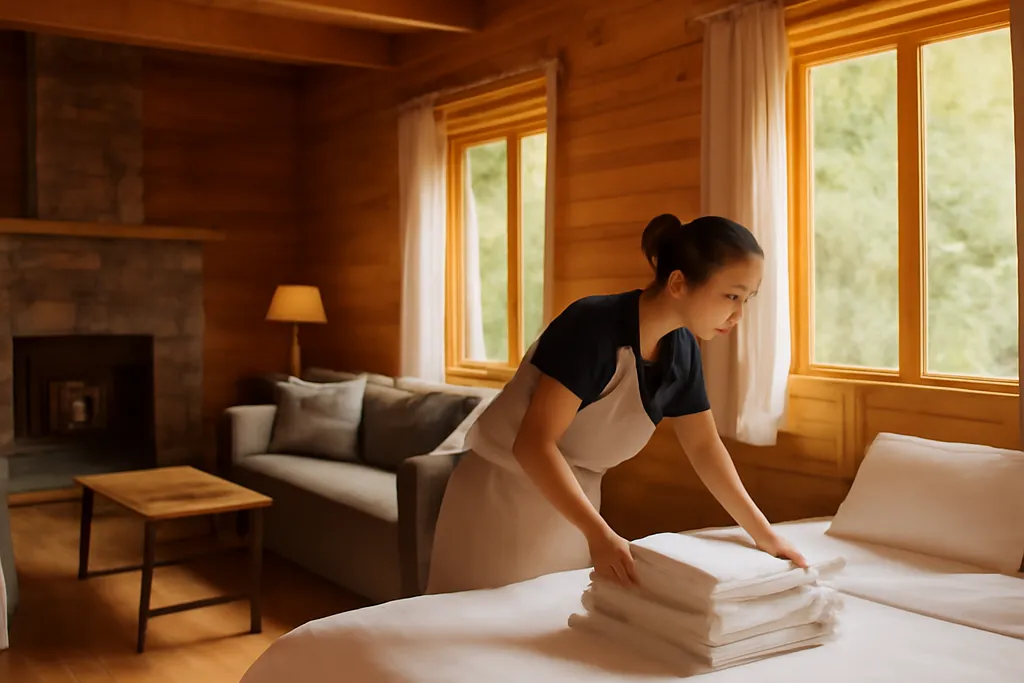
Marie-Ève Fontaine: It is what I call the “11 a.m. to 4 p.m. marathon.” That is the critical window. As soon as the departing renter leaves, a team of two or three cleaning staff gets to work. We are not talking about simple dusting here. It is an almost surgical protocol. We begin with a visual inspection to detect any potential damage. Then comes the ballet of sheets and towels. At my properties, we often use industrial laundry services to guarantee impeccable hygiene, a standard we share with the highest-end accommodations in Canada travel.
The main challenge is consistency. Every object must be returned to its exact place, as defined by the chalet’s interior design work, which was planned for ergonomics and aesthetics. We use digital checklists with mandatory photos. The staff member must photograph the inside of the oven, the bottom of the bathtub, and even the inside of the refrigerator. This protects us and assures the owner that the work has been done. Finally, there is the “finishing touch”: setting the atmosphere. We adjust the temperature, place a few logs near the fireplace, and make sure there is a clean scent without it being overpowering. It is precision logistics that leaves no room for improvisation.
“Cleaning a rental chalet is not a household chore; it is a hotel maintenance operation. If the guest notices that someone was there before them, we have failed.”
The most common emergencies during Quebec winters
Julien Bélanger: Winter in Quebec is unforgiving. What are the toughest emergencies you have to deal with to ensure renters’ comfort?
Marie-Ève Fontaine: Winter is our season of truth. The number one emergency, and by far the most stressful, is frozen pipes. Despite all the prevention and insulation, extreme cold of -30°C combined with a north wind can paralyze plumbing within a few hours if a window has inadvertently been left ajar. That is when my network of local contacts is vital. I have plumbers who answer my calls at 10 p.m. on December 24.
Then there is snow management. A renter arriving from Montreal or abroad in a small city car and getting stuck at the bottom of an icy driveway slope is a classic scenario. We have to coordinate mechanical snow removal, as well as manually sanding steps and entrances. Power outages are also a major challenge. In the Laurentians, an ice storm can leave us without electricity for 24 hours. In those cases, I have to make sure the chalet has a working backup heating system (wood-burning fireplace or generator) and explain to guests how to use it safely. It is a time of year when my phone never leaves my bedside table. We manage people as much as we manage the building’s mechanics.
| Type of emergency | Frequency (Winter) | Target response time | Priority action |
|---|---|---|---|
| Heating failure | High | < 2 hours | Provide space heaters |
| Frozen pipes | Moderate | Immediate | Shut off the water, call the plumber |
| Excessive snowfall | Very high | < 4 hours | Deploy the snowplow / sander |
| Hot tub failure | Moderate | < 12 hours | Check the circuit breakers (GFCI) |
| Loss of Wi-Fi | High | < 1 hour | Restart the router remotely |
Managing the relationship between owners and renters
Julien Bélanger: You act as a buffer between the owner, who cares about their property, and the renter, who wants to enjoy their vacation. How do you balance these two worlds?
Marie-Ève Fontaine: It is a constant balancing act. On one side, the owner sees their chalet as an investment, but often also as a place filled with emotion. They worry about damage, loud parties, and premature wear and tear. On the other side, the renter sometimes pays several thousand dollars for a week and expects absolute perfection. My role is to manage expectations on both sides.
To protect the owner, I make sure that all short-term rental regulations and insurance are strictly followed. This includes verifying renters’ identities and collecting security deposits. For the renter, I provide the assurance of having a professional contact. If something breaks, I do not immediately blame the guest; I look for a solution. Communication is key. I produce detailed monthly reports for owners, including revenue as well as the condition and wear of the equipment. You have to be honest: a chalet rented 40 weeks a year will wear out faster than a private second home. My job is to help the owner understand that while guaranteeing the renter that they will not be charged for normal wear and tear.
What renters should check before arriving
Julien Bélanger: What advice would you give a future renter to make sure their arrival goes smoothly?
Marie-Ève Fontaine: Preparation begins well before loading the car. The first piece of advice is to read the welcome guide sent by email. Too many people ignore it and find themselves lost in the middle of the forest because they did not download offline maps. In our regions, GPS can be unreliable. Next, check the provided inventory. Is firewood included? Is there a Nespresso machine or a drip coffee maker? These are details, but not having coffee on the first morning can dampen morale.
One crucial and often overlooked point is understanding the capacity of the septic system and water supply. If you rent a chalet for 8 people, that does not mean the well can handle 8 consecutive 20-minute showers. You have to learn to live a little more in tune with nature. I also recommend checking the local weather forecast, which can differ from Montreal’s by several degrees. Finally, make sure you have the manager’s emergency number saved in your phone. Arriving at 9 p.m. on a snowy Friday night is not the ideal time to search through your emails for a lockbox code.
Mistakes that cost renters dearly
Julien Bélanger: Over your 12 years of experience, what are the most common mistakes renters make that could be avoided?
Marie-Ève Fontaine: The most costly mistake, and I cannot stress this enough, is flushing “biodegradable” wipes or hygiene products down the toilet. In the city, they may go through, but here, we use septic systems. A blocked lift pump can cost $500 to $1000 for an emergency repair, and it is almost always charged to the renter because it is clearly improper use. This type of mishap is also well known to our electrician specializing in remote chalets, who just as often responds to failures caused by renters misusing equipment.
Another classic mistake involves the hot tub. People often enter the water wearing sunscreen, makeup, or, worse, carrying glassware. A shard of glass in a hot tub requires it to be fully drained, cleaned, and refilled, making it unusable for the next renters and resulting in significant costs. Finally, there is fireplace management. Using damp wood or too much newspaper can trigger fire alarms or, worse, cause a chimney fire. It is essential to follow basic safety instructions, often established during the architectural design of the chalet to optimize chimney draft. A small oversight, such as leaving the damper closed when lighting the fire, may require professional soot cleaning of all the fabrics in the living room.
How seasonality changes the work throughout the year
Julien Bélanger: Quebec is a land of seasonal contrasts. How do your workload and priorities change between July and January?
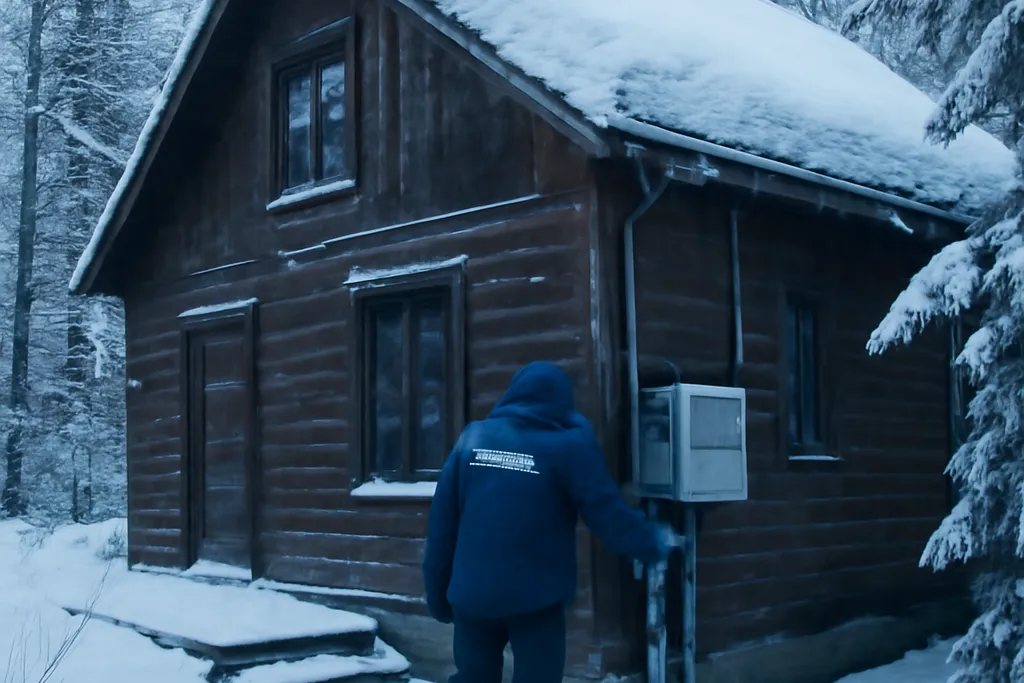
Marie-Ève Fontaine: My calendar is dictated by the seasons. Summer is the peak season for volume. Stays are short and turnovers are constant. We manage a lot of outdoor elements: dock maintenance, kayaks, barbecues, and lawn mowing. It is also the season when insects (blackflies, mosquitoes) require proactive management so they do not inconvenience guests.
Fall is my favorite time of year, but it is also when major maintenance work takes place. That is when we have chimneys swept, clean out gutters, prepare water sports equipment for winter storage, and close up the deck and dock for the season—a job similar to what our guide to chalet outdoor landscaping describes. Winter is the season of technical vigilance, as we discussed. Logistics are more demanding because of the snow. Spring, or “mud season,” is quieter in terms of rentals, but it is the time for major spring cleaning. We wash the windows, deep-clean the carpets, and inspect the foundations after the thaw. Every season has its own challenges, and you have to anticipate the building’s needs before a problem arises.
“In chalet management, we do not follow the clock; we follow the weather. A sudden thaw in February requires as much responsiveness as a snowstorm in December.”
The future of the profession with short-term rental platforms
Julien Bélanger: With the rise of platforms such as Airbnb and Vrbo, how do you see the property management profession evolving in Quebec?
Marie-Ève Fontaine: Platforms have democratized rentals, but they have also created an expectation of standardization that can sometimes be difficult to meet for unique chalets. The future of the profession lies in increased professionalization. We are seeing more and more technology make its way into our chalets: smart locks synchronized with reservations, connected thermostats to save energy between rentals, and noise sensors to prevent problems before the neighbors call the police.
However, I firmly believe that people will remain at the heart of the profession. A platform cannot send someone to de-ice a lock at 2 a.m. The local manager’s role is becoming that of a trusted guarantor. We are moving toward an increasingly personalized offering, almost like private concierge services. The challenge will be to maintain Quebec authenticity while providing an international level of service. Owners are also realizing that to remain competitive on these platforms, they can no longer make do with old mismatched furniture; they must invest in quality and professional management to earn those famous “five stars” that are essential to their economic survival.
5 quick questions—true/false
- Is a rented chalet always fully cleaned before arrival? True. It is the golden rule. Even if the chalet has remained empty for a week, a “refresh” visit is carried out to remove dust and check that no insects or small rodents have moved in.
- Is the owner always reachable in an emergency? False. That is precisely why they hire a manager. The owner is often on vacation or at work. The manager’s number is the true 24/7 emergency contact.
- Is fireplace maintenance included in the rental price? True. Cleaning out the ashes and providing a basic quantity of wood are part of the standard service, although some chalets charge extra for wood beyond a certain amount.
- Are pets systematically prohibited in rental chalets? False. More and more owners accept dogs (often for an additional cleaning fee), because this is a major request among Quebec travelers. However, it remains at the discretion of each property’s house rules.
- Is a security deposit always required for a chalet rental? True. Whether through a credit card pre-authorization or a collected deposit, the security deposit is essential for covering accidental damage or failure to follow basic rules.
Conclusion: The keys to a memorable stay
Managing a chalet in Quebec is an art of logistics that requires as much technical rigor as human empathy. As Marie-Ève Fontaine explained, a successful stay depends on meticulous preparation and constant responsiveness. For renters, peace of mind comes from knowing the property and respecting its equipment.
Here are the essential tips to remember for your next vacation:
- Plan your route: Do not rely solely on cell service in mountainous areas.
- Respect the systems: The septic tank and artesian well are the chalet’s lungs; treat them with care.
- Communicate early: If you notice a problem when you arrive, report it immediately rather than at the end of your stay.
- Prepare for the weather: A chalet in the forest lives according to Quebec’s climate, so plan your clothing and supplies accordingly.
- Read the welcome guide: It is your bible for understanding how each specific property operates.
Are you an owner looking to entrust your property to experts, or are you simply searching for the perfect chalet for your next vacation? Contact our team to discover our personalized services and selection of exceptional properties.
FAQ
What exactly does a chalet property manager do? A manager coordinates all logistical operations: professional cleaning, technical maintenance (hot tub, snow removal, landscaping), reservation and calendar management, as well as emergency communication with renters. They act as the link between owners’ expectations and guests’ comfort.
What should you do in the event of a failure during a stay in a remote chalet? The first step is to consult the welcome guide to see whether it is a common problem (e.g., a circuit breaker). If the problem persists, immediately contact the emergency number provided by the manager. It is recommended that you document the problem with a photo or video to facilitate remote diagnosis or follow-up after the stay.
Is cleaning always included in the price of a rental chalet? In most cases, a cleaning fee is added to the rental amount to guarantee professional disinfection. However, renters are generally expected to leave the chalet in a reasonably clean condition (dishes washed, garbage taken out), or they may have part of their security deposit withheld.
How can you verify that a manager is reputable before booking? It is advisable to read recent reviews on several platforms, check whether the chalet has a valid CITQ permit number, and test the manager’s responsiveness by asking a specific question before booking. A professional will respond clearly and in detail within 24 hours.
When is the high season for chalet management in Quebec? Peak activity occurs during the summer (from Saint-Jean-Baptiste Day to Labour Day) and during the holiday season. March break is also a period of very high demand, requiring increased logistics for snow and heating management.