
Reading time: 12 minutes
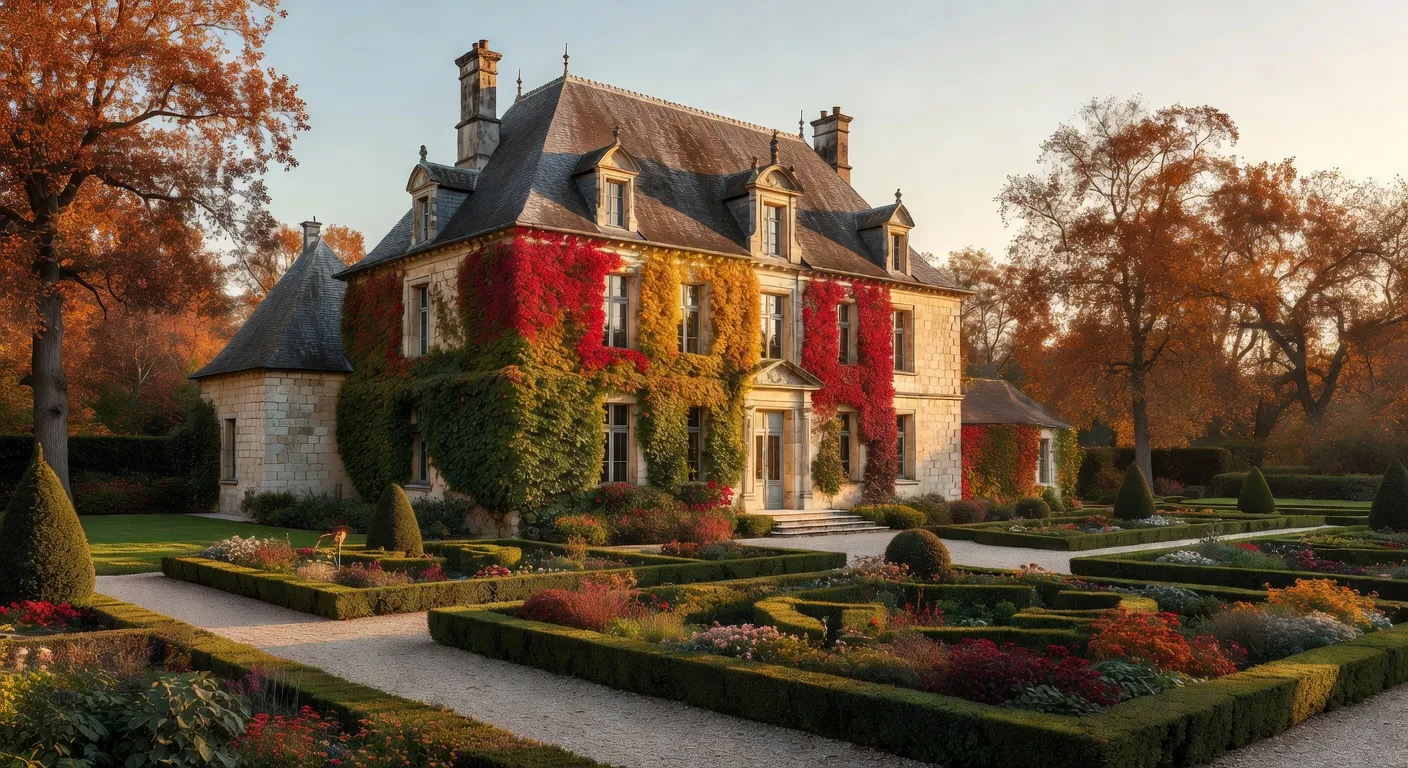
"Manor". The word has something hushed, almost ceremonious about it. It evokes stone patinated by centuries, symmetrical gardens, wood-panelled libraries and the silence of a private park. Yet behind this literary image hides a very precise architectural and legal reality, inherited from a feudal system that has disappeared but whose vestiges still dot the rural landscapes of France — and of Quebec.
Before tackling the distinctions from the castle, the villa or the chalet, we must first understand what a manor actually designates. Spoiler: neither size nor luxury alone suffices to define the term.
What is a manor? Clear answer in 30 seconds
The manor is the principal residence of a seigneur on his rural estate under the feudal Ancien Régime (Europe) or the seigneurial regime (New France, 1627-1854). It differs from the castle (which has a defensive purpose) by its lack of fortification: no moats, no military corner towers, no arrow slits. It differs from the villa (a Mediterranean resort residence) by its anchoring in an agricultural estate and its cut-stone architecture with pitched roofs. It differs from the chalet (a Nordic secondary residence) by its historical status as the seigneur's principal dwelling. A residence can therefore be large without being a manor, and a manor can be modest in size while still being a true manor if it comes from a documented seigneury.
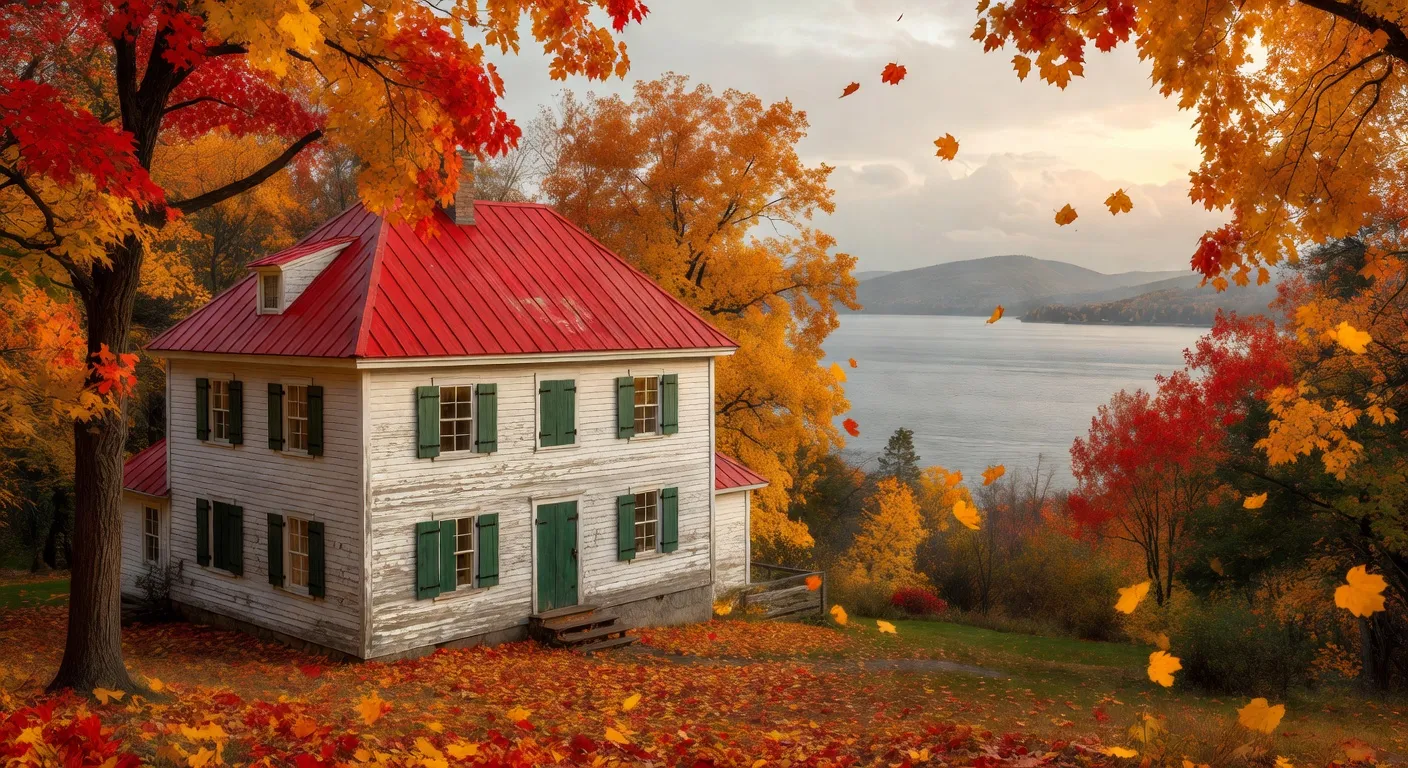
In Quebec, the seigneurial regime granted by the Compagnie des Cent-Associés in 1627 and abolished in 1854 left about two hundred built manors. Some forty still stand and are open to the public, the most iconic being the Mauvide-Genest manor (Île d'Orléans, c. 1734), the Papineau manor (Montebello), the Boucher-de-Niverville manor (Trois-Rivières) and the Cataraqui manor (Quebec City). Quebec manors display a specific vernacular architecture: thick fieldstone walls (up to 90 cm), steeply pitched roofs for snow, massive cut-stone chimneys, small-paned windows, gabled dormers. This architecture serves the residential function of a seigneurial family and the administration of an agricultural estate (rents, seigneurial courts, storage and livestock outbuildings). The word "manor" therefore designates both the dwelling and its social and economic role within the seigneury it administers.
Manor: the exact definition
Etymologically, the word manor comes from the Latin manere, meaning "to dwell", "to remain". It produced the French verb "manoir" (archaic, equivalent to "dwell") and the noun we know. In its first sense, the manor is simply a place where one dwells — but not just any place.
In medieval law, the manor designates the principal residence of a seigneur on his fief. It is a high-standing rural dwelling, set at the heart of an agricultural estate, housing both the seigneurial family and the administration of the estate (rents, jurisdiction, land management). The manor is not a fortification: it welcomes, administers, presides — but it does not defend.
Today the sense has broadened without diluting. A contemporary manor remains a spacious rural dwelling, old or inspired by historic architecture, built with noble materials, with a high number of rooms (often more than ten), surrounded by a park or landscaped garden, and destined for principal residence or prestigious hospitality.
The history of the manor, from the Middle Ages to 2026
The history of the manor follows that of the European rural nobility. In the Middle Ages, after the breakup of the Carolingian Empire, Western Europe organized around the feudal system: a seigneur holds a fief from his suzerain in exchange for military and administrative services. The seigneur's residence, when it has no defensive purpose (unlike the castle), takes the name of manor.
From the 12th to the 15th century, the typical manor is a rectangular stone building, one or two storeys, with a great common hall (the aula), a private chapel, stables and sometimes a dovecote — an exclusive symbol of seigneurial privilege. The first monumental chimneys appear in the 14th century.
From the 16th century, under Italian Renaissance influence, manor houses grew more ornate: mullioned windows, sculpted facades, French formal gardens designed by regional Le Nôtres. The 17th and 18th centuries saw the manor become a symbol of refinement rather than power: one entertains there, collects there, plays music there.
The Quebec adventure: the seigneurial manors of New France
The history of the manor in Quebec is fascinating because it compresses several centuries of European evolution. When France established the seigneurial regime in New France in 1627, it transposed the feudal system onto the banks of the St. Lawrence. The seigneurs received grants, cleared land, built manors and collected rents from their censitaires (peasant tenants).
The Mauvide-Genest manor, on Île d'Orléans, is one of the finest preserved examples. Built in 1734 by Jean Mauvide, surgeon to King Louis XV, it marries local fieldstone with Norman framing techniques. The Papineau manor in Montebello dates from the mid-19th century and belonged to Louis-Joseph Papineau, a figure of the 1837 Patriote rebellion. Its neoclassical silhouette still overlooks the Ottawa River.
The abolition of the seigneurial regime in 1854 transformed these dwellings, but many were preserved as museums, interpretation sites or classified private residences. For an overview of the regions where you can stay in a chalet near these historic places, the guide to the best chalet getaways in Quebec overlaps several seigneurial manor regions.
Architectural characteristics of the manor
Beyond the legal and historical definition, a manor is recognized by a bundle of architectural characteristics that stay relatively stable from one era to the next.
The plan
The manor is almost always organized around a great central hall (the medieval aula, then the classical salon de réception). This room, often double-height under the ceiling, structures the whole building. On either side open the private rooms (bedrooms, library, music room) and the service rooms (kitchen, pantry, laundry).
Older manors favour a compact rectangular plan, sometimes U-shaped around a courtyard of honour. Neoclassical manors (18th-19th centuries) open an axial perspective that crosses the whole building from facade to facade.
The materials
Cut stone remains the king of materials: limestone in western France, granite in Brittany and the Limousin, sandstone in the Vosges, fieldstone in Quebec. The roof is slate, flat tile or (in Quebec) tin plate then galvanized steel. The frames are oak or pine, hand-hewn with the axe on the oldest examples.
Characteristic decorative elements
- Corner turret or stair turret: inherited from the castle, it defends nothing but marks the owner's status.
- Monumental chimneys: often with ornate hoods, in carved stone, sometimes decorated with the family coat of arms.
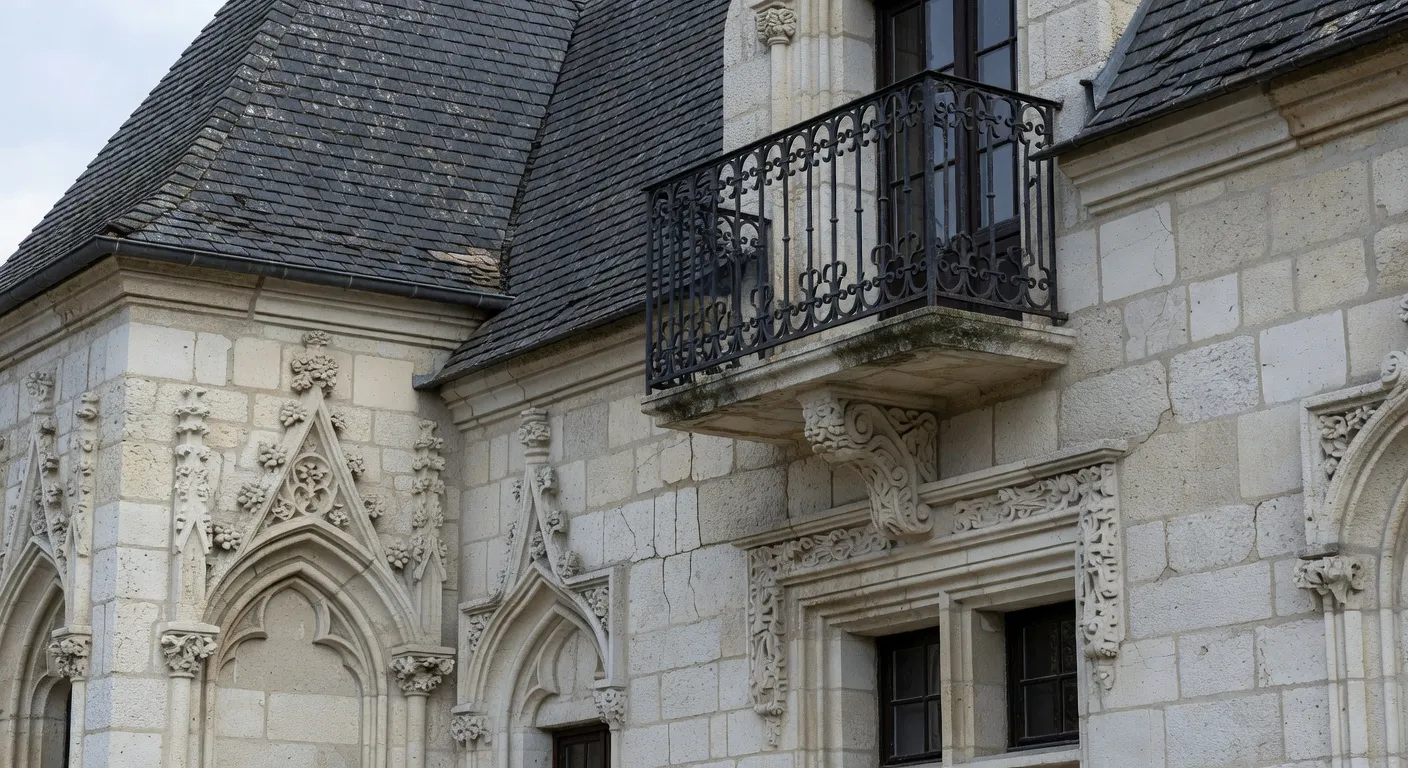
- Mullioned windows: stone crosses dividing the window into four. A Renaissance hallmark.
- Ornate dormers: in the roof, often with sculpted gables.
- Dovecote or pigeon house: freestanding or integrated, it was until 1789 an exclusively seigneurial privilege in France.
- Private chapel: almost always present on manors before 1789.
In Quebec, climate adaptation imposed specifics: very steep roofs for snow, "lucarnes" (projecting platforms) to break ice flows, double windows and thick stone (often 60 to 80 cm) for winter insulation. These Nordic architectural principles are found today in the design of contemporary luxury chalets — a topic covered in detail in our interview with architect Marc Tremblay.
Manor vs castle: the difference is clear
This is the most frequent question, and the answer is surprisingly simple: the castle was designed for war, the manor for peace.
A castle by definition has a serious defensive system: ramparts, moats, drawbridge, watchtowers, machicolations, battlements, keep. Its primary function is the military protection of a strategic point on the territory. From the 16th century, when gunpowder made these devices obsolete, the castle turned into the residential château (Chambord, Chenonceau) that keeps the aesthetic codes without the military function.
The manor, for its part, has been a civilian rural residence from the start. It may have a low wall enclosing the estate or decorative turrets, but never a credible defensive system. Its reason for being is residential, not military.
In practice, boundaries can blur: some 15th-century manors keep anachronistic defensive elements out of tradition, and small 17th-century residential châteaux are sometimes called "manors" by their modern owners. The golden rule still holds: a real defensive system = castle; none = manor.
This confusion also feeds its modern counterpart — manor, villa or chalet? — which we covered in detail in our manor / chalet / villa comparison.
12 manor houses to visit in Quebec and France in 2026
Here is a selection of manor houses open to the public, to prioritize for a cultural visit or a heritage stay.
In Quebec
- Mauvide-Genest manor (Île d'Orléans) — 1734, the oldest preserved manor in Quebec.
- Papineau manor (Montebello, Outaouais) — neoclassical residence of the Patriote leader.
- LeBoutillier manor (Gaspésie) — cod-fishing pioneer, Jersey charm.
- Globensky manor (Saint-Eustache, Laurentians) — remnant of the 1837 rebellion.
- Cartier manor (Saint-Antoine-sur-Richelieu) — residence of Sir Georges-Étienne Cartier.
- Boucher-de-Niverville manor (Trois-Rivières) — one of Canada's oldest urban civic buildings.
In France
- Manoir d'Argentelles (Orne, Normandy) — 15th century, archetype of the half-timbered Norman manor.
- Manoir de Coupesarte (Calvados) — 15th-century half-timbered jewel on moats.
- Manoir de Brion (Mont-Saint-Michel) — panoramic view over the bay.
- Manoir d'Ango (Seine-Maritime) — Italian Renaissance in Normandy, exceptional dovecote.
- Manoir de Kerazan (Finistère) — collections of Breton art.
- Manoir des Renaudières (Maine-et-Loire) — Angevin Renaissance, remarkable gardens.
Manor prices in 2026: orders of magnitude
How much does a manor cost today? The answer depends on three factors: historical authenticity, condition of the building and region.
| Type of manor | Region | 2026 range |
|---|---|---|
| 15th-16th century manor to restore | Normandy, Brittany, Limousin | €300,000 to €800,000 |
| Restored 17th-18th century manor | Loire, Touraine, Périgord | €1M to €4M |
| Manor with park and classified outbuildings | All prestigious regions | €4M to €15M+ |
| "Manor-style" residence built after 1900 | Eastern Townships, Laurentians, Charlevoix | CA$1M to CA$5M |
| Nightly manor rental in Quebec (high end) | Charlevoix, Eastern Townships | $800 to $3,500 CAD / night |
To these prices add maintenance costs that are often underestimated: an authentic manor consumes 3 to 5% of its value per year in upkeep (roof, facades, heating, garden, local taxes).
Restoring a manor: the rules to know
If the idea of restoring a manor appeals to you, know that it is more demanding than romantic. In France, a manor classified as a Monument Historique imposes strict respect for original materials and techniques, under the control of the Architectes des Bâtiments de France. In Quebec, manors listed on the Quebec heritage register (Cultural Heritage Act) require prior ministerial authorization for any visible modification.
Cost overruns compared to a standard renovation are significant: traditional slate instead of shingle, aerial lime instead of cement, cut stone repointed the old way, hand-shaped curved framing. Expect €2,000 to €4,500 per m² of renovated living space for work compliant with heritage rules.
In return, these properties unlock powerful fiscal mechanisms: in France, the Malraux law and Monument Historique status allow deducting up to 100% of the work from taxable income. In Quebec, subsidies from the Ministère de la Culture and municipal aid are available for listed properties.
No manor budget? The luxury lakeside cottage
For many people, the dream behind the manor is not the stone but the experience: a large private estate, silence, a park, a lake, a fireplace, high-ceilinged rooms, a weekend outside of time. That experience is now widely available through lakeside chalet rentals in Quebec, at budgets that have nothing in common with manor ownership.
A contemporary luxury chalet in the Laurentians or Mauricie often offers: a private estate of several hectares, a lake with dock, 5 to 8 bedrooms, a stone fireplace, a games room, an outdoor Nordic spa, a panoramic view. All for a weekly rental of $2,000 to $6,000 — the equivalent of one or two nights in some hotel manors of Charlevoix.
The chalets in the Domaine du Lac Marsan collection in the Laurentians or Lac la Peche in Mauricie embody this credible alternative to the traditional manor stay: the same private-estate atmosphere, plus water and forest.
And for lovers of historic architecture: the voyage-canada.com travel guides devote several reports to St. Lawrence heritage circuits, which often cross the seigneurial manors open for visits.
Frequently asked questions about manors
Conclusion
The manor is a precise and fascinating architectural category: neither castle, nor villa, nor simple country house, it bears witness to a feudal system that has vanished but whose elegance stands the test of time. Whether one is fascinated by seigneurial history, by cut-stone architecture, or simply by the atmosphere of a private estate in nature, the manor continues to embody a certain art of living.
To taste that atmosphere without assuming its cost or upkeep, a private lakeside chalet stay remains the most credible alternative. Contact us to discover Soleica's prestige chalets in Quebec.