
Visiting a manor in Quebec means immersing yourself in a seigneurial heritage unique in North America. The seigneurial system, established in 1627 by the Company of One Hundred Associates and officially abolished in 1854 by the Act for the Abolition of Feudal Rights and Duties, shaped the territory of the St. Lawrence Valley for more than two centuries. Of the approximately 250 seigneuries granted under the French and British regimes, nearly 200 manors were built, around forty of which are still standing and accessible to the public today. These buildings, witnesses to a bygone era, embodied the manor’s central role as the hub of an agricultural, commercial, and sometimes industrial estate. Each property tells a different microhistory: Jersey merchants in Gaspésie, seigneurial agronomists on the South Shore, hydraulic engineers in the Laurentians, prime ministers, and Patriots of Lower Canada. These manors have survived the challenges of time along contrasting paths: fires in the 19th century, institutional transformations (seminaries, schools, town halls), rigorous restorations in the 1970s and 1980s led by the Ministry of Culture, or preservation by the founding families. The year 2026 will be particularly favourable for visits, with the announced reopening of Manoir Cataraqui after restoration and special exhibitions at Manoir Mauvide-Genest to celebrate its 290th anniversary. Whether you are passionate about architecture, a history enthusiast, or simply curious, discovering these buildings will help you better understand the cultural evolution of the St. Lawrence Valley. To prepare for your stay, first see our guide to the definition and history of the manor in Quebec, which explains the architectural features and chronology of the seigneurial system.
1. Manoir Mauvide-Genest (Île d’Orléans, circa 1734)
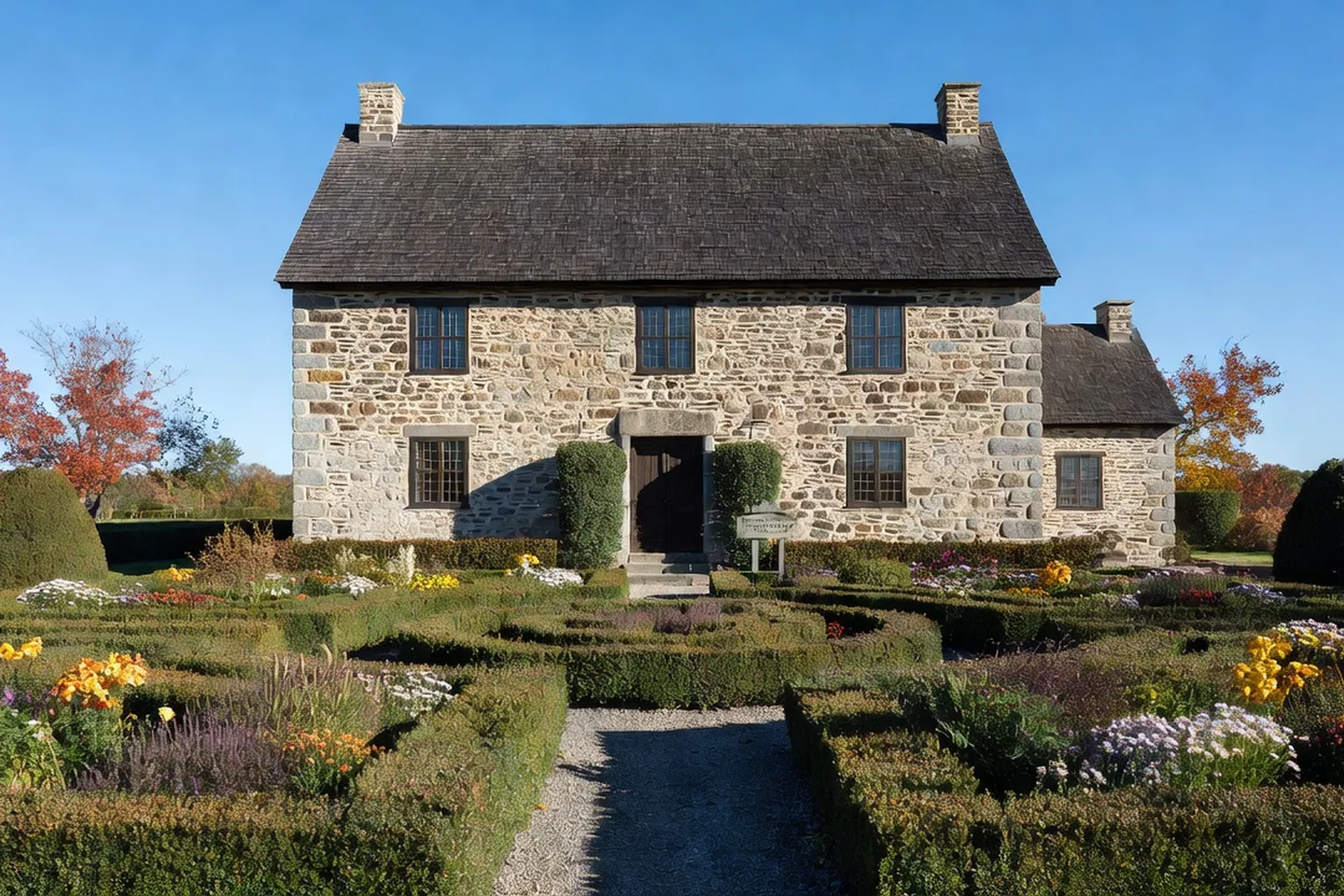
Located in Saint-Jean-de-l’Île-d’Orléans, Manoir Mauvide-Genest is one of the oldest surviving intact seigneurial manors in New France. Built around 1734 by Jean Mauvide, a French-born naval surgeon, this fieldstone building is remarkable for its sharply pitched roof, arched window surrounds, and dressed-stone chimneys—typical of the seigneurial architecture of the St. Lawrence’s South Shore at the time. Mauvide transformed the manor into an important maritime trading centre for the island, near the port of Saint-Jean. Today, it houses a museum with seasonal exhibitions on life under the French regime and a formal French garden reconstructed from 18th-century archives. Visitors can enjoy guided tours during the summer season (June to October), ideal for families and school groups. Admission: $12 per adult. An architectural comparison with other vacation properties will help you grasp the manor’s uniqueness in relation to the Quebec chalet (interview with an architect)—the distinction between a seigneurial residence and a rural home is instructive.
2. Manoir Papineau (Montebello, Outaouais, mid-19th century)
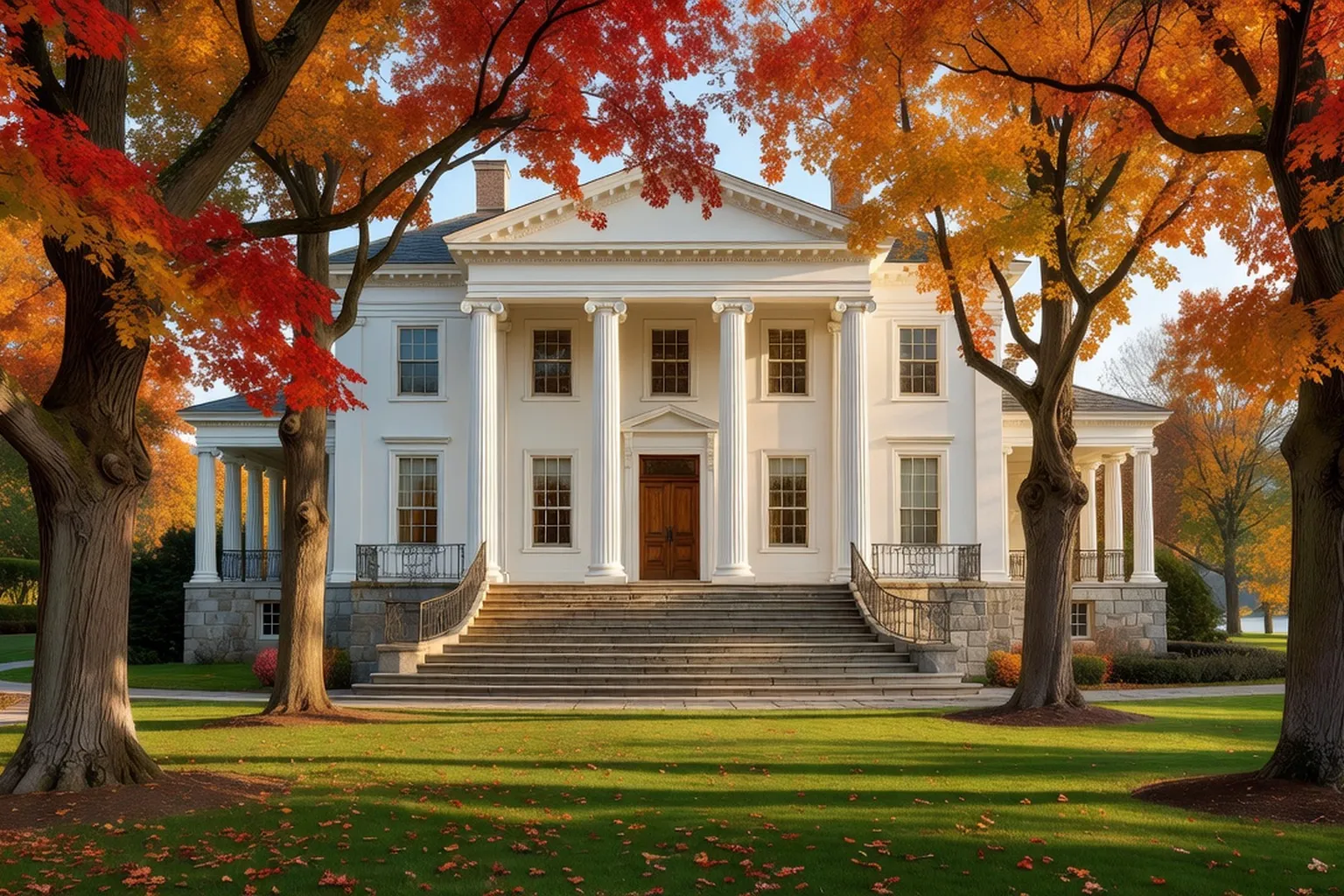
Manoir Papineau, located in Montebello in the Outaouais region, was built between 1846 and 1850 for Louis-Joseph Papineau, the famous leader of the Patriot Party of Lower Canada. This Neoclassical manor, with its monumental porch featuring Doric columns and its landscaped grounds spanning more than 100 hectares, is one of Canada’s largest heritage estates. The symmetrical façade and sash windows reflect the British influence on mid-19th-century architecture. Following the 1837-1838 rebellion and his exile in France and the United States, Papineau made the manor his primary residence from 1850 until his death in 1871. Managed by Parks Canada since 1993, it offers guided tours and interactive exhibitions open year-round (with reduced hours outside the main season) and attracts a broad audience, particularly enthusiasts of 19th-century political history and families. Admission is included with the Parks Canada pass.
3. Manoir LeBoutillier (Gaspésie, circa 1850)
The home of Jersey merchant John LeBoutillier, located in L’Anse-au-Griffon on the Forillon Peninsula, is a remarkable example of the vernacular architecture of the Gaspé coast. Built around 1850, this white-painted wooden manor, with a gable roof and pedimented dormers, reflects the Anglo-Norman influence of the Jersey merchants who dominated the salt cod economy in the 19th century. John LeBoutillier (1797-1872) used this manor as the nerve centre of his commercial operations: “Charles Robin & Company” and its Jersey competitors (foremost among them the LeBoutilliers) shaped Gaspésie’s fishing economy for 150 years. Now managed by Parks Canada as part of Forillon National Park, the manor houses an interpretation centre on the salt cod economy and the lives of Jersey families. Visitors can explore the site freely during the summer season (June to October).
4. Manoir Globensky (Saint-Eustache, Laurentians, circa 1865)
Built around 1865 for Charles-Auguste-Maximilien Globensky, Manoir Globensky stands in the heart of Saint-Eustache. Erected on the site of a former residence destroyed during the Battle of Saint-Eustache (December 14, 1837), this Victorian-style building is distinguished by its towers, carved wooden balconies, and ornate dormers. Globensky, a descendant of a Polish family that settled in Lower Canada in the 18th century, was a prominent local Conservative. The manor currently serves as a cultural centre and municipal library for the City of Saint-Eustache. It offers guided heritage tours that delve into local history, particularly the Patriots’ Rebellion—Saint-Eustache remains a major place of remembrance for this episode. The tours are specially designed for school groups from the Greater Montreal area and enthusiasts of Lower Canadian history. Free admission.
5. Manoir Trent (Drummondville, Eastern Townships, early 19th century)
Manoir Trent is located in Drummondville, in the Centre-du-Québec region, on the grounds of Domaine Trent, which was bequeathed to the municipality. This British estate, built for the Trent family in the early 19th century, features light-coloured wooden colonial architecture characterized by broad covered porches and painted wooden shutters. One interesting detail is the interior design, which reflects 19th-century British comfort: a suite of adjoining reception rooms and a central staircase with turned balusters. Today, it operates as a rural interpretation centre and public park, offering a glimpse into the lives of British settlers who arrived after the American War of Independence. Visitors can take part in educational workshops and guided tours, primarily intended for students and enthusiasts of the history of British settlement in Lower Canada.
6. Manoir Couillard-Dupuis (Montmagny, Chaudière-Appalaches, circa 1789)
Manoir Couillard-Dupuis, in Montmagny, was built in the late 18th century for the seigneurial Couillard family, descendants of Guillaume Couillard, one of the first settlers of New France and Louis Hébert’s son-in-law. This dressed-stone building reflects the architecture of the late French regime, with its thick walls (up to 90 cm), steeply pitched roofs designed for heavy snowfall, and stone chimneys. One interesting anecdote: the Couillard family retained certain seigneurial rights until their complete abolition in 1854, making it one of the Quebec seigneurial families most representative of the transition. Today, the manor houses a museum of the historic town, with a focus on snow goose hunting (the Montmagny archipelago lies along the greater snow goose’s main migration corridor). Guided tours are popular, particularly among birdwatching enthusiasts and families during migration season.
7. Manoir Boucher-de-Niverville (Trois-Rivières, Mauricie, circa 1668-1729)
Located in downtown Trois-Rivières, Manoir Boucher-de-Niverville is among the oldest surviving stone houses in Quebec, with elements dating from the final years of the 17th century. Built for the Boucher de Niverville family, which included French army officers, seigneurs, and merchants, this residence features robust architecture with thick fieldstone walls and a steeply pitched roof characteristic of the French regime. One notable fact: the house served as headquarters during several local skirmishes between 1660 and 1720 and hosted several governors visiting Trois-Rivières (a strategic outpost at the mouth of the Saint-Maurice). Today, it is a museum managed by the City of Trois-Rivières, offering guided tours focused on daily life under the French regime and attracting history students and urban archaeology enthusiasts.
8. Manoir de Charleville (Boucherville, Montérégie, circa 1740)
Manoir de Charleville, built around 1740 for seigneur Pierre Boucher de Boucherville (a descendant of Pierre Boucher, governor of Trois-Rivières), stands in Boucherville’s historic downtown. Its structure, typical of the French regime, includes a stone foundation, a solid timber frame assembled with mortise-and-tenon joints, and a steeply pitched roof. One historical anecdote: the manor was used as a gathering point for local troops during conflicts with the Iroquois in the 17th and 18th centuries, and later as a stop on the King’s Road between Quebec City and Montreal. Acquired by the municipality in the 1980s, it is now a heritage interpretation centre that bears witness to the seigneurial history of Old Boucherville. Tours are available mainly in summer (July-August), with an educational program tailored to schools and local history groups.
9. Manoir de Tonnancour (Trois-Rivières, early 18th century)
A residence of seigneurial origin, Manoir de Tonnancour was built in the early 18th century in Trois-Rivières by Charles de Tonnancour, seigneur of Pointe-du-Lac. Following several successive renovations in the 19th and 20th centuries, it now houses Galerie d’art du Parc, which presents contemporary and heritage art exhibitions that attract art lovers from across the region. One notable architectural detail is its grand carved oak staircase, the centrepiece of the manor’s interior and a testament to the craftsmanship of joiners under the French regime. The manor also served as the residence of several influential Quebec political figures in the 19th century, including members of the responsible government. The exhibitions are accessible year-round, attracting a varied audience, from art lovers and historians to school groups.
10. Manoir Fraser (Rivière-du-Loup, Bas-Saint-Laurent, mid-19th century)
Manoir Fraser, located in Rivière-du-Loup, was built in the 1850s for the Fraser family, Scottish seigneurs who arrived after the British Conquest of 1760. Seigneur Alexander Fraser and his descendants played an important role in the economic development of the St. Lawrence’s South Shore in the 19th century. This Neoclassical building, with its Ionic colonnade and triangular pediment, is characterized by its elegant symmetry and large arched windows overlooking the restored Victorian garden. One notable historical fact: the manor served as an administrative centre for the region under British rule and hosted several governors on official visits. Today, it serves as a heritage interpretation centre and hosts various performances and cultural events. Tours are mainly seasonal (May to October), with a program specially designed for families and school groups.
11. Manoir Cataraqui (Quebec City, Sainte-Foy, mid-19th century)
Located in Quebec City’s Sainte-Foy-Sillery borough, Manoir Cataraqui was originally an Anglo-Scottish summer residence built in the 1850s, then converted into the official residence of the lieutenant governor of Quebec between 1908 and 1966. Its Neoclassical architecture, with a colonnade and monumental porch, is now managed by the Commission de la capitale nationale du Québec, which organizes exhibitions, summer concerts, and diplomatic events there. One notable detail: the original ballroom, which hosted numerous official receptions, including Queen Elizabeth II’s visit in 1959, was restored identically according to the original plans. The manor recently underwent a major restoration (2024-2025) to preserve its architectural integrity and improve public accessibility. Open year-round, it offers guided tours and welcomes a varied audience, from tourists to school groups. To better understand the nuances between types of heritage residences, also read our comparison manor, chalet, or villa: 7 essential differences, which clarifies what distinguishes a manor from other architectural forms.
12. Manoir Rouville-Campbell (Saint-Hilaire-sur-Richelieu, Montérégie, circa 1850)
Manoir Rouville-Campbell, built in the 1850s for Major Thomas-Edmund Campbell, former aide-de-camp to the governor general of the Province of Canada, is located in Mont-Saint-Hilaire on the banks of the Richelieu River. This Gothic Revival manor, with its Scottish-inspired turrets and pointed-arch windows, is a striking example of the influence of Victorian Gothic architecture in Lower Canada. One interesting fact: the manor was designed to impress potential royal visitors and to host fox hunts organized by the Campbell family. It is now a heritage hotel and restaurant, hosting weddings, banquets, and private events by reservation. Accessible year-round, it is particularly popular for luxury events and weddings themed around Victorian heritage. Wedding photography in a heritage setting is a speciality of the venue—the encyclopedic entry on the manor as a seigneurial building documents the model’s European origins and colonial variations, helping readers understand the evolution of this architectural type.
Summary table: region, current use, public opening
| # | Manor | Region | Current use | Public opening |
|---|---|---|---|---|
| 1 | Mauvide-Genest | Capitale-Nationale (Île d’Orléans) | Museum | June to October |
| 2 | Papineau | Outaouais (Montebello) | Parks Canada heritage site | Year-round |
| 3 | LeBoutillier | Gaspésie (L’Anse-au-Griffon) | Parks Canada interpretation centre | June to October |
| 4 | Globensky | Laurentians (Saint-Eustache) | Cultural centre + library | Year-round |
| 5 | Trent | Centre-du-Québec (Drummondville) | Rural interpretation centre | June to September |
| 6 | Couillard-Dupuis | Chaudière-Appalaches (Montmagny) | Historic town museum | May to October |
| 7 | Boucher-de-Niverville | Mauricie (Trois-Rivières) | Museum | Summer + fall |
| 8 | de Charleville | Montérégie (Boucherville) | Interpretation centre | July-August |
| 9 | de Tonnancour | Mauricie (Trois-Rivières) | Galerie d’art du Parc | Year-round |
| 10 | Fraser | Bas-Saint-Laurent (Rivière-du-Loup) | Interpretation centre | May to October |
| 11 | Cataraqui | Capitale-Nationale (Quebec City) | CCN site | Year-round |
| 12 | Rouville-Campbell | Montérégie (Mont-Saint-Hilaire) | Hotel + restaurant | Year-round |
For those wishing to continue with an authentic riverside stay near several manors (Cataraqui in Quebec City, Mauvide-Genest on Île d’Orléans, Couillard-Dupuis in Montmagny, Fraser in Rivière-du-Loup), compare our feature on chalets in Charlevoix in 2026: Baie-Saint-Paul, La Malbaie, Petite-Rivière to identify the area best suited to your heritage tour.
FAQ
Which Quebec manor is the oldest one still open to visitors?
Manoir Boucher-de-Niverville in Trois-Rivières is among the oldest surviving stone houses in Quebec, with elements dating from the final years of the 17th century. Manoir Mauvide-Genest on Île d’Orléans, built around 1734, is the oldest surviving intact seigneurial manor in New France and remains the purest example of its kind.
Can you celebrate a wedding in a heritage manor in Quebec?
Yes. Several manors offer wedding packages with accommodation, catering, and a ceremony venue. Manoir Rouville-Campbell in Mont-Saint-Hilaire, Manoir Boucher-de-Niverville by reservation, and Manoir Cataraqui in Quebec City are the main options in 2026. Prices range from $8,000 to $35,000 depending on the package and number of guests. Reservations are made 12 to 18 months in advance.
Which manors in Quebec are managed by museums or public organizations?
Manoir Papineau in Montebello and Manoir LeBoutillier in Gaspésie are managed by Parks Canada, Manoir Cataraqui by the Commission de la capitale nationale du Québec, Manoir Mauvide-Genest by a non-profit corporation, and Manoir Globensky by the City of Saint-Eustache. The others are managed by municipalities, local cultural organizations, or private operators under heritage agreements.
Which manors are open year-round versus only during the summer season?
Manoir Cataraqui, Manoir Globensky, and Manoir de Tonnancour (art gallery) are open year-round. Manoir Mauvide-Genest, Manoir LeBoutillier, Manoir Couillard-Dupuis, and Manoir de Charleville operate mainly during the summer season. Manoir Papineau is open year-round but with reduced hours outside the main season. Manoir Rouville-Campbell is open year-round by reservation for its hotel services.
How much does it cost to visit a heritage manor in Quebec in 2026?
Admission ranges from $6 to $18 per adult for manor museums. Parks Canada manors (Papineau, LeBoutillier) are included with the Parks Canada pass ($75 annually). Municipal manors (Globensky) are often free or charge a nominal fee. Specialized guided tours cost an additional $5 to $12.
Conclusion
With its 12 manors open to visitors, Quebec offers a rich and diverse cultural experience. These buildings, spread across the province (4 in the Quebec City/South Shore region, 3 in Mauricie/Central Quebec, 3 in Montérégie/Laurentians/Outaouais, 1 in Gaspésie, 1 in Bas-Saint-Laurent), are living witnesses to the seigneurial era and the transition to British rule. Visitors can consider several heritage tours: the “South Shore Manors” tour (Mauvide-Genest + Couillard-Dupuis + Fraser) makes it possible to explore the South Shore in 3 days and combines well with a stay in a riverside chalet. The 4-day “Outaouais and Townships Manors” tour (Papineau + Globensky + Rouville-Campbell) reveals three centuries of heritage in the heart of Montérégie and Outaouais. The 2-3-day “Urban Manors” tour (Cataraqui + Mauvide-Genest + Boucher-de-Niverville + de Tonnancour) makes it possible to visit four manors in accessible urban settings. The heritage conservation of these buildings is crucial and often depends on public funders (Quebec’s Ministry of Culture, Parks Canada, municipalities) and private ones (heritage foundations, patronage)—ensuring their preservation for future generations. Each manor tells a unique story and provides a window into the past, enriching our understanding of Quebec heritage. Exploring these places also means supporting the preservation of our collective cultural legacy.