
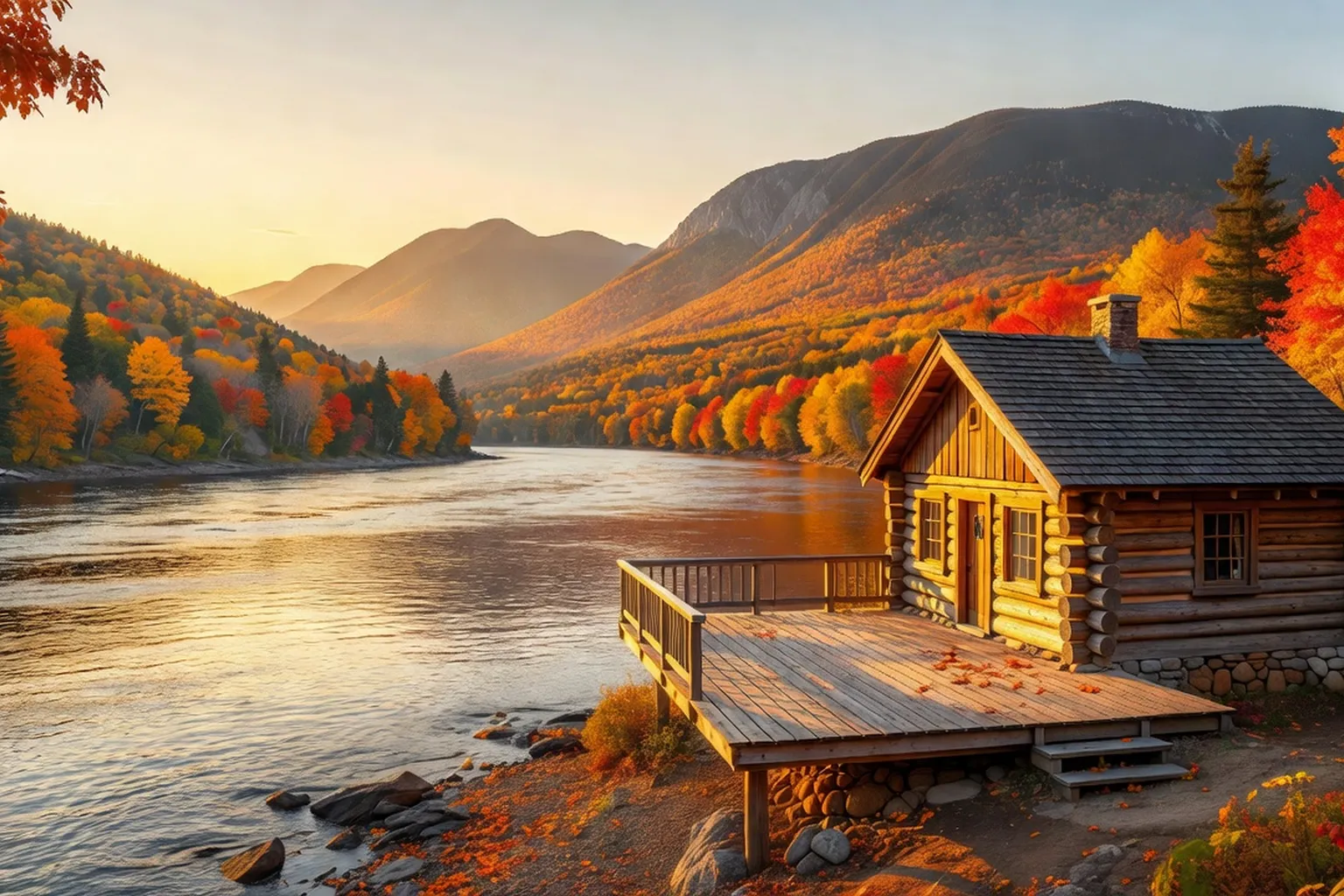
A UNESCO-recognized World Biosphere Reserve since 1988, Charlevoix occupies a special place in Quebec’s tourism imagination. The region stretches along nearly 200 kilometres of coastline between Baie-Saint-Paul and Tadoussac, with a succession of villages, headlands, tidal flats, and plateaus that form the province’s most filmed scenery after Quebec City. Renting a chalet in Charlevoix in 2026 means choosing a region where nature sets the pace: the tide rises twice a day, mist rolls in from the river in the late afternoon, and the Laurentian Mountains plunge directly into the St. Lawrence Estuary.
This guide explores the region’s three must-see subareas—Baie-Saint-Paul and its hinterland, La Malbaie and the St. Lawrence coast, and Petite-Rivière-Saint-François and the Massif area—identifying for each the right chalet profile, four-season activities, average 2026 prices, and pitfalls to avoid when booking. If you are still deciding between Charlevoix and another region, see also our comparative guide to the 4 regions where you can rent a chalet in Quebec.
Why Charlevoix in 2026?
Within a fifty-kilometre radius, Charlevoix brings together three ecosystems found in few other regions of Quebec: an estuary shoreline where salt water and fresh water mix with the tides, an inland plateau sculpted by a 360-million-year-old meteorite crater, and a mountain range culminating at 1175 metres at Mont du Lac à Empêche. For visitors, this geological diversity translates into a variety of landscapes that the eye never tires of observing from a chalet terrace.
The year 2026 marks a tourism revival for the region. After two record-breaking seasons in 2024 and 2025, several operators renovated their facilities, the Train de Charlevoix expanded its range of scenic routes, and new producers joined the Route des saveurs. Chalet availability during high season (mid-July to mid-August, fall foliage season in September–October, Christmas holidays, and the March school break) nevertheless remains tight: book four to six months in advance for waterfront chalets and three months for chalets in the hinterland.
Finally, Charlevoix benefits from steadily improving accessibility: 90 minutes from Quebec City via Route 138, about 4 h from Montreal via Highway 40 and then Route 138, and the option of taking the Train de Charlevoix for part of the journey (Quebec City–La Malbaie, about 3 h 30 with scenic stops).
Baie-Saint-Paul: the artistic heart of the region
Baie-Saint-Paul is the natural gateway to Charlevoix when arriving from Quebec City. The village stretches through a steep-sided valley where the Rivière du Gouffre meets the St. Lawrence River, forming an alluvial fan that long served as a strategic site for agriculture and later for the paper industry in the early 20th century. Today, Baie-Saint-Paul is best known for its exceptional concentration of art galleries—more than 25 along the streets of the village centre—and for its preserved architectural heritage.
The right chalet profile
In Baie-Saint-Paul, most rental chalets are located in the hinterland, a 5- to 15-minute drive from the village centre. There are three distinct subareas:
-
Chemin du Cap-aux-Corbeaux offers chalets perched high above the bay with sweeping views. This is the premium option, with prices starting at around $350 per night in low season and reaching $700 to $1100 in high season for a chalet accommodating 6 to 8 people.
-
Rang Saint-Antoine and the Gouffre Valley offer more traditional log chalets, often with river access. Expect to pay $220 to $450 per night.
-
The heights of Côte Saint-Laurent (toward Saint-Hilarion) provide access to a more boreal playground, with access to inland lakes. Rates: $180 to $380.
Signature activities
Downtown Baie-Saint-Paul alone is worth a full day: the Musée d’art contemporain (renovated in 2025), the galleries on Rue Saint-Jean-Baptiste, the MicroBrasserie Charlevoix microbrewery, and the International Contemporary Art Symposium held every summer in early August. The inland area, meanwhile, offers more nature-based activities: hiking along the Sentier des caps de Charlevoix, cycling on the Le Massif bike trail, and stargazing in the International Dark Sky Reserve.
La Malbaie: understated luxury on the St. Lawrence coast
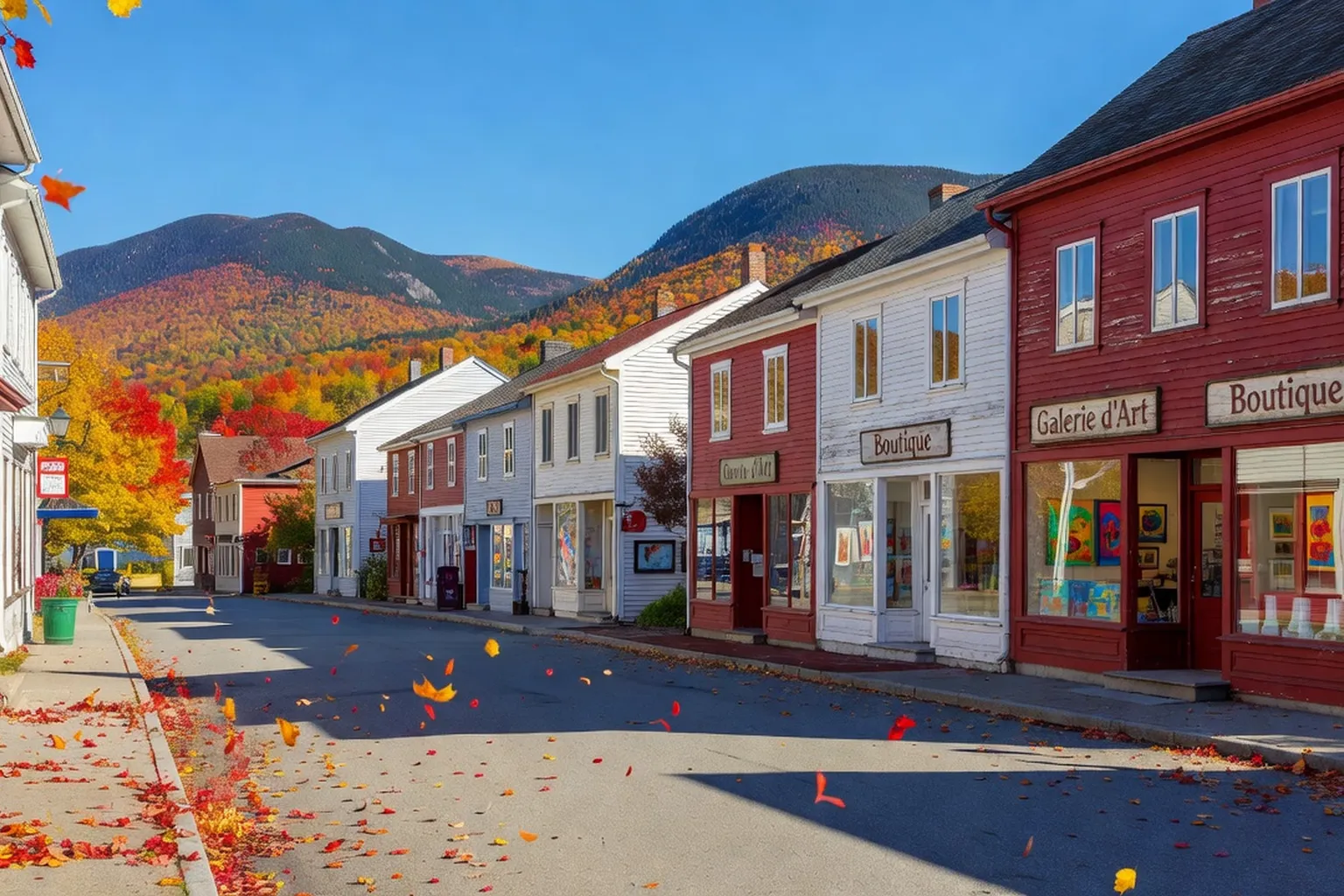
La Malbaie, once a resort capital for Montreal and New York elites at the turn of the 20th century, retains an understated atmosphere that sets it apart from the rest of Charlevoix. This is where the famous Fairmont Le Manoir Richelieu has stood on the Pointe-au-Pic promontory since 1899, and where the first resort communities shaped the village of Cap-à-l’Aigle. For chalet renters, the region offers a rare combination: direct access to the St. Lawrence River at varying tides and a rich culinary scene.
Rental subareas
La Malbaie actually encompasses several former villages that have merged: Pointe-au-Pic, Cap-à-l’Aigle, Rivière-Malbaie, and Sainte-Agnès. Each has its own personality.
-
Pointe-au-Pic offers proximity to the Casino de Charlevoix, Manoir Richelieu, and Train de Charlevoix. Chalets here generally rent for between $280 and $600 per night.
-
Cap-à-l’Aigle, accessible via the Route des Lilas, charms visitors with its gardens and century-old houses converted into inns or luxury chalets. Rates range from $350 to $850.
-
Rivière-Malbaie, at a higher elevation, provides access to Mont Grand-Fonds and a more alpine environment. Expect to pay $220 to $480.
Fine dining as an experience
No getaway to La Malbaie should omit a fine-dining experience. Several establishments have earned multiple accolades: Vices Versa and the restaurant at Manoir Richelieu for the height of luxury, Faux Bergers in Baie-Saint-Paul (with a region-wide reputation) for contemporary regional cuisine, and the farm-to-table restaurant Les Saveurs Oubliées (in Saint-Irénée) for a salt-marsh lamb experience from another era. If you are booking a chalet in Charlevoix with a culinary focus, see also our guide to cooking in a Quebec chalet.
Petite-Rivière-Saint-François and the Massif area
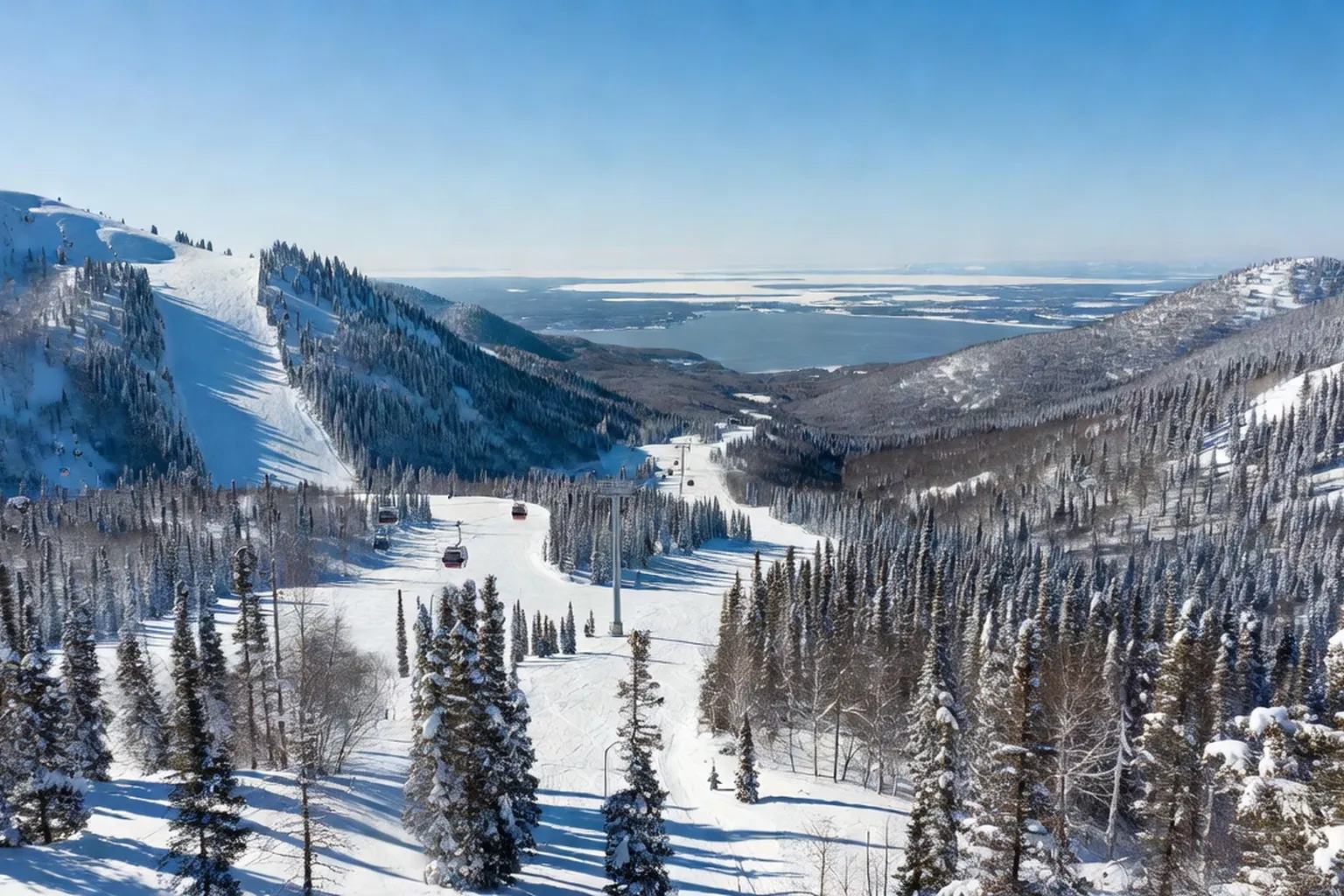
Petite-Rivière-Saint-François is probably the subregion of Charlevoix that has undergone the fastest transformation over the past twenty years. The development of the Le Massif de Charlevoix resort by Daniel Gauthier (co-founder of Cirque du Soleil), inaugurated in 2002, transformed this village of fishers and low-key vacationers into a unique ski-and-river destination unlike any other in the world. From the summit of Le Massif (770 m of skiable vertical drop), you literally descend toward the St. Lawrence River—it is the only resort in North America to offer such a view.
The Massif advantage
The Le Massif resort has 53 runs spread across 406 acres, with average annual snowfall of 645 centimetres—one of the highest totals in Quebec after Le Mont Sainte-Anne. The season runs from late November to mid-April. In summer, Le Massif becomes an adventure park: rail sledding (the legendary “Skyline”), hiking, cycling, and paragliding. Since 2021, the site has also been home to Club Med Charlevoix, the chain’s first four-season all-inclusive resort in North America.
The ski-in/ski-out chalet
The dream of every ski-trip enthusiast is a ski-in/ski-out chalet. In Petite-Rivière-Saint-François, several luxury chalet developments have emerged around the resort: Domaine des Vagues, the Cap Maillard area, and the chalets around Hameau Saint-François. Winter high-season rates: $600 to $1500 per night for chalets accommodating 6 to 12 people.
For more modest budgets, an attractive option is to rent a chalet a 10- to 15-minute drive from Le Massif, in the Saint-Tite-des-Caps or Beaupré area. Expect to pay $180 to $350 for a chalet accommodating 4 to 6 people.
Four-season activities from the chalet
Charlevoix is best experienced over time. For those who want to move from one experience to the next without rushing, here is a seasonal reference guide.
In winter (December to March): downhill skiing at Le Massif and Mont Grand-Fonds, snowshoeing in Parc national des Hautes-Gorges-de-la-Rivière-Malbaie, dog sledding in Saint-Aimé-des-Lacs, viewing the northern lights from higher elevations (January to March), and ice fishing on Lac Pikauba.
In spring (April–May): snow goose watching at Cap Tourmente (April), sugar shacks in the Gouffre Valley, and hiking on low-elevation trails (the Sentier des caps de Charlevoix becomes accessible from mid-May).
In summer (June to August): whale-watching cruises departing from Saint-Siméon or Baie-Sainte-Catherine (up to 13 observable species), hiking in Parc national des Grands-Jardins (low-altitude tundra, unique in Quebec), mountain biking at Mont-Grand-Fonds, and sea kayaking on the river.
In autumn (September to mid-October): spectacular colours between the third week of September and the second week of October, hiking in the Vallée du Gouffre and on Mont du Lac à Empêche, and tastings along the Route des saveurs (cheese économusée, ice wines, and meads). It is also the best season for landscape photography.
Average 2026 prices by subarea
| Subarea | Low season (Nov., April–May) | Shoulder season (June, Sept.) | High season (July–August, Dec.–Feb.) |
|---|---|---|---|
| Baie-Saint-Paul (hinterland) | $180–280 | $280–420 | $420–700 |
| Baie-Saint-Paul (Cap-aux-Corbeaux) | $280–400 | $400–600 | $600–1100 |
| La Malbaie (Pointe-au-Pic) | $220–350 | $350–500 | $500–850 |
| La Malbaie (Cap-à-l’Aigle) | $280–450 | $450–650 | $650–1200 |
| Petite-Rivière (near Le Massif) | $350–550 | $450–700 | $800–1500 |
| Petite-Rivière (other areas) | $180–300 | $280–450 | $450–700 |
Indicative rates for chalets accommodating 6 people, excluding cleaning fees ($60–150) and taxes (5% GST + 9.975% QST + 3.5% lodging tax).
Five mistakes to avoid when booking
First mistake: underestimating Route 138 in winter. Route 138 in Charlevoix is one of Quebec’s most rugged roads (18% grades, blind curves, changing conditions). Approved winter tires are mandatory, but high-performance tires—not merely legally compliant ones—are strongly recommended for navigating the hills of Les Éboulements and La Misère.
Second mistake: confusing a river view with river access. Many chalets at higher elevations (Cap-aux-Corbeaux, Cap-à-l’Aigle) offer magnificent panoramic views, but walking access to the shore can sometimes require a 20- to 30-minute descent. If you want to take out a kayak or go for a dip at high tide, check the actual distance to the water in the chalet description.
Third mistake: failing to anticipate the tide. Tides in La Malbaie have a range of 5 to 7 metres. At low tide, the shoreline extends for hundreds of metres, and the experience is radically different from high tide. Consult the official tide tables on the Fisheries and Oceans Canada website before your stay to plan your coastal activities.
Fourth mistake: choosing a chalet without a fireplace in winter. Charlevoix is cold and windy in winter. A chalet without a wood-burning fireplace or pellet stove is a saving that comes at a high cost in comfort. Check for a backup heating system and the amount of firewood provided.
Fifth mistake: overlooking private roads. Many chalets in Charlevoix are served by private or semi-private roads whose winter maintenance varies. Explicitly ask the host whether the road is plowed, how often, and whether you need to plan for a snowmobile approach from the last plowed point. To better understand the issues specific to lakefront chalets, see also our dedicated guide.
FAQ
What is the best time to rent a chalet in Charlevoix?
For the fall colours, the last week of September and the first week of October offer an exceptional experience (peak colours, mild temperatures, wildlife active before winter). For skiing at Le Massif, February is ideal (maximum snow cover, lengthening days). For whales, mid-August to mid-October maximizes the chances of seeing several species.
How much does a 7-night chalet stay in Charlevoix cost for a family of 4?
Expect to pay $1800 to $3500 for a shoulder-season rental of a chalet accommodating 4–6 people, plus about $800 for food (4 adults or 2 adults + 2 children), $350–500 for fuel and paid activities (a 2-day ski pass, one whale-watching cruise, one museum), for a total budget of $3000 to $5000.
Is Charlevoix accessible without a car?
With difficulty. The Train de Charlevoix connects Quebec City to La Malbaie with limited (seasonal) service. Once there, the lack of regular public transportation severely restricts travel. A car (or renting one locally) is strongly recommended.
Are there waterfront chalets with hot tubs?
Yes, but they represent less than 20% of the rental market. Premium chalets in Cap-à-l’Aigle, around Pointe-au-Pic, or in the new Petite-Rivière-Saint-François developments often include an outdoor Nordic hot tub. High-season rates: $600 to $1500 per night.
Are dogs allowed in Charlevoix chalets?
About 35% of rental chalets accept dogs, generally with an additional fee of $30 to $80 per stay and a size limit. Check the exact conditions with the host when booking. To explore other options for family chalets in Quebec, see our complete guide.
Conclusion
Charlevoix is not a destination you visit—it is a region you inhabit for the duration of a stay. For a first visit, choose Baie-Saint-Paul: the combination of the artistic centre and rolling hinterland offers the best introduction to the region’s diversity. For a contemplative and culinary experience, La Malbaie remains a safe bet. For ski enthusiasts and those seeking athletic challenges, Petite-Rivière and Le Massif have no equal.
Whatever subarea you choose, book early (4 to 6 months ahead in high season), ask about the exact winter access conditions, and remember that the light of Charlevoix—the light painters have pursued since Clarence Gagnon and Marc-Aurèle Fortin—reveals itself only to those who take the time to wait for it. For those wishing to continue exploring, the Wikipedia encyclopedia entry devoted to the Charlevoix region provides an additional reference on its history, the geology of the astrobleme, and the region’s cultural heritage.