
The Soleica newsroom welcomes Julien Tardif, an observational astronomy educator in the Eastern Townships. He explains how to make a chalet stay a simple, calming and accessible opportunity to reconnect with the night sky.
A chalet far from urban lights can become an excellent observing site, provided that you prioritize darkness, an open horizon and a well-chosen evening. Quebec is also home, in the Eastern Townships, to the Mont-Mégantic International Dark Sky Reserve, recognized in 2007 as the first in the world and covering more than 5,000 km². The ASTROLab at Mont-Mégantic National Park offers astronomy activities there.
To extend your desire to spend time outdoors after sunset, our article on a lakefront chalet in Quebec also explores how these landscapes change the experience of a stay.
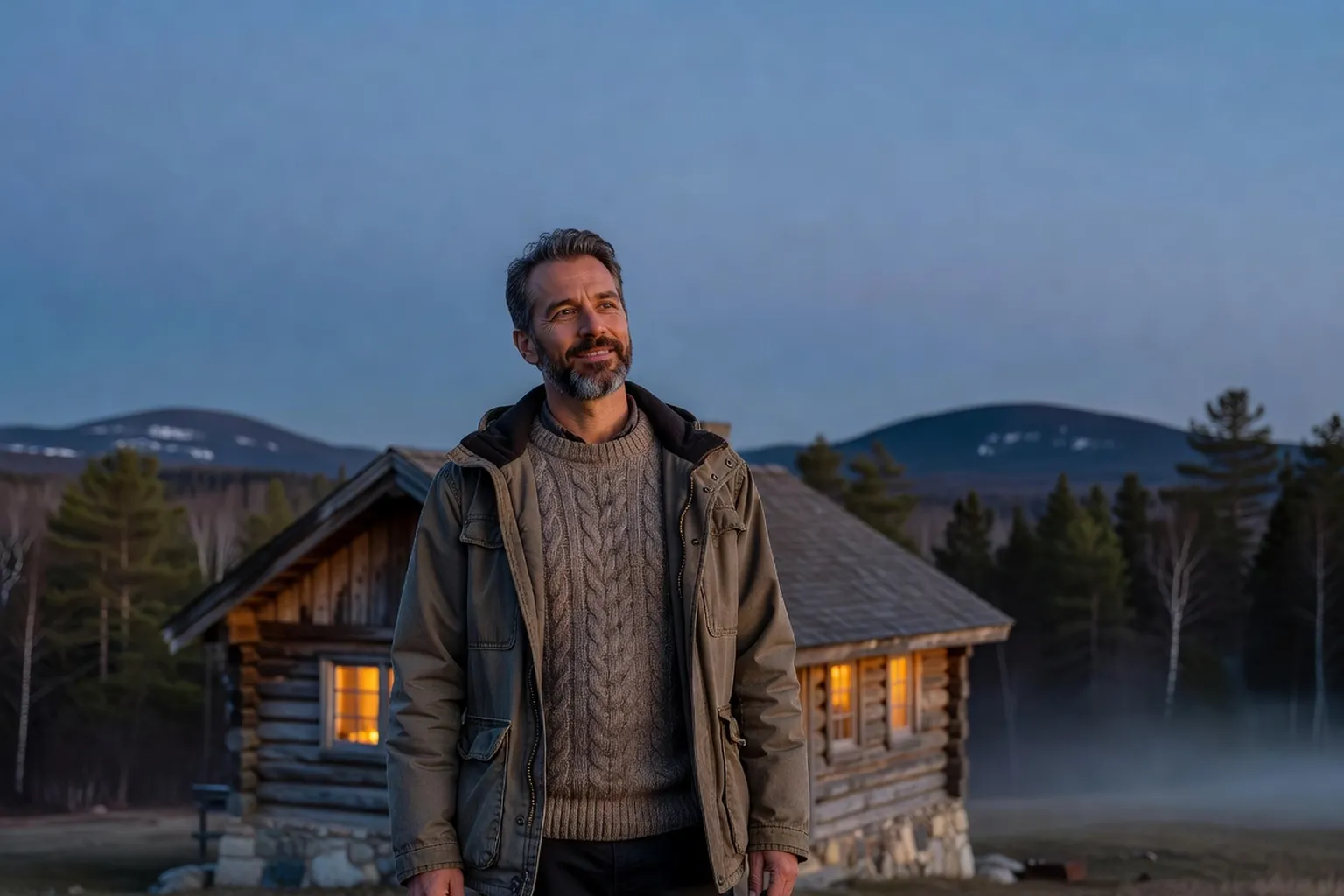
Observational astronomy educator
Julien Tardif is an observational astronomy educator in the Eastern Townships.
Choosing a chalet that lets the night in
Soleica: What makes a chalet far from cities a good place to observe the stars?
Julien Tardif: The first quality is darkness. As soon as surrounding lights become scarce, the sky gains depth and fainter stars begin to appear. A chalet can offer this visual calm, especially when it is not surrounded by neighbouring lighting or fixtures pointed toward the sky. You do not need to look for a spectacular place in the complicated sense of the term: above all, you need to be able to step outside, look up and not be constantly dazzled. The presence of a lake, field or clearing can also open up the view, but the essential thing is to preserve a dark area around you. The night then becomes the true landscape of the stay.
Soleica: What details should you check before booking or when you arrive at the chalet?
Julien Tardif: First, see whether the outdoor space lets you view a good portion of the sky. A large deck, dock or yard without trees too close by can provide a wider horizon. It is helpful to identify fixed lights: those on the façade, in a parking area or on a neighbouring property. If outdoor lighting is necessary, a low-intensity, warm light pointed downward is preferable to a lamp that shines everywhere. You can also ask the host whether it is possible to turn off the outdoor lights while you are observing. This simple consideration often has more effect than adding equipment.
Reading the weather and the Moon
| Plan for | Avoid |
|---|---|
| A forecast for clear skies and a dark outdoor space | A brightly lit yard or a light pointed toward the sky |
| A moonless night or one with a thin crescent when looking for the Milky Way | A full Moon night if your goal is to see the sky’s faintest details |
| A dock or deck offering an open view | A campfire right next to your observing site |
Soleica: How do you choose the best night to observe from the chalet?
Julien Tardif: Start with the weather forecast, because an overcast sky leaves no room for observing, even in the best setting. Next, look at the Moon’s presence. To admire the Milky Way, a moonless night is particularly favourable, because its light can hide the sky’s most delicate areas. A thin crescent can also work, depending on when it is visible. A full Moon does not prevent you from going outside or recognizing constellations or bright celestial objects, but it reduces the sky’s contrast. The idea is to match your expectations to the night available rather than trying to see everything every time you go out.
Soleica: Should you organize your entire stay around the nighttime forecast?
Julien Tardif: It is better to stay flexible. The weather changes, and an evening that seemed less promising can offer a useful break in the clouds, while a favourable forecast can turn cloudy. Simply prepare for your observing session by knowing where to set up, where to place a red light and what clothing to put on. If the sky clears, you will be ready without turning the evening into a complicated operation. To set your expectations according to the seasons and the conditions of your stay, you can consult our guide on when to book your chalet in Quebec. Observing is best kept as an invitation to slow down rather than an obligation.
Enjoying the seasons without pitting them against one another
Soleica: Which season do you recommend for a first evening of observing?
Julien Tardif: Every season brings a different atmosphere. Summer is appreciated for the opportunity to look for the Milky Way in a comfortable setting, when evenings make it easier to stay outside. Mid-August is also associated with the Perseids, a meteor shower that many people enjoy watching from a dark location. Fall offers longer nights, which leaves more room for observing in the rhythm of a stay. Winter requires more thorough preparation, but cold nights are often very transparent. There is therefore no useless season: you need to choose the one that suits your wishes and accept the particularities of the night.
Soleica: Is winter really worth the effort for looking at the sky?
Julien Tardif: Yes, provided you take the cold seriously. When the air is cold and the sky is clear, transparency can be remarkable, and the stars appear very sharp. But discomfort quickly takes your attention away from the sky. You need to dress very warmly, plan appropriate layers and avoid going out thinking that light clothing will be enough because observing is done without moving. Once you are well protected, you can settle in more peacefully and let the night have its effect. Our interview on the four-season chalet in Quebec also addresses how to enjoy stays in nature throughout the year.
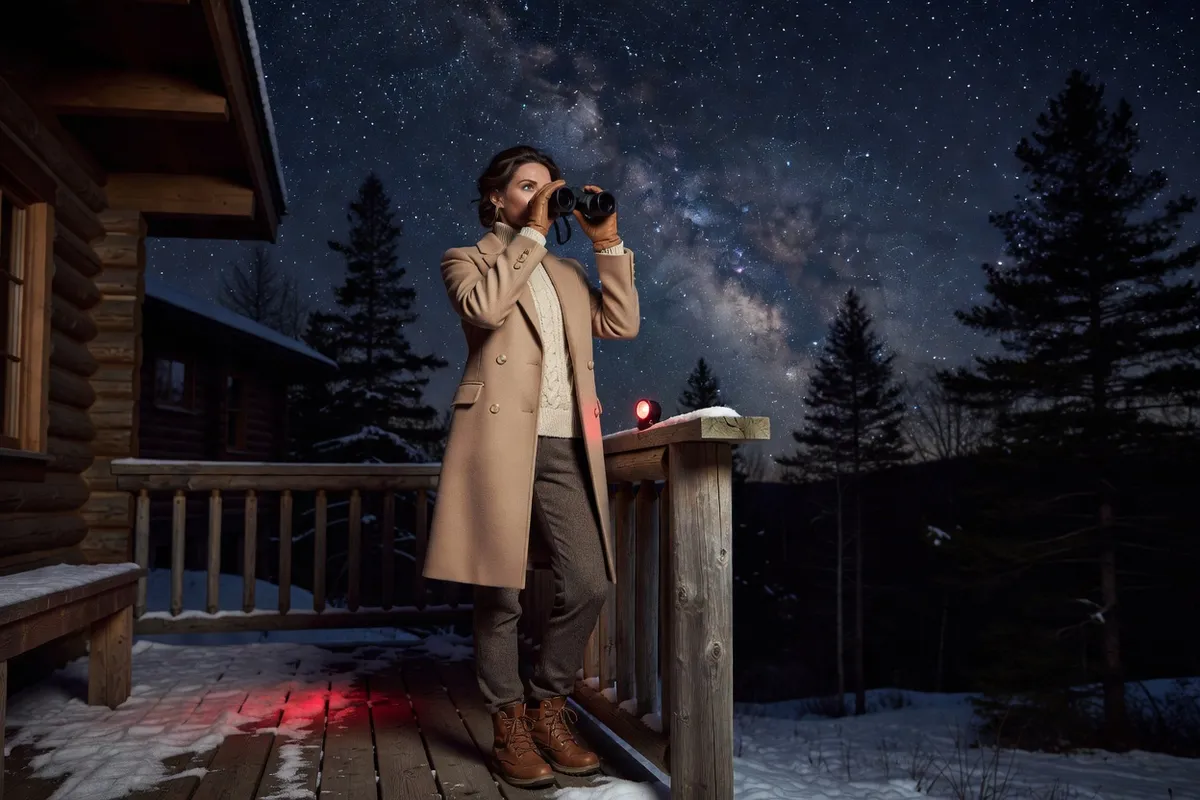
Letting your eyes adjust to the darkness
Soleica: Why do you sometimes see far fewer stars just after stepping out of the chalet?
Julien Tardif: Your eyes need about 20 to 30 minutes in the dark to better detect faint stars. This is an essential step, and it mainly requires patience. A white light or a phone screen can temporarily disrupt this adaptation. It is therefore best to go outside, find your spot, then remain in very low light. Many people believe the sky is empty because they look at it too soon after leaving a lit room. In reality, the night gradually reveals its details when you give it the necessary time.
Soleica: What light should you use without ruining your eyes’ adjustment?
Julien Tardif: A dim red light is a good solution for getting around, checking an object or consulting a sky map without overly disrupting your night vision. The important thing is to avoid direct white light and not point the lamp at another person’s face. For your phone, you can limit its use or switch it to night mode if you absolutely need to look at a map. Keep in mind, however, that the screen remains a light source. The most pleasant approach is often to consult it at the beginning, then put it away and truly observe the sky, without constantly alternating between the screen and the stars.
Recognizing what the sky offers to the naked eye
Soleica: What can you actually see without a telescope from a very dark chalet?
Julien Tardif: The naked-eye sky is already very rich. Depending on the night and the season, you may distinguish the Milky Way as a diffuse presence, recognize constellations, spot bright planets and follow satellites that slowly cross your field of view. During a meteor shower, waiting is also part of the pleasure: it is not about staring at one specific point, but about keeping a wide view of the sky. Shooting stars appear briefly and above all require availability. It is often the first discoveries shared that make an evening memorable, well before the desire to identify every observed object.
The newsroom also invites you to discover how to watch the Northern Lights in northern Canada, in a very different context of nighttime travel.
Starting with binoculars rather than a telescope
Soleica: Are binoculars really enough for beginners?
Julien Tardif: They are often an excellent starting point. Binoculars make it possible to observe the Moon and discover star clusters with appreciable simplicity. They are easy to take out, do not require complex setup and invite you to explore the sky freely. A telescope can be very interesting, but it also brings adjustments and handling that can take attention away from a first evening. With binoculars, you remain in a direct relationship with the sky: you look, you search, you compare what you see with a map. It is a gentle way to develop your eye before deciding whether you want to go further.
Soleica: How can sky map apps help without taking over the whole evening?
Julien Tardif: They are useful for providing reference points. A sky map app can help you associate a group of stars with a constellation or recognize a bright celestial object. Use it as a map, not as the centre of the evening. Consult it briefly, then lower the screen and look for the object with the naked eye. This alternation helps you learn the sky while preserving the quality of your night vision. The goal is not to complete an inventory: it is to orient yourself well enough that shapes and reference points gradually become familiar.
Making observing a shared moment
Soleica: How can you interest children without turning the evening into a lesson?
Julien Tardif: With children, it is best to prioritize curiosity and comfort. To prepare for the stay as a whole, the chalet safety checklist for families with young children remains a good starting point. Rather than trying to name many objects, suggest looking for a very bright star, following the passage of a satellite or waiting together for a shooting star. Let them ask their questions and accept that their attention may shift from a detail in the sky to another nighttime discovery. Safety remains important: choose a stable spot, away from the water if you are on a dock, and keep a dim red light for necessary movement. A successful evening is one in which everyone feels good outside and remembers having looked at the sky differently.
Soleica: Can you combine a campfire and a starry sky?
Julien Tardif: Yes, but you have to accept separating the moments. A campfire creates a warm atmosphere, but it dazzles you and immediately reduces your ability to see faint stars. Enjoy the fire, then move away from it when you want to observe. Then let your eyes return to darkness before judging the quality of the sky. This transition can become a lovely ritual: the group gathers near the fire, then a few people choose to walk toward a dark space, an open deck or a dock. You do not have to pit the two pleasures against each other; you simply need to give each one its time and place. Before lighting anything, remember that the rules on campfires and firewood at the chalet may prohibit all outdoor fires on certain evenings.
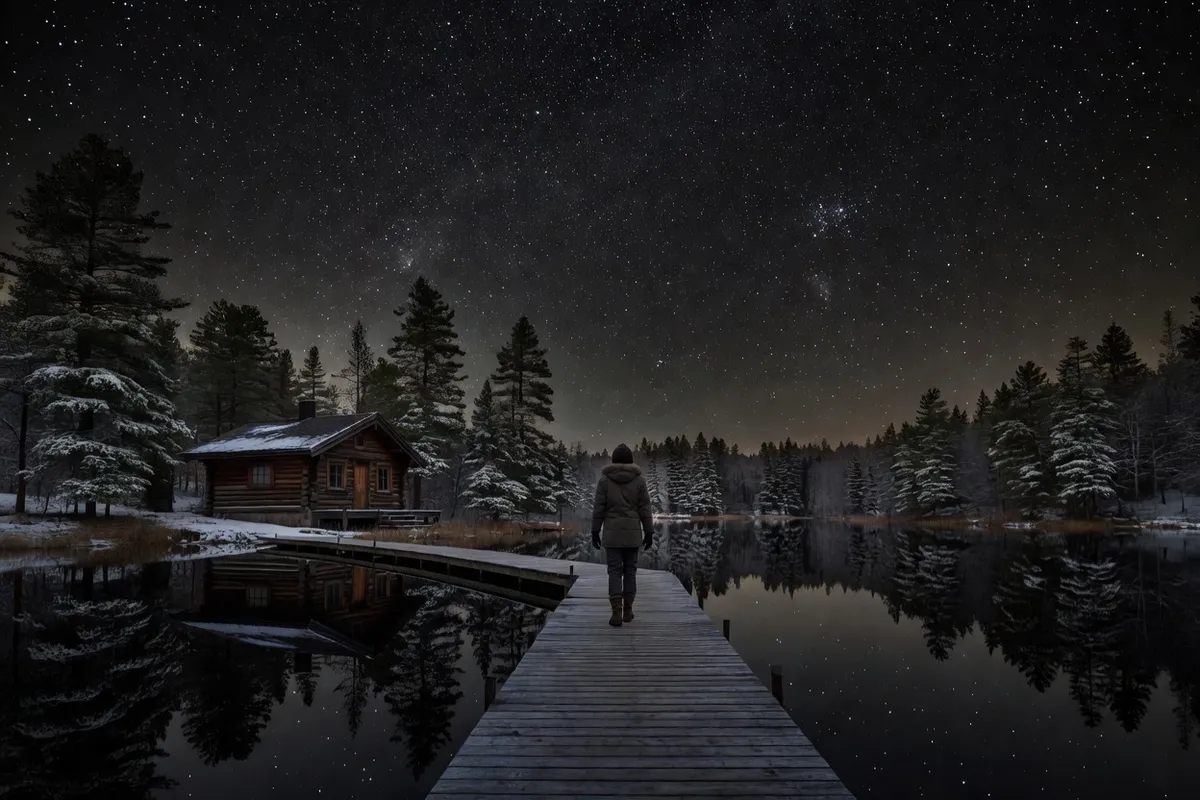
Preparing the ground before nightfall
Soleica: Why scout out your spot in broad daylight?
Julien Tardif: Because ground you know is safer to navigate in the dark. During the day, you can identify steps, roots, the edge of the dock, where to set up chairs and the spot where the horizon remains most open. This keeps you from feeling your way around with a white light and losing your night vision. I also recommend choosing an observing point that is easy to access, with a stable surface where you can sit or lie down on a blanket. If someone is accompanying you, agree in advance on where you will meet. A quiet evening almost always begins with these small preparations, made while it is still light.
Soleica: Are there any considerations to respect toward the host and neighbours?
Julien Tardif: Yes, and it is a matter of good neighbourliness as much as comfort. At night, sound carries, especially by the water: speak softly and avoid loud music, which also benefits observing. Respect the property’s instructions, especially for outdoor lighting and access to the dock or deck. If you asked for a light to be turned off, return it to the way it was upon arrival at the end of the evening so the next occupant is not disoriented. Finally, stay on the property reserved for your stay rather than crossing a property line to seek a better viewpoint.
Photographing the sky without losing the evening
Soleica: Can you bring home a photo of the sky with just a phone?
Julien Tardif: You can try the experience with a phone placed on a stable support, especially if you are mainly looking to preserve the memory of an evening at the chalet. The essential thing is not to hold the device in your hand and to give it a point of support. You also have to accept that the result will not always look like what your eyes perceive. Observing and photography do not require the same attention: the bright screen can interfere with your adjustment to the dark. Take a few attempts, then put the phone away and return to the sky. The best image is not necessarily the one you will publish, but the one of the night you truly experienced.
Soleica: What mistakes do beginners make most often?
Julien Tardif: The first is leaving all the chalet lights on, then concluding that the sky is not interesting. The second is repeatedly looking at a phone screen without giving the eyes time to adjust. Another mistake is starting with too much equipment, when a dark spot, warm clothing and binoculars are often enough to create a wonderful first experience. Finally, many people wait for a perfect night and miss out on a sky that is simply clear. It is better to go outside with modest expectations, take the time to look and let the surprises come.
Common beliefs: true or false
- You need a telescope to observe the sky: false. Constellations, the Milky Way, bright planets, satellites and shooting stars can be discovered with the naked eye.
- A full Moon is ideal for seeing the Milky Way: false. The Milky Way is easier to see far from lights and on a moonless night.
- Binoculars are reserved for people who are already experienced: false. They are a very good first instrument for observing the Moon and star clusters.
- Winter prevents any enjoyable observing: false. Cold nights can be very transparent if you are dressed very warmly.
- A campfire improves stargazing: false. Its glow dazzles you; you need to move away from it to observe.
- A quick glance outside is enough to judge the sky: false. The eyes need about 20 to 30 minutes of darkness to detect faint stars.
Three things to remember
- First, look for a dark space, with few outdoor lights and an open view from a deck or dock.
- Choose a clear sky and, for the Milky Way, favour a moonless night or one with a thin crescent.
- Preserve your night vision, dress for the season and start simply, with the naked eye or binoculars.
The starry sky does not require performance: from a well-chosen chalet, it is often enough to turn off the lights, wait and look up.
FAQ
Why ask the host to turn off the outdoor lights?
Outdoor lighting that is on can spoil observing by dazzling the eyes. A low-intensity, warm light pointed downward is preferable when lighting is necessary. Simply ask the host whether the fixtures can be turned off during your observing session.
When is the Milky Way easiest to see?
The Milky Way is easier to see far from lights and on a moonless night. Summer is a favourable season for looking for it from a chalet. Clear skies and eyes accustomed to darkness also make a big difference.
Do you need to buy a telescope to get started?
No, naked-eye observing already offers plenty to discover. Binoculars also provide great results on the Moon and certain star clusters. They allow you to start simply before considering a telescope.
How can you observe the sky with children at the chalet?
Choose a stable, dark and comfortable spot. Invite them to look for a bright star, a satellite or a shooting star rather than memorizing many names. A dim red light can help when moving around without overly disrupting night vision.
How do you take a photo of the sky with a phone?
Place the phone on a stable support rather than holding it in your hand. Try a few shots without letting the screen constantly light up your face. After taking photos, put the device away so your eyes can return to the darkness.