
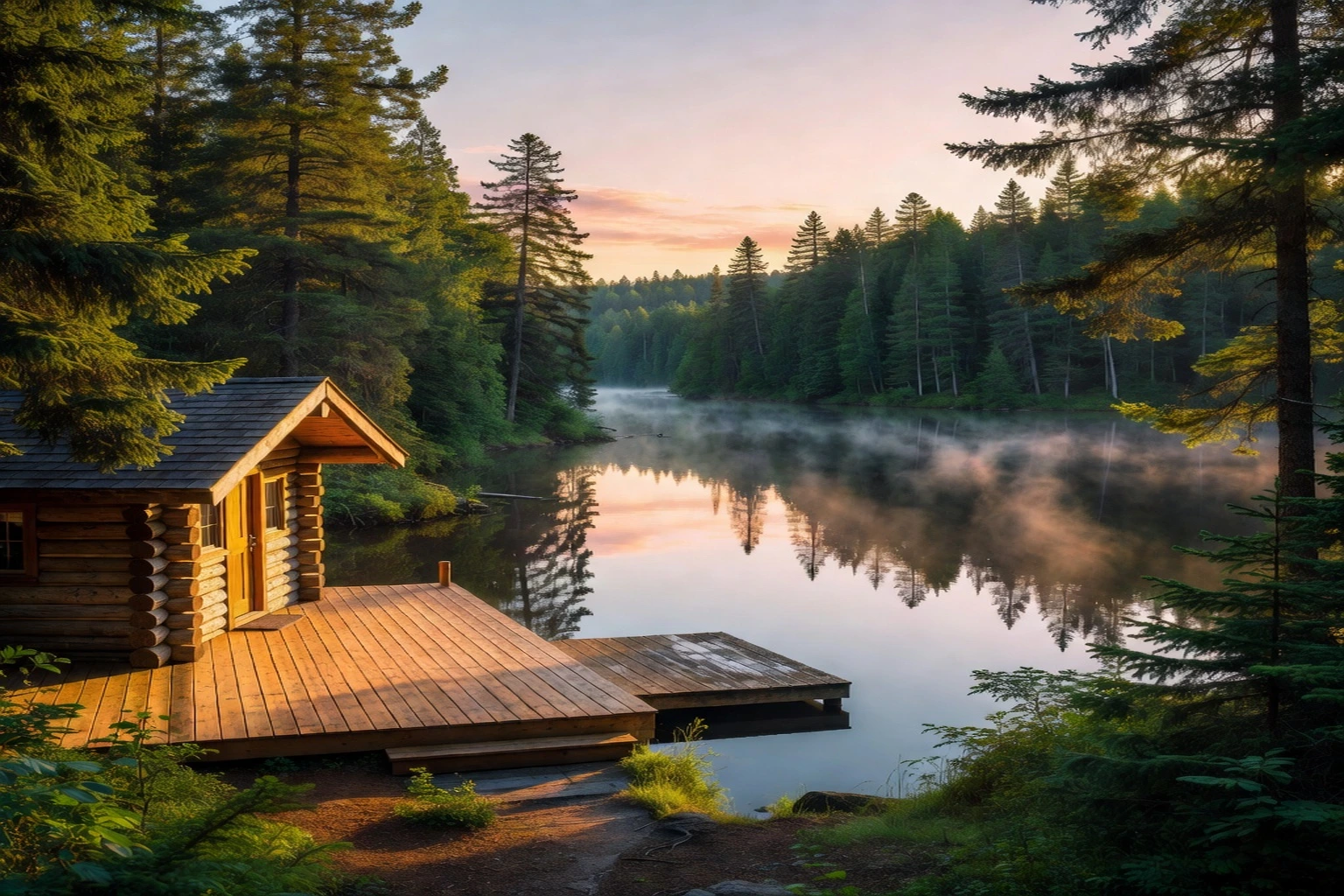
A private fishing cottage in Quebec is simply a self-catered cabin with direct access to a lake or river where you control the schedule, the species you target and the pace of the day. Unlike a fully staffed fishing lodge, you buy your own groceries, clean your own fish and decide whether dawn or dusk is worth setting the alarm. For 2026, the province offers roughly 700 fishable lakes and ponds according to FishingBooker, with speckled and lake trout, bass, walleye and pike forming the standard menu. This guide explains how to choose a cottage, plan the season, pack the right gear and budget realistically so your next trip produces more fish and fewer surprises.
What Makes a Fishing Cottage Truly Private
Privacy in a fishing cottage means more than a no-contact check-in. It usually means a standalone building, a shoreline that is not shared with another rental, and a dock or launch area reserved for your group. The opposite is a multi-unit fishing camp or a lodge where boats, guides and dinner hours are communal. Both formats work, but a private cottage fits anglers who want to:
- Fish at first light or last light without waiting for a guide schedule or a shared boat.
- Keep their own kitchen, fillet station and gear organized on their own timetable.
- Bring family or friends who may not fish at all but still want lake access, a fire pit and a quiet deck.
The trade-off is responsibility. You handle bait, tackle, licences, boat safety and sometimes launch logistics. If you are new to Quebec waters, reading our editorial interview with a Quebec wilderness fishing guide will help you ask sharper questions before booking.
A genuinely private cottage also sits on a lake with controlled access. Some of the best experiences come from small lakes where only one or two properties have frontage. The fishing pressure stays low, the fish remain less spooky, and the shoreline does not turn into a boat parade on a Saturday morning. When you read a listing, look for phrases like “private lake,” “no public access,” “exclusive shoreline” or “single cottage on the lake.” Ask the owner directly how many other rentals share the waterfront and whether the dock is private.
Best Quebec Regions for a Private Fishing Cottage
Quebec is large enough that climate, species and scenery shift noticeably from south to north. For most anglers flying into Montreal or driving from Ottawa and New England, four regions stand out for private cottage rentals.
Eastern Townships. Rolling hills, mixed forest and lakes such as Lac à la Pêche and Lake Memphrémagog make this region ideal for a short getaway from Montreal. The Mont Sutton area in particular combines fishing access with hiking and a small ski hill, which matters if some travellers in your group are not anglers. Properties like the Soleica chalets near Mont Sutton and Domaine Lac Marsan put you on private waterfront within a two-hour drive of the city.
Laurentians. North of Montreal, the Laurentians offer a dense concentration of rental cottages, many on walleye and pike lakes. Highway access is easy, grocery stores and bait shops are common, and the region works well for mixed groups. If you are comparing regions, our Laurentians versus Charlevoix chalet comparison breaks down access, scenery and price differences.
Outaouais. West of Montreal and across the river from Ottawa, Outaouais is known for walleye, pike and bass fisheries. Water temperatures warm earlier here than in the Laurentians, which can extend the productive season slightly. The region also tends to be quieter midweek than the Laurentians.
Mauricie and Lanaudière. Between Montreal and Quebec City, these regions offer a mix of reservoir fishing, river access and provincial parks. They appeal to anglers who want to combine a cottage stay with hiking, paddling or wildlife watching rather than pure boat fishing.
For species variety, travel timing and easy logistics, the Eastern Townships and the Laurentians remain the safest bets for a first private fishing-cottage trip. Outaouais and Mauricie reward anglers willing to drive a little farther for less crowded water.
Species, Seasons and Catch Expectations
Quebec fishing law splits the year by species and waterbody, so the same lake can have different open seasons for walleye, pike and trout. Always check the current Quebec sport-fishing regulations on the official Quebec.ca fishing portal before you finalize dates. The most common species you will encounter from a private cottage are:
- Walleye. Prized for fillets. Often most active in low-light periods and during spring and autumn transitions.
- Northern pike. Aggressive predators that hit spoons, spinnerbaits and jerkbaits near weed edges and shallow bays.
- Largemouth and smallmouth bass. Visual feeders that respond well to topwater in summer and soft plastics along structure.
- Speckled trout. Found in cooler, clear lakes and rivers; sensitive to warm water and best targeted in spring and early autumn.
- Lake trout. Deeper, colder lakes; often caught by trolling or jigging over structure.
FishingBooker notes that bass and walleye fishing in Quebec generally runs from May through November, though exact dates depend on the zone. Pike seasons often open earlier, while trout seasons are more tightly controlled to protect spawning. Ice fishing, according to Bonjour Québec, is practiced from January to mid-March on lakes with safe ice and legal access.
Catch expectations should match the lake, not the region. A small, lightly fished lake with a healthy forage base can produce several pike or bass per day even for intermediate anglers. A large, clear trout lake may produce fewer but larger fish and will demand more precise technique. Ask the owner for recent guest feedback, not marketing photos. A realistic target for a mixed-species cottage lake is two to four quality fish per angler per day, with some blanks mixed in.
Gear, Boat and Dock Checklist
What you pack depends on what the cottage provides. Start by asking the owner a short checklist two weeks before arrival:
- Is there a boat, and what type? Rowboat, canoe, kayak, aluminum fishing boat, motor included?
- How many life jackets are provided, and what sizes? Children need properly fitted PFDs.
- Is there a fish-cleaning station, outdoor sink or place to store bait cool?
- Does the dock have cleats, a ladder, lighting and enough depth for the boat?
- Is shore fishing practical, or is the shoreline too weedy, steep or rocky?
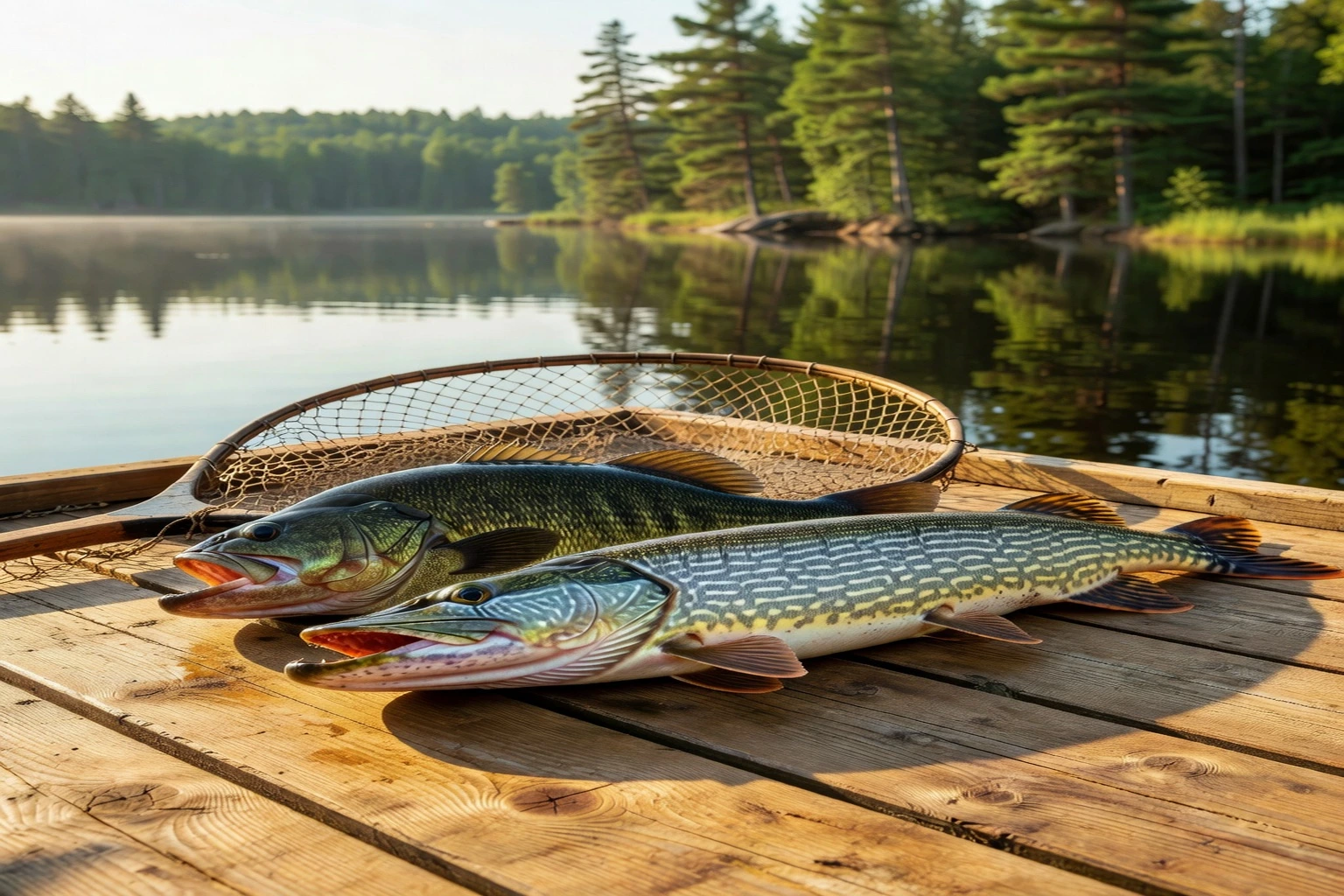
Your personal tackle box should cover the main species without overloading the car. A practical starter kit for a Quebec cottage trip includes medium-action spinning rods, a selection of spinnerbaits, crankbaits, soft-plastic worms and jigs, a few topwater lures, steel or fluorocarbon leaders for pike, needle-nose pliers, a landing net, a fillet knife and a cooler with ice. If you plan to keep fish, bring sealable bags or a vacuum-sealer for the drive home.
For families, safety around water deserves as much attention as tackle. Children need constant supervision near docks, boats and fire pits. Check the cottage for secure railings, stable dock access and clear emergency routes before anyone unpacks a rod.
Budget and Booking Timeline for 2026
The global fishing-tourism market was valued at roughly $12.4 billion in 2025 and is projected to grow to about $22.1 billion by 2034, according to Dataintelo. Quebec captures a meaningful slice of that demand, especially from U.S. and Ontario anglers who drive north for accessible wilderness. That popularity means the best lakefront cottages are not last-minute bargains.
| Cost item | Typical 2026 range | Notes |
|---|---|---|
| Private cottage rental (per night) | $180 – $500 CAD | Varies by lake privacy, season and group size. |
| Boat or motor rental add-on | $40 – $120 CAD per day | Often cheaper for multi-day stays. |
| Non-resident fishing licence | $60 – $130 CAD | Annual, seasonal or daily options exist. |
| Bait and tackle supplies | $50 – $150 CAD per trip | Save by bringing proven lures from home. |
| Local guide (half day) | $300 – $500 CAD | Worthwhile for first-timers or complex lakes. |
For a four-night stay with a small group, budget roughly $1,200 to $2,500 CAD for the cottage, plus licence, fuel, food and any gear you do not already own. Booking three to six months ahead is the safest strategy for peak summer and autumn weekends. If you are open to shoulder-season dates, late May and mid-September often combine lower rates with excellent fishing.
When comparing listings, prioritize verifiable details over adjectives. A cottage described as “fisherman’s paradise” is less useful than one that names the lake, the species caught, the boat included and the depth at the dock. Ask for the address or lake name so you can cross-reference it on a fishing forum or recent guest review before paying a deposit. Our interview with a Quebec property manager walks through the contract, deposit and cancellation questions every angler should ask.
If you are travelling with a dog, remember that water access and shoreline rules affect pets too. Some of the most reliable pet-friendly cottages in Quebec include fenced yards and clear policies about lake swimming.
FAQ
A private fishing cottage in Quebec is less about luxury and more about control. You choose the lake, the species, the meals and the schedule. With a valid licence, realistic expectations and a short checklist of questions for the owner, 2026 can be the year your group finally lands more memories than excuses. Start your search early, confirm the boat and dock details in writing, and pick a region that matches your drive time and target species.