
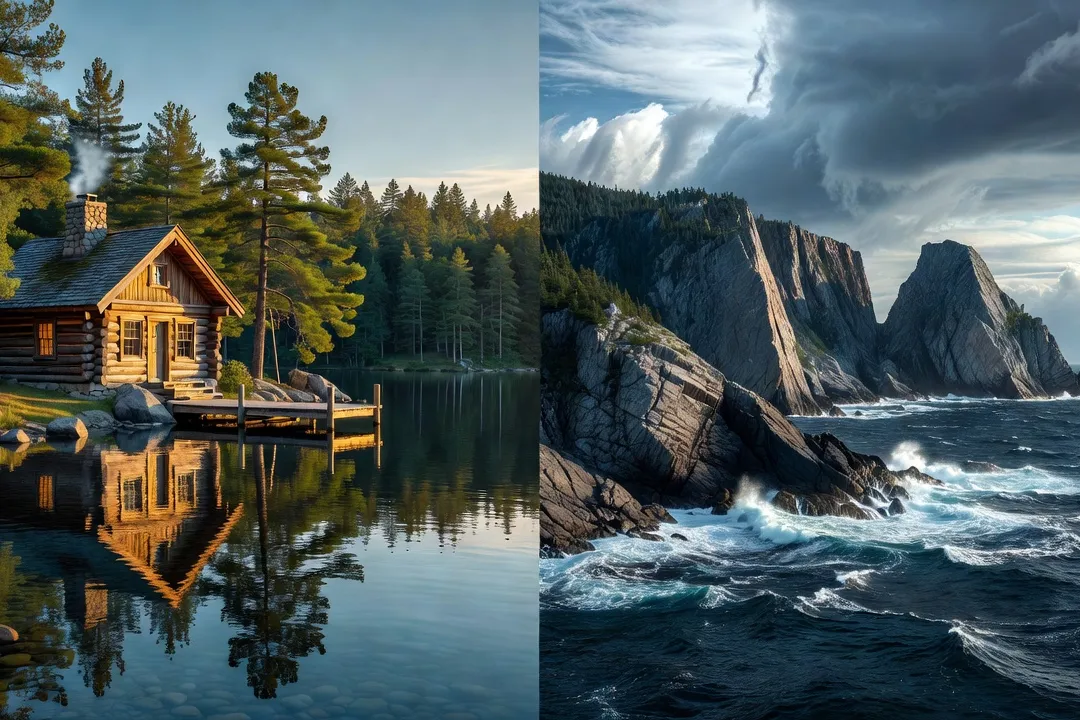
For most visitors, choose the Laurentians if you want an easy escape from Montreal, dependable ski access, lake time and a broad selection of family-friendly chalet settings. Choose Charlevoix if your trip is centred on dramatic St. Lawrence views, food, art, whale-watching and a more scenic road-trip atmosphere from Quebec City. The Laurentians are usually simpler for a two- or three-night Montreal stay; Charlevoix rewards travellers who can slow down, especially from late spring through autumn.
Quick comparison: Laurentians or Charlevoix?
Both regions offer beautiful upscale chalets, but they create very different trips. The Laurentians are the classic Quebec cottage-country escape: forests, lakes, ski hills, villages and a strong four-season outdoor culture. Charlevoix feels more theatrical, where mountains descend toward the St. Lawrence River and villages, farms, galleries and coastal viewpoints shape the itinerary.
For international visitors, the practical difference often begins with the airport and ends with how much driving you want to do. From Montreal, the Laurentians are the clear winner for convenience. From Quebec City, Charlevoix is the natural choice. If you are planning a longer Quebec itinerary, combining Montreal, the Laurentians, Quebec City and Charlevoix can make an excellent one-week or 10-day route.
| Trip factor | Laurentians | Charlevoix |
|---|---|---|
| Best gateway city | Montreal | Quebec City |
| Typical drive from Montreal | About 1.5–3 hours, depending on the sector | About 4–5.5 hours, depending on the village |
| Typical drive from Quebec City | About 3.5–5 hours | About 1–2.5 hours |
| Signature scenery | Lakes, forests, rolling mountains, ski slopes | St. Lawrence River, coastal cliffs, mountains, farmland |
| Best known for | Skiing, lake stays, hiking, cycling, family chalet weekends | Whale-watching, gastronomy, art, river views, scenic drives |
| Best for | Families, groups, active weekend escapes | Couples, food-focused travellers, photographers, slower road trips |
| Strongest seasons | Winter and summer | Summer and autumn, with a growing winter appeal |
| Chalet atmosphere | Classic lakefront or forest retreat | River-view, mountain-and-coast escape, rural heritage setting |
A useful rule of thumb: choose the Laurentians when the chalet itself is likely to be your main base for a relaxed, activity-filled stay. Choose Charlevoix when the chalet is one part of a wider regional experience involving restaurants, producers, viewpoints, villages and marine excursions.
Before reserving, compare individual locations rather than relying only on a regional label. The Laurentians cover a large territory, from Mont-Tremblant and Saint-Sauveur to quieter lake districts, while Charlevoix includes distinct bases such as Baie-Saint-Paul, La Malbaie and Petite-Rivière-Saint-François. Our Laurentians chalet guide and Charlevoix chalet rental guide can help narrow down the right village and chalet setting.
Access and driving: Montreal versus Quebec City
The Laurentians are generally the more efficient choice for travellers arriving through Montréal–Trudeau International Airport or spending time in Montreal before heading to a chalet. Depending on your destination, drives can range from roughly 90 minutes to three hours. Mont-Tremblant, Sainte-Agathe-des-Monts, Saint-Sauveur and Mont-Blanc are among the better-known areas, but a lakeside chalet may involve additional local roads after leaving the main highway.
This accessibility matters in winter. After a transatlantic flight or a day exploring Montreal, a shorter drive reduces stress, especially when roads are snowy or when children are travelling with you. It also makes the Laurentians well suited to a Friday-to-Sunday escape, a ski long weekend or a short midweek stay.
Charlevoix is more naturally paired with Quebec City. From Quebec City, Baie-Saint-Paul is commonly around 1.5 hours away, while La Malbaie is typically farther east. Actual times vary with weather, traffic, road conditions and the exact chalet location. The route is part of the experience: leaving Quebec City, the landscape gradually becomes more rural and increasingly dramatic as the St. Lawrence appears.
From Montreal, Charlevoix is feasible but requires more commitment. Plan on a longer drive, often four hours or more before reaching the region’s main communities, and longer still for a chalet on a rural road or farther along the coast. It is best approached as a three-night minimum stay, rather than a quick overnight excursion.
For either destination, a rental car is strongly recommended. Public transportation can bring travellers to some larger communities, but it is not ideal for accessing remote chalets, ski areas, trailheads, groceries or restaurants on your own schedule. In winter, choose a vehicle suited to Quebec conditions and allow more time than a navigation app suggests.
The Québec government’s road information service, Québec 511, is a useful official resource for monitoring road conditions, closures and winter travel information. Visitors driving outside major cities should check conditions before departure, particularly after heavy snow, freezing rain or strong winds.
Landscapes and outdoor activities: lakes and ski slopes versus river and cliffs
The Laurentians and Charlevoix both offer mountains, but the feeling of the terrain is distinct. In the Laurentians, landscapes tend to unfold around wooded hills and freshwater lakes. You might wake up to mist over a lake, spend the day skiing or paddling, then return to a chalet for a sauna, fireplace and dinner with friends. It is a region that supports a simple, self-contained rhythm.
Winter is especially central to the Laurentians’ identity. Mont-Tremblant is internationally recognized, while other ski centres and cross-country networks make the region attractive to visitors who want variety. Alpine skiing, snowboarding, snowshoeing, skating, snowmobiling and cross-country skiing are all part of the wider winter culture. For a chalet group with mixed abilities, this variety is valuable: some guests can ski while others enjoy a village visit, spa treatment, forest walk or quiet afternoon by the fire.
Summer shifts the focus to lake life. Swimming, canoeing, kayaking, paddleboarding, cycling and hiking are natural additions to a chalet stay. Many guests choose the Laurentians because children can spend long afternoons outdoors without requiring a tightly scheduled sightseeing program. For ideas that extend beyond the property, explore our Quebec wilderness, fishing and nature-lodge guide.
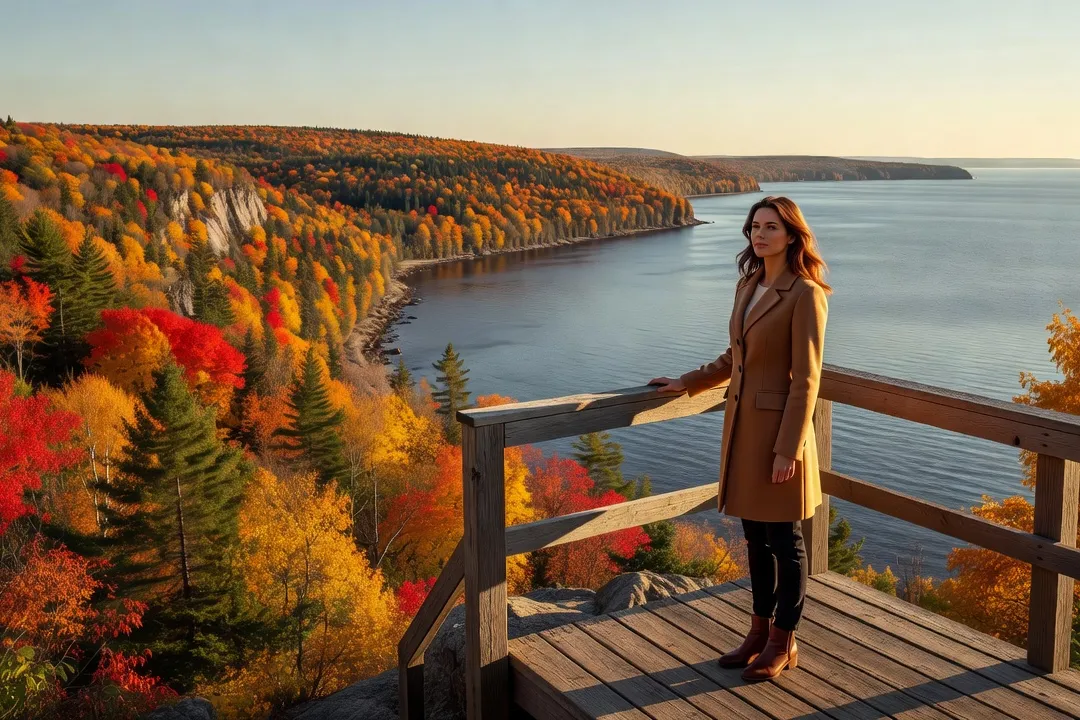
Charlevoix has a more vertical and coastal personality. Mountains, fields and forest descend toward the St. Lawrence River, creating wide views that feel particularly striking at sunrise, sunset or during autumn foliage. The region is part of the UNESCO Charlevoix Biosphere Reserve, recognized for the relationship between its natural environments, communities and protected landscapes. This is not simply a scenic label: it helps explain why Charlevoix feels like a destination where geology, agriculture and the river are constantly present.
Whale-watching is one of Charlevoix’s defining experiences. Excursions from the region and nearby communities provide opportunities to observe marine wildlife in the St. Lawrence Estuary, where nutrient-rich waters support a remarkable ecosystem. The Marine Mammal Observation Network, a respected Quebec organization, encourages responsible wildlife observation and advises visitors to choose operators that follow marine mammal protection practices.
Outdoor days in Charlevoix can include hiking, scenic drives, beach walks, river viewing, cycling, skiing at Le Massif de Charlevoix, and visits to national parks. Parks Canada’s nearby Saguenay–St. Lawrence Marine Park is a major reference point for understanding the marine environment and responsible whale-watching. The river should be treated with respect: weather changes quickly, water remains cold, and shorelines are not always suitable for swimming.
Seasonal pricing and when to book
Chalet pricing changes significantly according to season, property size, location, amenities and minimum-stay rules. A waterfront chalet with a hot tub near a major ski area will not be priced like a smaller forest cabin in a quieter period. The figures below are broad planning ranges, not guaranteed rates, and should be used to set expectations before checking current availability.
| Season | Laurentians typical chalet demand and price tendency | Charlevoix typical chalet demand and price tendency |
|---|---|---|
| Winter holidays and ski weekends | Peak demand; premium rates, especially near ski areas and during school breaks | High demand around Christmas, New Year and Le Massif ski dates; premium river-view properties book early |
| January to March | Strong ski season; weekends often cost more than weekdays | Good value outside holidays, with winter sports and quiet coastal scenery |
| Spring | Often lower-demand period, though Easter and school breaks can rise | Variable; late spring is attractive for food, hiking and quieter stays |
| June to August | High lake-season demand; waterfront properties command a premium | Peak season for whale-watching, festivals, dining and river views |
| September to October | Popular foliage season, especially weekends | Excellent autumn season; harvest, colour and scenic drives support strong demand |
| November to early December | Usually one of the best-value windows | Often quieter, though some travellers enjoy stormy river views and early winter calm |
As a general planning range, visitors may find smaller or simpler chalets from several hundred Canadian dollars per night in quieter periods, while large luxury properties, waterfront homes and peak holiday stays can reach well above one thousand dollars per night. Weekly stays may be more economical than booking a series of short weekends, particularly in summer.
The Laurentians tend to have their strongest booking pressure around Christmas, New Year, school breaks, major ski weekends and July–August lake season. If your group needs multiple bedrooms, direct lake access or a hot tub, book early. The most desirable winter weekends can disappear months in advance.
Charlevoix experiences strong demand from late June through early October, when whale-watching, festivals, farm visits and outdoor activities converge. Autumn weekends are especially sought after. Winter is increasingly appealing for travellers combining a chalet stay with skiing at Le Massif, but it remains less universally ski-centred than the Laurentians.
To manage a budget without sacrificing the experience, consider these strategies:
- Travel Sunday through Thursday rather than over a Friday–Sunday peak period.
- Avoid Christmas, New Year and major school holidays if your dates are flexible.
- Prioritize the amenity that matters most—lakefront access, river view, ski proximity, sauna or large dining space—rather than trying to secure every feature.
- Stay longer in one chalet instead of changing accommodations every two nights.
- For Charlevoix, book a shoulder-season stay in late May, early June or November if you prefer quiet scenery over a packed itinerary.
Best months for each region
The best month depends less on a universal “best season” than on what you want your days to look like. A February ski trip and an August lake week are both ideal Laurentians trips, but for entirely different travellers. Similarly, Charlevoix in September feels very different from Charlevoix in January.
For the Laurentians, January through March is the strongest period for snow sports. Expect genuine winter conditions, shorter daylight hours and a chalet-centred rhythm. Skiers will appreciate proximity to resorts, while families may prefer a property with safe outdoor space, a fireplace and indoor entertainment for weather changes.
June through August is the region’s lake season. Warm-weather visitors can structure days around water activities and easy outdoor meals. It is particularly good for multigenerational groups because some people can stay close to the chalet while others explore local trails, villages or cycling routes.
September and early October suit travellers who want foliage, hiking and cooler evenings by the fire. The Laurentians are highly popular during fall colour season, so weekend reservations should be made well ahead.
For Charlevoix, late June through September is the most broadly rewarding period for first-time visitors. Restaurants, producers, galleries, outdoor activities and marine excursions are in full motion, while the St. Lawrence provides a constantly changing backdrop. July and August are excellent for families, though they are also the busiest months.
September and October may be Charlevoix’s most romantic period. The harvest season, colourful hillsides and crisp air pair naturally with scenic drives, local food and long dinners. Couples and photographers often prefer this period to midsummer, when roads and attractions can be busier.
Winter in Charlevoix is best for travellers who actively want snow, mountain scenery and a quieter coastal stay. Le Massif de Charlevoix gives the region a strong ski option, and the river landscape can be spectacular in cold weather. However, visitors should be comfortable with winter driving and should not expect every summer-oriented activity to be available.
Families, couples and group travel: choosing by travel style
The Laurentians are often the easier recommendation for families with young children. The shorter drive from Montreal, the availability of ski and lake activities, and the classic chalet rhythm all reduce logistical pressure. Parents can plan active mornings and quieter afternoons at the property without needing to drive long distances every day.
A family chalet should be selected with practical details in mind, not just scenic appeal. Ask about stair gates, water access, railings, bedroom layout, fireplace use, hot-tub rules, nearby roads and whether the property has a suitable play area. Review our chalet safety checklist for families with young children before booking, especially if your group includes toddlers, babies or children who are not confident swimmers.
The Laurentians also work well for friend groups. A large dining table, outdoor fire area, hot tub and easy access to hiking or skiing can make the chalet the social centre of the trip. Groups can divide their days according to energy level without losing the feeling of travelling together.
Charlevoix is particularly well suited to couples, adult friend groups and travellers celebrating an occasion. The scenery invites slower days: coffee overlooking the river, a drive through rural villages, a farm or cheese stop, an art gallery, a tasting menu, then a return to a view-oriented chalet. It can be romantic without becoming formal or overly programmed.
That said, Charlevoix is absolutely possible with children. Families who enjoy nature, food and day trips will find plenty to do. The key is to choose the right base. A chalet near Baie-Saint-Paul can make dining and village visits easier, while a location closer to skiing may suit a winter family trip. Be realistic about driving distances between activities, particularly with younger children.
Choose the Laurentians if your group values:
- Shorter access from Montreal.
- Lake swimming, paddling and casual outdoor time.
- Multiple ski and snow-play options.
- A flexible schedule centred around the chalet.
- A straightforward family weekend or multigenerational stay.
Choose Charlevoix if your group values:
- River and mountain views rather than lakefront living.
- Gastronomy, local producers and village exploration.
- Whale-watching or coastal nature experiences.
- A scenic road-trip feeling.
- A couple-focused, creative or food-led escape.
Dining, local producers and the regional food experience
Food is a meaningful differentiator between these two regions. The Laurentians have plenty of appealing restaurants, bakeries, cafés, markets and independent producers, especially around larger resort communities and established villages. For chalet guests, the practical strength of the Laurentians is convenience: it is generally easy to stock up on groceries, pick up bakery items, find casual dining or organize a simple group meal.
The region works well for visitors who want a balanced approach: cook at the chalet most nights, eat out once or twice, and add local ingredients to the menu. Think Quebec cheeses, seasonal produce, smoked meats, cider, maple products and bakery goods rather than building every day around a long restaurant itinerary.
Charlevoix, by contrast, is one of Quebec’s most recognizable food destinations. The region’s agricultural identity is woven into the travel experience, with farms, cheese makers, chocolatiers, bakeries, microbreweries, cider makers and restaurants drawing on local products. The Route des Saveurs de Charlevoix is a helpful regional reference for discovering producers and food-focused stops.
The Charlevoix Cheese Factory and the wider cheese tradition of the area are part of this landscape, but the pleasure is broader than one product. A day can easily include a bakery breakfast, farm shop visit, local cider, a cheese stop and an evening meal featuring regional ingredients. Baie-Saint-Paul also adds an arts-oriented dimension, with galleries and independent shops that make it enjoyable to wander between meals.
For international guests, Charlevoix is often the better choice if dining is one of the main reasons for travelling. Reserve popular restaurants in advance during summer and autumn weekends, and check seasonal opening hours before building a route around a particular producer. Rural Quebec businesses may operate on reduced schedules outside the busiest months.
The Laurentians are better if you want dining to remain easy and informal. Charlevoix is better if you want food to shape the itinerary. Neither is inherently superior; the right decision depends on whether your ideal chalet trip includes a stocked kitchen and quiet evenings, or a series of memorable regional stops.
How to make the final decision before booking
A clear choice usually emerges once you answer a few practical questions. Start with the departure city. If you have only two nights after visiting Montreal, the Laurentians will often give you more vacation time and less windshield time. If Quebec City is already on your itinerary, Charlevoix becomes much more convenient.
Then decide whether your trip is activity-led or atmosphere-led. The Laurentians are ideal when skiing, lake access, family play and chalet amenities are central. Charlevoix shines when the journey itself matters: river scenery, local food, art, viewpoints and seasonal nature excursions.
Finally, look closely at the chalet rather than assuming every property delivers the same regional experience. In the Laurentians, one chalet may be walkable to skiing while another is secluded beside a lake. In Charlevoix, one property may overlook the river while another offers a forest setting closer to mountain activities. Check road access, winter parking, distance to groceries, bedroom configurations, outdoor features and house rules.
For a first Quebec chalet stay, these combinations are especially reliable:
- Montreal + Laurentians, 4 to 6 nights: Ideal for ski trips, summer lake holidays or family travel with limited driving.
- Quebec City + Charlevoix, 4 to 7 nights: Excellent for couples, food lovers, whale-watchers and scenic summer or fall travel.
- Montreal + Quebec City + Charlevoix, 7 to 10 nights: Best for international visitors wanting a fuller Quebec road trip.
- Laurentians in winter, Charlevoix in autumn: A strong repeat-visitor strategy for seeing two completely different sides of Quebec.
FAQ
Is the Laurentians region closer to Montreal than Charlevoix?
Yes. The Laurentians are substantially closer to Montreal, with many popular chalet areas reachable in roughly 1.5 to 3 hours, depending on the exact location. Charlevoix is usually better accessed from Quebec City, although it can be reached from Montreal on a longer drive.
Which region is better for skiing?
The Laurentians are generally better for travellers who want skiing to be the main purpose of the trip, thanks to their concentration of ski areas and established winter-resort culture. Charlevoix is also attractive for skiing, particularly around Le Massif, but its overall appeal is more balanced between mountain and coastal experiences.
Where should I stay for whale-watching in Charlevoix?
Choose a Charlevoix base that makes it practical to reach marine excursion departure points and nearby river communities, while allowing enough time for weather-dependent schedules. Check the operator’s current departure location and responsible wildlife-viewing practices before reserving.
Are the Laurentians or Charlevoix better for a family chalet vacation?
The Laurentians are usually easier for families, especially those arriving from Montreal or travelling with young children, because lake activities, ski options and chalet-based days are easy to organize. Charlevoix can be excellent for families too, particularly those who enjoy scenic drives, food stops and nature outings.
When should I book a chalet in either region?
Book as early as possible for Christmas, New Year, ski weekends, summer holidays and autumn foliage weekends. For more flexibility and potentially better value, consider weekday stays or shoulder-season dates, while checking which local activities and businesses are open.