
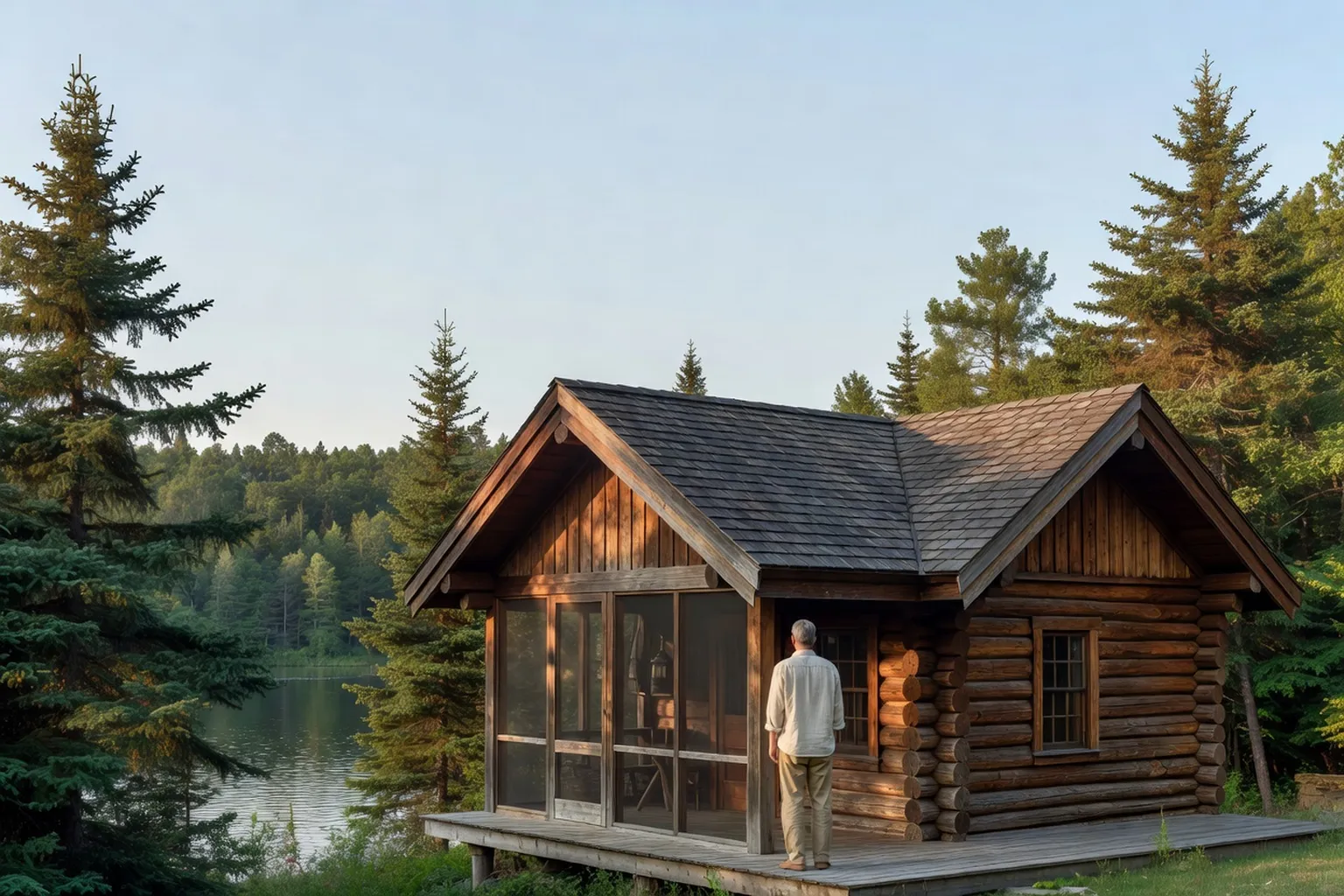
At the chalet, you can greatly limit the inconvenience caused by mosquitoes, black flies and ticks by combining preparation, protective clothing, an appropriate repellent and careful checks after outings. Black flies breed in river rapids and are mostly an issue near waterways, mosquitoes are especially numerous in early summer, while ticks require vigilance in tall grass and along forest edges. The goal is not to give up the outdoors, but to enjoy the property with simple, consistent habits.
The timing of your booking already matters a great deal. To factor the particularities of each season into your plans, also consult our guide on choosing when to book a chalet in Quebec. A successful getaway starts with practical questions to ask the host, then continues with calm organization once you arrive.
Recognizing the most common visitors
Not all insects are found in the same places or follow the same patterns. Knowing what to expect lets you adjust your expectations without turning your stay into a complicated operation. Near a waterway, on an open terrace or during a walk in the woods, the precautions are not exactly the same.
| Visitor to watch for | Timing or environment to keep in mind | Main precaution |
|---|---|---|
| Black flies | Mostly from late spring to early summer, in wet environments, near streams and rivers | Plan for protective clothing and choose a sheltered outdoor space whenever possible |
| Mosquitoes | Mostly in early summer, with increased activity at dawn and dusk | Adjust outings and use an appropriate insect repellent |
| Ticks | Tall grass, trails and forest edges | Avoid tall grass and check your body, clothing and equipment |
Black flies can be particularly common in wet environments near streams or rivers. This does not mean that a waterfront chalet should be ruled out from the outset. Instead, consider the quality of sheltered spaces, the condition of window screens and the option of retreating indoors if conditions become less comfortable.
Mosquitoes are more numerous mainly in early summer and are more active at dawn and dusk. A terrace can therefore be very pleasant at one time of day and require more preparation at another. Rather than improvising once the bags are unpacked, keep the necessary long clothing and repellent within easy reach.
Ticks require a different kind of attention. They are not managed only on the terrace or at mealtime outdoors. They are mainly a concern when moving through tall grass, going out near forest edges and doing activities that take you off a clear trail. This distinction is important: the right precaution depends on the activity, not only on where the chalet is located.
Choosing a chalet and a time of year wisely
Before confirming your stay, ask the host about the chalet’s immediate surroundings. Ask whether window screens are in good condition, whether the terrace is enclosed or protected by porch screening, and whether you can sit comfortably outdoors without being directly in tall grass. These details do not guarantee an absence of insects, but they have a concrete impact on your day-to-day experience.
Also look at the property layout described in the listing or communicated by the host. A clear outdoor space, a maintained grassy area around the chalet and a terrace where air circulates are useful elements to consider. Distance from standing water may also be one of your selection criteria. If you are looking for a stay near the water, it is still entirely possible to prioritize comfort by checking the protections available around the building.
A stay near a lake can offer a remarkable setting, provided you plan your outdoor time according to the conditions of the day. Our article on reasons to choose a lakefront chalet will help you think about the experience you are looking for without losing sight of the practical aspects of the property.
The season deserves the same attention as the building. If you travel during the period when black flies are mainly present, near a stream or river, a screened porch can become a true living space. If your stay falls when mosquitoes are more numerous, plan your outdoor reading, meals or games with their increased activity at dawn and dusk in mind.
Wind is also something to note when you arrive. A terrace more exposed to circulating air, a sheltered porch or an enclosed space do not create the same experience. Walk around the property at the start of your stay to identify the places where you will feel most comfortable at different times of day.
Dressing to walk, play and relax outdoors
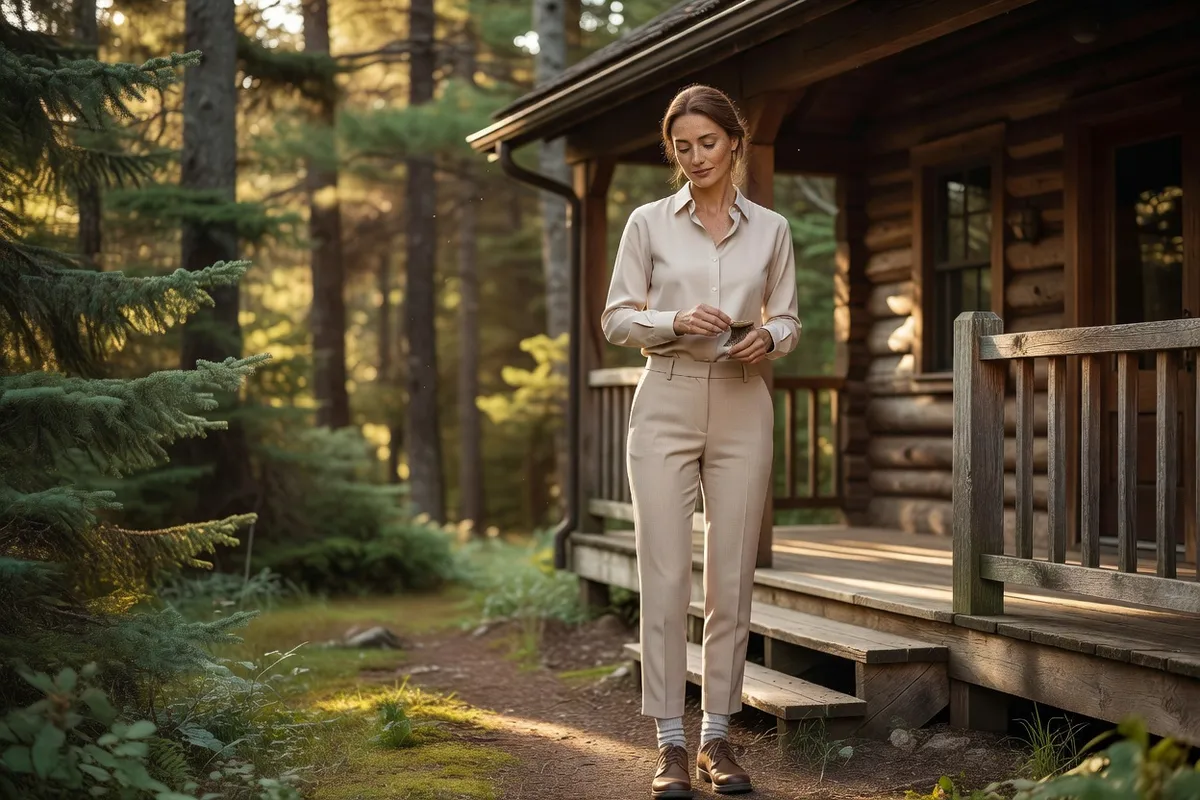
Clothing remains one of the simplest protections to adopt. Public health recommendations are simple: long, light-coloured clothing, closed-toe shoes and pant legs tucked into socks. This approach is useful for walks in the woods, passing near tall grass, chores around the chalet and outdoor activities at the end of the day.
This does not mean spending your entire stay bundled up. The idea is instead to plan for a light layer that you can easily put on before a walk, a game on the property or a time when mosquitoes are more active. A long-sleeved shirt or sweater, lightweight pants, socks and closed-toe shoes should remain accessible rather than packed at the bottom of a bag.
Light colours also make it easier to inspect yourself visually after an outing. Get into the habit of checking pant legs, socks, shoes and areas of fabric that brushed against vegetation. Permethrin-treated clothing is available on the market. If this option interests you, carefully read the instructions associated with the garment in question and plan to use it before you leave.
For a hike or organized outdoor activity during your stay, adapt your clothing to the route rather than to how warm it feels when you set out. The guide A Chalet in Sutton in Summer: Hiking, Mountain Biking and Relaxation 2026 offers other ideas for preparing active days, without repeating bite-specific guidance here.
Well-chosen clothing also prevents you from having to constantly interrupt activities. Keep a pair of closed-toe shoes near the door, plan a long garment for each person and make tucking pant legs into socks a habit when passing through tall grass. This may seem less than elegant in the moment, but it is particularly sensible when you want to reduce exposure to ticks.
Using repellents methodically
Public health recommendations mention insect repellents containing DEET or icaridin. The best product is the one you use according to its label, in the intended setting and with the appropriate precautions. Before you leave, make sure you know how to apply it and that every responsible adult in the group knows the instructions for the product chosen.
Do not improvise precautions intended for children. For a young child, confirm appropriate options with a pharmacist, then follow the label closely. This approach is more useful than relying on a family habit, advice heard on site or a solution presented as universal.
Repellent does not replace protective clothing, closed-toe shoes or avoiding tall grass. It is an additional measure. Think about using it before an outdoor activity, especially if you plan to remain near a wet environment, walk in the woods or spend time outside at dawn or dusk.
To find official recommendations and general precautions, consult protecting yourself from mosquito and tick bites (Québec.ca). This resource lets you check your habits before leaving and better prepare the people travelling with you.
Avoid piling up products without a clear plan. A carefully chosen insect repellent, appropriate clothing and a post-walk routine make for a clearer foundation than a kit full of solutions whose uses no one knows. At the chalet, simplicity encourages consistency: you will be more likely to protect yourself if everything is accessible and easy to use.
Setting up the surroundings without complicating the stay
The chalet’s outdoor area deserves a practical look-over as soon as you arrive. Identify the terrace, dining area, play areas, access trails and sections where the grass is taller. Mowed grass around the chalet, a clear path and a relaxation area set up away from tall grass make safer habits easier for the whole group.
Standing water near the place where you are staying is one of the elements to watch for when choosing or occupying a chalet. Without changing the grounds or interfering with installations that do not belong to you, you can simply ask the host which spaces are the most pleasant and most used. This discussion avoids assumptions and helps you organize your activities in the most suitable areas.
Outdoor lighting should first and foremost allow you to see where you are walking and avoid unnecessary trips through less open areas. Well-placed lighting near the entrance, terrace and main path makes it easier to return in the evening. On the terrace, a fan may also be one of the features to consider to improve your comfort during time spent outdoors.
If you are an owner or the host asks for your opinion on outdoor spaces, our feature on designing the outdoor area of a Quebec chalet looks at the terrace, dock and garden from another angle. Here, the main point is that a clear, maintained and well-organized outdoor area makes tick precautions easier to follow.
However, avoid viewing the outdoors as a permanently risky space. The chalet is also a place to slow down, cook outdoors, read and enjoy the scenery. Simply identify a comfortable area to settle in, keep useful clothing nearby and choose trails rather than routes through tall grass. These adjustments preserve the spirit of a vacation.
When it comes to ticks, adopting a return routine
Tick prevention relies on very concrete actions. During outings, stay on trails and avoid tall grass. When you return, check your entire body, then inspect the clothing and equipment that went with you. This routine applies to adults and children alike and should be part of the normal flow of a day spent outdoors.
Take a bath or shower as soon as possible after an outdoor activity, ideally within two hours. Use this time to carry out a thorough, careful check. Do not wait until the end of the stay or until you return home: consistency matters more than a rushed check done too late.
Checking requires a methodical approach. Do not limit yourself to immediately visible areas. Ask a trusted person for help with areas that are hard to see, and also check folds of clothing, bags, blankets used outdoors and other equipment. After a walk, allow enough time for this step before moving on to a meal or another activity.
If you find an attached tick, remove it as soon as possible with a tick remover or fine-tipped tweezers. Do not crush it, press on it or grasp it with your fingers or nails. This should be done calmly and precisely, without trying improvised methods.
The risk of contracting Lyme disease is low if the tick has been attached for less than twenty-four hours. Preventive antibiotic treatment may be offered if the tick has been attached for at least twenty-four hours, was removed seventy-two hours ago or less, the bite occurred in an at-risk area and no symptoms have appeared, after an assessment by a doctor or pharmacist. If symptoms appear, seek advice without delay.
Children and dogs: appropriate habits, without overcomplicating things
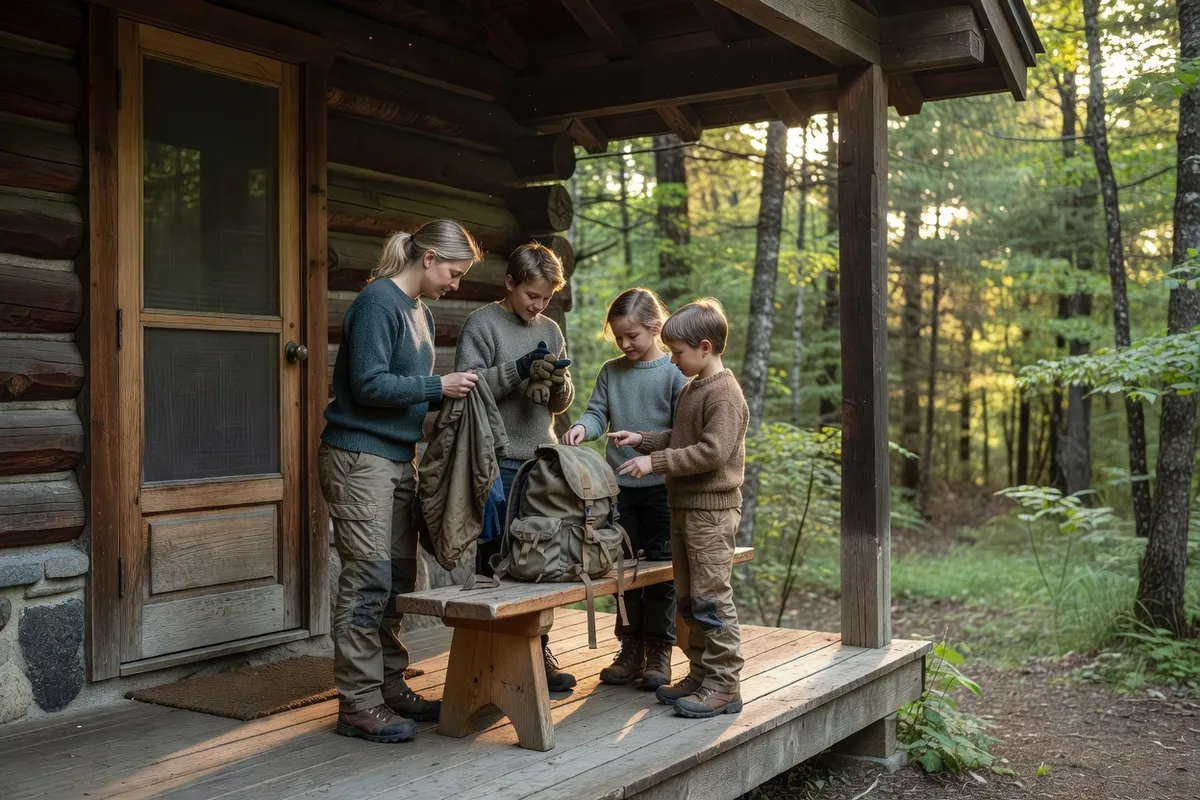
With children, prevention must be easy to understand and repeat. Before heading out, simply explain that they should stay on trails and avoid playing in tall grass. When you return, make checking clothing, equipment and the body a normal step without creating unnecessary worry. Long, light-coloured clothing, closed-toe shoes and pants tucked into socks are simple guidelines to pass on.
The safety of a family stay extends well beyond insects. To organize the whole chalet with peace of mind, consult our checklist for chalet safety with young children. You will find a useful complement there, while this guide remains focused on bite prevention and vigilance regarding ticks.
For children, precautions related to repellents should be confirmed with a pharmacist. Do not assume that a product used by an adult is automatically suitable for the whole family. Read the label, prepare clothing before leaving the chalet and maintain the shower or bath routine after an outdoor activity.
Dogs can also be exposed when they accompany the family through tall grass or in the woods. Ask your veterinarian for advice on appropriate protective products. For other aspects of a stay with a pet, our article Travelling Safely to a Chalet with Your Dog: An Interview with a Veterinarian offers dedicated information without weighing down this guide.
What to do after a bite or finding a tick
After an insect bite, start by moving away from the area where you are exposed. Check whether protective clothing, closed-toe shoes or repellent should be added before resuming the activity. Do not let a first bite make you abandon the whole day: it may simply signal that it is time to change clothes, move the group or go indoors for a while.
If you find a tick, the priority is different: remove it as soon as possible using a tick remover or fine-tipped tweezers, without crushing it, pressing on it or touching it with your fingers or nails. Make a mental note of the circumstances of the discovery so you can clearly explain the situation if you need professional advice.
Do not rely on home methods for removal or on recipes presented as shortcuts. Health authorities recommend an appropriate tool and prompt removal. If you are unsure about how long the tick was attached, the area where it was found or the appearance of symptoms, seek an assessment from a doctor or pharmacist.
It is also useful to distinguish the discomfort of an evening outdoors from a situation that calls for a consultation. The chalet remains a place for relaxation, but the appearance of symptoms after a tick should not be downplayed. Inform the people travelling with you, maintain your checking routine until the end of the stay and prioritize professional advice when the situation warrants it.
Packing your bag and dispelling misconceptions
A well-planned prevention kit keeps you from looking for solutions once you are there. It does not need to be bulky: above all, it should suit the planned activities and remain accessible near the chalet door.
- Long, light-coloured clothing for each person.
- Closed-toe shoes, socks and pants that can be tucked into socks.
- An insect repellent containing DEET or icaridin, with a readable label.
- A tick remover or fine-tipped tweezers.
- Permethrin-treated clothing, if you have chosen this option.
- A bag or space set aside for clothing and equipment to inspect after outings.
- A change of clothes for returning from a walk or activity in the woods.
First misconception: only deep woods require vigilance. In reality, ticks call for avoiding tall grass and staying on trails, even when the outing seems brief or familiar. Second misconception: repellent eliminates the need for any other precaution. Long clothing, closed-toe shoes and checking after an activity remain complementary measures.
Third misconception: it is enough to quickly check arms and legs. Recommendations call for checking the entire body, then also inspecting clothing and equipment. Fourth misconception: a tick must be removed in a spectacular way or with your fingers. The proper action is instead to remove it quickly with a tick remover or fine-tipped tweezers, without unnecessary pressure.
Finally, do not confuse prevention with giving things up. A Quebec chalet can remain a place for swimming, reading, walking and outdoor meals. By anticipating periods when mosquitoes and black flies are more present, choosing a practical environment and making tick checks a ritual, you protect your stay without losing its spontaneity.
FAQ
When are mosquitoes most active at the chalet?
Mosquitoes are more active at dawn and dusk. They are more numerous mainly in early summer. Plan for long clothing, closed-toe shoes and an insect repellent containing DEET or icaridin, used according to its label.
How can I protect myself from black flies near a river?
Black flies breed in river rapids: you meet them mostly in wet environments, near streams and rivers, from late spring to early summer. Choose long, light-coloured clothing and look for a chalet with window screens in good condition or a sheltered terrace. Also keep a comfortable indoor space for times when you prefer to take shelter.
What should I do if I find a tick on my skin?
Remove it as soon as possible with a tick remover or fine-tipped tweezers. Do not press on the tick, crush it or grasp it with your fingers or nails. The risk of contracting Lyme disease is low if it has been attached for less than twenty-four hours. Seek advice if symptoms appear.
Should I seek advice after removing a tick?
A consultation may be indicated depending on how long it was attached and the area concerned. Preventive antibiotic treatment may be offered if the tick was attached for at least twenty-four hours, was removed seventy-two hours ago or less, and the bite occurred in an at-risk area, after an assessment by a doctor or pharmacist. Also seek advice if symptoms appear.
How can I protect a child during a stay in the woods?
Dress them in long, light-coloured clothing and closed-toe shoes. Avoid tall grass, stay on trails and check the body, clothing and equipment after outdoor activities. Take a bath or shower as soon as possible, ideally within two hours. For a repellent, confirm appropriate precautions with a pharmacist and read the label.