

To travel safely to a chalet with your dog, you need to prepare their parasite prevention, check their vaccinations, bring a first-aid kit, and anticipate risks related to the lake, forest, wildlife, and extreme temperatures. You also need to know how to recognize an emergency and prevent your dog from running away in this unfamiliar environment. An editorial interview with Marie, a general-practice veterinarian.
What veterinary preparations should be made before departure?
**Élodie:** Is a veterinary consultation really necessary before spending a few days at a chalet?
**Marie:** It is not mandatory before every getaway, but it is particularly relevant if the dog is very young, elderly, has a chronic illness, or is not accustomed to wooded areas. Ideally, you should contact your clinic a few weeks before departure to give the veterinarian time to adjust preventive measures and, if necessary, try medication for motion sickness or anxiety in a controlled setting.The vaccination record should be assessed according to the dog’s age, health, lifestyle, and destination. Core vaccines, including those against distemper, parvovirus, adenovirus, and rabies, should be checked. Depending on the expected exposure, the veterinarian may also discuss leptospirosis, which is transmitted in particular through environments contaminated by the urine of infected animals, as well as Lyme disease. However, no vaccine replaces supervision, a leash, or tick prevention.
The Canadian Veterinary Medical Association recommends preventive medicine tailored to each animal rather than the same protocol for all. A dog that will spend time on a dock in Mauricie, explore trails in Outaouais, or be around other animals does not have exactly the same risk profile as a dog that will remain mainly indoors at a chalet in Charlevoix.
Finally, you should bring a sufficient supply of the dog’s usual medication, with a little extra in case your return is delayed. Medications must remain in their labelled containers. Avoid administering a human product, leftover prescription medication, or a calming supplement without veterinary approval: several substances commonly used by humans are dangerous for dogs, and the correct dose depends on much more than their weight.
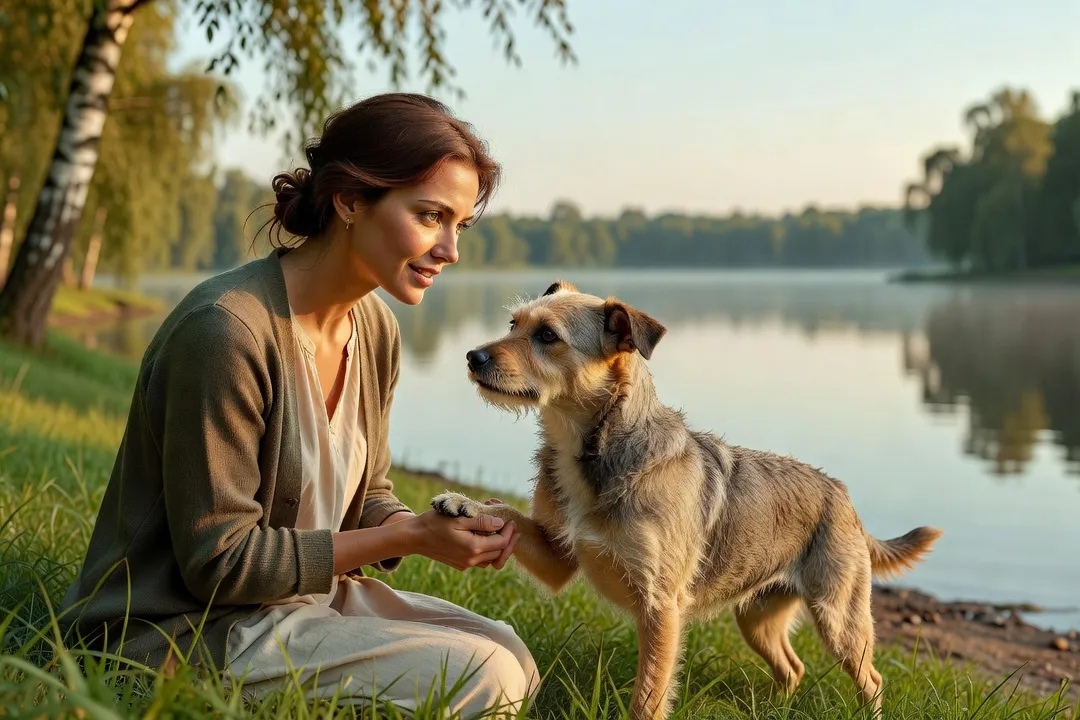
Before leaving, here are the most useful checks:
- confirm that the contact information associated with the microchip is up to date;
- take recent photographs of the dog, from the front and in profile;
- bring a copy of their vaccination record and a list of their medications;
- note the number of their regular clinic and identify veterinary services in the area in advance;
- bring their usual food to avoid a sudden dietary change;
- check the property rules in the guide to dog-friendly chalets in Quebec;
- bring a spare leash, a well-fitting harness, and a legible ID tag.
How can ticks and Lyme disease be prevented in wooded areas?
**Élodie:** Is inspecting the dog’s coat after a hike enough to protect them from ticks?
**Marie:** No. Inspection is important, but it complements a preventive product chosen with a veterinarian; it does not replace it. Ticks can be active whenever conditions are favourable, including during certain cool periods without snow cover. In the Laurentians, the Eastern Townships, Outaouais, or elsewhere in Quebec, it is therefore best not to rely solely on the calendar.The Canadian Parasitology Expert Panel publishes Canadian guidelines on parasites in companion animals. It recommends a risk assessment that takes the region, travel, and the dog’s activities into account. The available products do not all have the same duration of action or the same contraindications: the choice depends in particular on age, weight, medical history, and whether there is a cat in the home. Some parasite-control products intended for dogs, particularly those containing permethrin, can be extremely toxic to cats.
After every outing, slowly run your hands over the dog’s entire body. Carefully examine:
- around the eyes, muzzle, and ears;
- beneath the collar and harness;
- the armpits and groin;
- the spaces between the toes;
- the base of the tail and skin folds.
If a tick is attached, grasp it as close to the skin as possible using fine-tipped tweezers or a tool designed for this purpose, then pull slowly and steadily. The Government of Quebec advises against methods that involve burning the tick or covering it with alcohol, oil, or petroleum jelly before removing it. You can keep it in a closed container or take a clear photograph to facilitate identification, particularly through the Canadian eTick platform.
A bite does not automatically mean that the dog will develop Lyme disease. Conversely, the absence of immediate symptoms does not mean there is no risk. Unusual fatigue, fever, decreased appetite, painful joints, or lameness that seems to shift from one leg to another warrants a call to the veterinarian, especially after a known exposure. Lyme vaccination may be discussed for certain dogs, but it is part of a strategy that includes parasite-control products, inspection, and prompt tick removal.
What dangers should be anticipated around a lake and in the forest?
**Élodie:** Is swimming in a lake generally safe for a healthy dog?
**Marie:** It can be, but you should never assume that a dog naturally knows how to swim well. Their body type, age, stamina, a heart or respiratory condition, and even the water temperature alter the risk. A properly fitted canine life jacket is useful on a dock, in a boat, or for an inexperienced swimmer. It should have a sturdy handle without restricting the shoulders or breathing.Check access to the water before allowing the dog to approach: a steep slope, slippery rocks, fish hooks, fishing lines, currents, submerged branches, and the absence of an easy exit are all hazards. Prolonged ball games in the water can also cause the dog to swallow an excessive amount of water. If they become disoriented, weak, nauseated, or abnormally agitated after intensive swimming, stop the activity and promptly contact a veterinarian.
Green water, unusual foam, a suspicious odour, or a warning about blue-green algae blooms means the dog must be kept away. The Government of Quebec notes that some cyanobacteria can produce toxins harmful to humans and animals. Do not let the dog drink this water, swim in it, or lick their coat after suspected contact. Possible exposure, particularly if followed by vomiting, weakness, or neurological signs, requires urgent veterinary care.
The forest poses other risks. Wild mushrooms are difficult to identify reliably; the prudent choice is to prevent the dog from eating them. The ASPCA Animal Poison Control Center’s toxic plant database can guide an initial check, but it does not replace a veterinarian’s assessment. A photograph of the plant, mushroom, or fruit, taken without delaying care, may be useful.
Finally, encounters with wildlife must be avoided. A porcupine, skunk, raccoon, coyote, moose, or bear can injure a dog, even if the dog only seems to want to play. Food and garbage must remain indoors or in a secure container. In the event of porcupine quills, do not cut them and avoid a prolonged improvised removal attempt: there may be many of them, they can break, or they may be lodged in the mouth. After a bite or contact with a bat or a mammal that may transmit rabies, prevent any further contact and call a veterinarian promptly.
The dog’s safety is also part of the safety of everyone staying at the chalet. The measures described in a chalet safety checklist for young children — storing products safely, controlling access to the lake, monitoring doors — are often relevant when a curious animal accompanies the family.
What should a dog first-aid kit contain?
**Élodie:** What items should you actually bring without turning your luggage into a mobile clinic?
**Marie:** The kit is intended to stabilize a situation, protect a minor injury, and facilitate transportation to a clinic. It should not create a false sense of security or delay a consultation. Its contents can be kept together in a waterproof bag that is clearly labelled and inaccessible to the dog.I recommend asking the veterinarian to demonstrate how to apply a temporary bandage and use a thermometer, if that tool is included in the kit. A bandage that is too tight can cut off circulation; a muzzle can be dangerous for an animal that is vomiting, having difficulty breathing, or has a facial injury. Even the gentlest dog may bite when in pain, which means handling must be calm and minimal.
| Item | Use at the chalet | Important precaution |
|---|---|---|
| Sterile gauze pads and non-adherent dressing | Cover a wound during transportation | Do not apply tape directly to the wound |
| Self-adherent bandage and gauze roll | Temporarily hold a gauze pad in place | Leave some room; monitor the toes for swelling and coldness |
| Sterile saline solution | Gently rinse an eye or a small wound | Do not replace it with an improvised irritant product |
| Fine-tipped tweezers or tick-removal tool | Remove an attached tick | Pull steadily without burning or crushing the tick |
| Disposable gloves | Limit contact with blood, secretions, or an unknown substance | Wash your hands after the procedure |
| Towel and blanket | Dry, gradually warm, or transport a small dog | Avoid direct and excessive heat |
| Headlamp | Examine a paw or move around at night | Keep spare batteries |
| Spare leash, long line, and harness | Secure the dog after an incident | Never leave a dog tied to a long line unsupervised |
| Prescribed medications | Continue the usual treatment | Keep the label and follow only the prescription |
| Summary medical record | Inform an unfamiliar clinic | Include allergies, illnesses, and current treatments |
You can also add resealable bags, round-tipped scissors, tweezers, an emergency blanket used with caution, and a suitable muzzle if the dog has been positively accustomed to it. The kit must be inspected before every stay to replace any soiled, damp, or expired supplies.
Three actions should be avoided:
- inducing vomiting without veterinary instructions, particularly after the ingestion of a corrosive product or an object;
- administering ibuprofen, acetaminophen, aspirin, or any other human medication without authorization;
- waiting until the next day when a potentially toxic substance has been swallowed on the grounds that the dog still seems normal.
It is also useful to check the terms concerning animals in the rental agreement and the scope of your own insurance. The interview on regulations and insurance for short-term chalet rentals helps distinguish the tenant’s obligations, the property rules, and reasonable preventive measures.
Which signs require urgent veterinary care?
**Élodie:** How can you distinguish a minor ailment from a situation that requires leaving immediately for a clinic?
**Marie:** From a distance, it is impossible to establish a perfect rule for every dog. Age, size, existing illnesses, and the circumstances matter greatly. The best response is to call a clinic, describe exactly what happened, and follow the triage instructions. Before departure, identify an open clinic in the area and an emergency service accessible from the chalet, rather than waiting for an accident to occur.Difficulty breathing, loss of consciousness, collapse, seizures, bleeding that does not slow with gentle pressure, drowning even for a brief period, or significant trauma require immediate attention. The same applies to rapid abdominal distension accompanied by unsuccessful attempts to vomit, sudden paralysis, an inability to urinate, or severe pain.
Any suspected ingestion of antifreeze, human medication, cannabis, rodenticide, cleaning products, bait, or an unknown mushroom must be reported without delay. Bring the packaging or a photograph of the label if this can be done safely. Do not wait for symptoms to appear: some substances cause damage before the signs become apparent.
After swimming, a persistent cough, rapid or laboured breathing, unusual weakness, repeated vomiting, or an abnormal gait also warrants prompt assessment. After a hike, check for eye injuries, grass awns or debris between the toes, cut paw pads, and signs of heatstroke. A dog that is panting excessively, staggering, becoming confused, or collapsing should be moved to a cool place, cooled gradually with cool rather than ice-cold water, and then taken for veterinary care.
To facilitate the call, have this information ready:
- the time and nature of the incident;
- the dog’s approximate weight;
- the symptoms observed and how they have progressed;
- the product, plant, or animal involved;
- the amount possibly ingested, without guessing if it is unknown;
- the dog’s illnesses, allergies, and usual medications;
- any first-aid measures already taken.
How can stress and the risk of running away be reduced?
**Élodie:** Can a dog that is reliable at home be allowed off-leash around an isolated chalet?
**Marie:** Their usual reliability does not guarantee their behaviour in a new place. The scent of wildlife, the sound of water, an arriving vehicle, a thunderstorm, or the temporary departure of their caregiver can alter their response. Even excellent recall can fail when a deer crosses the property. Unless the space is genuinely fenced and has been checked, a leash or long line held by an adult remains the safest option.Upon arrival, it is best to take a short walk on a leash before going inside. Then introduce the rooms gradually and set up the dog’s bed, their open crate if they are familiar with it, water, and a few objects carrying the scent of home. The first few hours are not the right time to test a long absence. Some dogs pant, pace, temporarily refuse a treat, or startle more easily; these signs may reflect stress, but also pain or a medical problem. Their intensity and persistence should determine whether to call the veterinarian.
Doors are a critical point. All adults must know that the dog is present, particularly when unloading the car. An indoor gate can create an airlock, but it must be stable and suited to the animal’s size. An up-to-date ID tag and microchip increase the chances of being reunited; a GPS tracker can complement these measures but never replace a leash or supervision.
To reduce incidents, maintain the dog’s routines as much as possible:
- meals at the usual times;
- rest periods in a quiet place;
- shorter walks at the beginning of the stay;
- rewards for returning voluntarily and remaining calm;
- no unrestricted access to garbage, firewood, and food supplies.
The person making the reservation should also confirm the property boundaries, proximity to the road, presence of a dock, and rules concerning animals. These questions complement the choice of a truly four-season chalet, whose access and hazards change considerably between July and January.
What special precautions should be taken in winter?
**Élodie:** Is a dog’s coat enough to protect them during a winter stay at a chalet?
**Marie:** Not always. Cold tolerance depends on breed, coat type, age, body condition, acclimatization, wind, moisture, and overall health. A small short-haired dog, an elderly animal, or a dog with osteoarthritis may need shorter outings and a dry, well-fitting garment. No dog should be left outside for long periods unsupervised simply because they have a thick coat.After every outing, inspect the paw pads and the spaces between the toes. Clumps of compacted snow can become painful; salt and de-icing products can irritate the skin or be swallowed during licking. Rinse the paws with lukewarm water, then dry them thoroughly. Boots can help, but they should be introduced gradually before the trip to check their size and prevent chafing.
Concerning signs of hypothermia include pronounced shivering, weakness, a slow gait, confusion, or decreased responsiveness. Shivering may even stop as the condition worsens. Bring the dog indoors, remove anything wet, wrap them in blankets, and warm them gradually, without using a scalding hot-water bottle or vigorous rubbing. Prompt veterinary care is necessary if the signs persist or if exposure was significant.
The ears, tail, and toes are vulnerable to frostbite. An area that is pale, greyish, cold, painful, or swollen after warming should not be rubbed. Finally, antifreeze represents a major toxicological emergency, and lake ice should never be considered safe for a dog. They may run toward a fragile section long before a human can call them back; near a frozen body of water, a leash remains the best protection.
FAQ
Q: Does my dog need to receive the Lyme disease vaccine before every chalet stay?
A: Not necessarily; this decision depends on their exposure, the region where they will be staying, their health, and their vaccination protocol. The veterinarian may include it in a strategy that always comprises parasite prevention and coat inspection.
Q: Can I let my dog drink clear lake water?
A: Water that appears clear is not guaranteed to be free of microorganisms or contaminants. The safest choice is to bring drinking water and a clean bowl, then prevent the dog from drinking directly from the lake.
Q: What should I do if my dog eats a wild mushroom?
A: Remove any pieces that are still accessible without getting bitten, take photographs, and contact a veterinarian immediately. Do not induce vomiting without professional instructions, and keep a sample only if this can be done safely.
Q: Is a long line safe around the chalet?
A: Yes, when it is held or used under supervision in a clear space, with a properly fitted harness. Do not leave the dog tied up alone, because the long line may become wrapped around a tree, a limb, or outdoor furniture.
Q: How can I tell if my dog’s paws are too cold?
A: A dog that lifts their paws, slows down, limps, stops, or tries to go back inside may be uncomfortable. Examine the paw pads, gently remove snow, rinse off de-icing residue, and seek veterinary care if pain, discolouration, or swelling persists.