
Reading time: 8 minutes
There is no doubt that there are several types of exclusive homes in real estate. It is worth noting that a manor, a chalet and a villa are among the most exclusive homes generally discussed. For the detailed historical definition, also see our guide to the definition and architecture of the manor; this page focuses on the differences between the three types of dwelling.
These three types of property share certain common traits: large gardens, generous outdoor spaces and spacious rooms. Yet each has a distinct architectural and cultural identity. Let's explore these differences in detail.
Manor vs villa in 5 points
- Historical origin: the manor comes from the medieval seigneurial system; the villa from the villae rusticae of ancient Rome.
- Materials: the manor favours dressed stone and fieldstone; the villa uses stone, stucco, terracotta and large picture windows.
- Location: the manor is rural and tied to a seigneurial estate; the villa is often on the coast, in the Mediterranean or in a resort setting.
- Architecture: the manor features several reception rooms in enfilade and outbuildings; the villa favours open space and horizontality.
- Current use: Quebec manors are often turned into museums, cultural centres or heritage hospitality venues; villas remain residential or high-end tourist rentals.
Chalet vs villa: use and location
The Quebec chalet and the villa share a vacation purpose, but differ in their geographic setting and atmosphere. The chalet is tied to the northern climate (wood, fireplace, winter insulation, access to wild nature), while the villa belongs to a warm environment (light stone, open terraces, pools, Mediterranean or tropical climate). The chalet favours family intimacy in the forest or by a lake, while the villa stages broader sociability around outdoor gardens and open reception rooms. In Quebec, where the chalet is the dominant form of second home, the villa in the Mediterranean sense remains rare and concentrated in certain luxury projects in the Eastern Townships or the Outaouais.
The chalet: a retreat with character
The chalet is arguably the most emblematic type of dwelling in mountainous and forested regions. Historically, chalets were simple wooden structures built to shelter shepherds and their livestock at ski resorts and in the high pastures. Today, the chalet has evolved into a symbol of rustic comfort and escape into nature.
Chalets are characterized by construction that is mainly wooden, often complemented with stone. They generally include features such as a wood stove or a fireplace, warm furnishings and a design that favours harmony with the natural environment. Roof shapes vary by region and era, and modern designs vary considerably.
Modern versions of the chalet can include enclosed gardens, landscaped outdoor spaces, pools, recreation centres and even separate guest houses. Some contemporary chalets are built in a very luxurious manner, with a spa, sauna and high-end amenities.
The chalet in Quebec culture
In Quebec, the word "chalet" has a particular meaning. It refers to any second home, whether a small cottage by a lake or a large house in the mountains. "Going to the chalet" is a tradition deeply rooted in Quebec culture, associated with family vacations, fishing, skiing and outdoor living.
Unlike the European use of the term, a Quebec chalet is not necessarily made of wood or located in the mountains. It can be situated on a lakeshore, in the forest or in a country village. This versatility makes the chalet a central concept of the Quebec art of living.

The villa: elegance and space
The villa is a type of residence characterized by its generous dimensions and significant space. Originating in ancient Rome, where the "villae" were agricultural estates of the nobility, the villa has evolved over the centuries to become synonymous with luxury residence.
Modern villas often feature a contemporary, minimalist decor, with large picture windows, spacious terraces and pools. Some villas even include farmland, recalling their Roman origin. Historically more popular than chalets in Mediterranean regions, villas generally occupy an expansive plot of land.
Villas often serve as vacation retreats in sunny regions. Some prestige villas contain more than 15 bedrooms with dressing rooms, but they require a large domestic staff for their day-to-day upkeep.
Distinctive characteristics of the villa
- Open architecture: large windows, terraces, indoor-outdoor connection
- Warm climate: typically associated with Mediterranean or tropical regions
- Garden and pool: almost systematic elements
- A single level or garden level: unlike the manor, often single-storey
- Noble materials: stone, stucco, terracotta
The manor: a residence of opulence
The manor is a spacious, high-end residence built with premium materials and luxury fittings. Contrary to what one might think, it is not size that primarily distinguishes the manor from the villa; rather, it is its many rooms and its historical heritage that define it.
Historically, the manor was the home of the lord of a feudal estate. It was the administrative and residential centre of a seigneury. Manors are typically located outside urban centres, on rural estates, and include spacious rooms, formal gardens and often outbuildings.
Contemporary manors retain this aura of prestige. Many have multiple lounges, libraries and reception rooms, and are surrounded by landscaped grounds. The current preference favours manors set on islands or near coasts, combining historic charm with a natural setting.
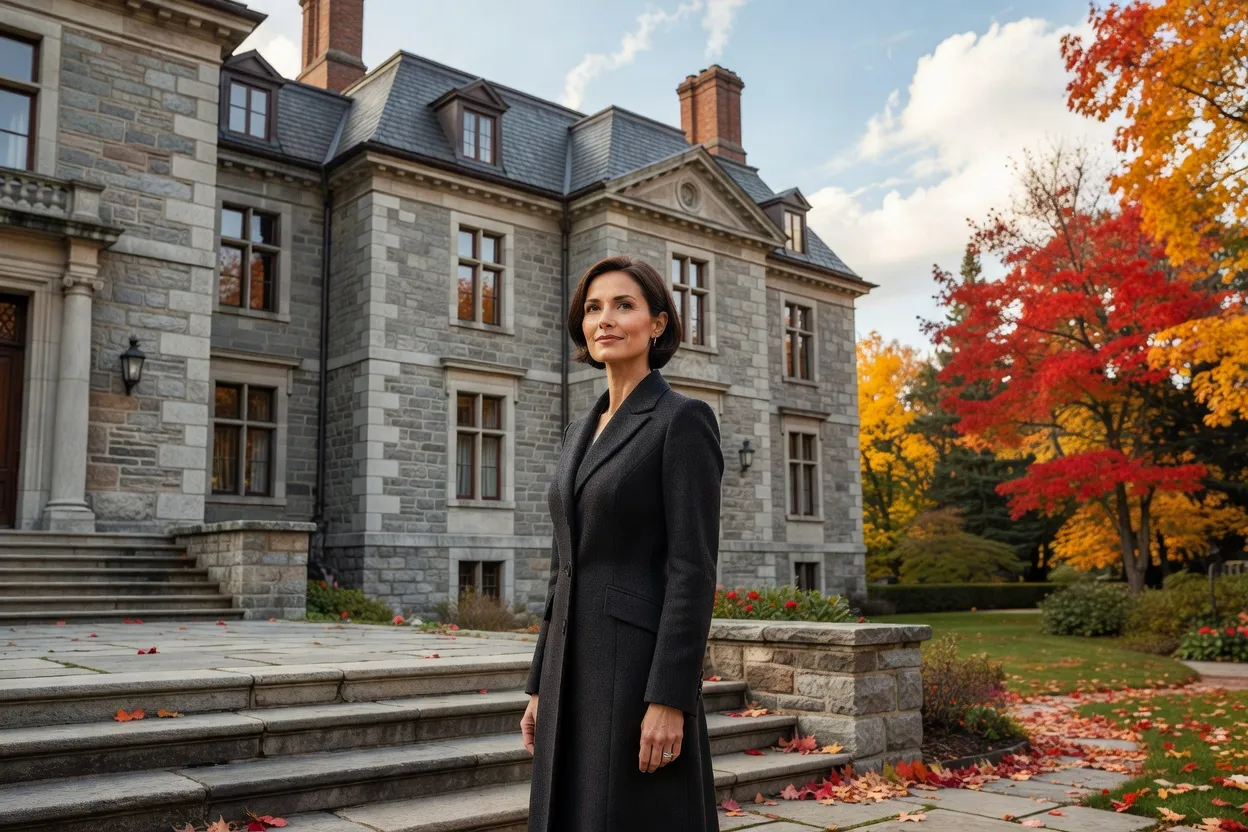
Manor vs castle: what's the difference?
The manor is often confused with the castle, but the distinction matters. A castle is a military fortification, originally designed for defence. A manor, on the other hand, is above all a prestige residence, with no defensive purpose. The manor is more modest than a castle in size, but more refined in its residential comfort.
Detailed comparison table
| Criterion | Chalet | Villa | Manor |
|---|---|---|---|
| Origin | Alps (shepherds) | Ancient Rome | Medieval feudalism |
| Main material | Wood, stone | Stone, stucco, terracotta | Dressed stone, brick |
| Typical location | Mountain, forest, lake | Coast, countryside, suburb | Rural estate, countryside |
| Associated climate | Cold, snow | Warm, Mediterranean | Temperate |
| Size | Small to medium | Large | Large to very large |
| Number of bedrooms | 2 to 5 | 4 to 15+ | 6 to 20+ |
| Style | Rustic, warm | Contemporary, bright | Classic, historic |
| Main use | Vacations, second home | Primary residence or vacations | Primary residence, events |
| Average price (estimate) | $150,000 - $1M | $500,000 - $5M | $1M - $10M+ |
How to choose between a chalet, a villa and a manor?
The choice between these three types of dwelling depends on your priorities:
- For nature and privacy: the chalet is ideal. Its more modest size and its setting in the mountains or the forest offer a real change of scenery.
- For sun and space: the villa meets these needs with its large terraces and open architecture.
- For prestige and history: the manor offers a unique setting steeped in heritage and character.
Affluent people frequently choose the chalet for its closeness to nature, its compactness that favours family moments, and the warm atmosphere it provides. In Quebec, this chalet tradition is so strong that it is an integral part of the cultural identity.
If you are interested in a chalet stay in Quebec, discover our chalet at Mont Sutton in the Eastern Townships, our chalet at Lac la Peche in Mauricie, or the luxurious Domaine du Lac Marsan in the Laurentians.
Frequently asked questions
Conclusion
The manor, the chalet and the villa are three types of prestige dwellings that reflect distinctly different architectural and cultural traditions. The manor evokes the European aristocratic heritage, the villa embodies Mediterranean elegance, and the chalet symbolizes harmony with nature.
Whether you are looking for a real estate investment or simply an ideal vacation spot, we recommend consulting specialized real estate agents to guide you in your choice. And if it is the Quebec chalet experience that appeals to you, contact us to discover our chalets available for rent.