
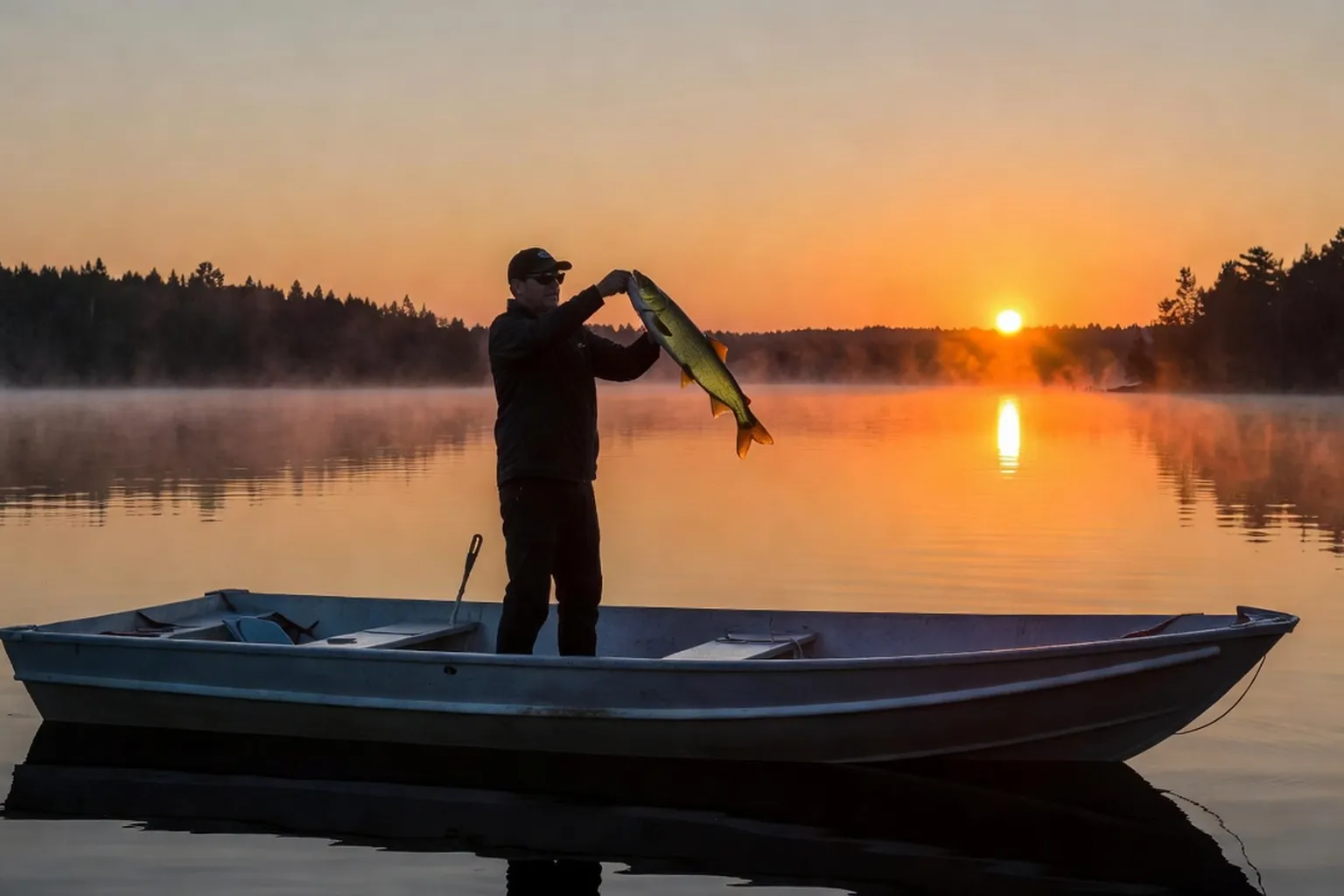
Quebec has more than three million lakes and bodies of water, approximately 350,000 of which are larger than four hectares—one of the highest hydrographic densities in the world. Recreational fishing is a traditional pastime deeply rooted in Quebec culture. A fishing licence is mandatory: the annual resident licence costs approximately 30 CAD in 2026, while the annual non-resident licence ranges from 85 to 110 CAD. Fourteen controlled harvesting zones (ZECs) and twenty-two outfitters with exclusive rights regulate access to certain wildlife territories. The choice of body of water largely determines the success of the outing: each species (brook trout, lake trout, landlocked salmon, walleye, northern pike, bass, Atlantic salmon, yellow perch) has specific requirements in terms of depth, temperature, and legal season. The season varies by fishing zone, and ice conditions allow ice fishing from late November to March in several regions. A typical fishing cottage includes a rowboat equipped with a 9.9 HP motor, loaner rods, a refrigerator-freezer, and an outdoor fire pit. To properly prepare for your stay, first see our guide to fishing cottages in Quebec in 2026, which details destinations by species and packages with a rowboat.
1. Lac Saint-Jean (Saguenay–Lac-Saint-Jean) — landlocked salmon, whitefish
Lac Saint-Jean covers 1,041 km² and is the largest lake located entirely within Quebec. It acts as a natural reservoir fed by the Péribonka River, the Métabetchouane River, the Mistassini River, and several other tributaries. Landlocked salmon, a freshwater salmon endemic to the basin, and large lake whitefish are the most sought-after species. The optimal period for landlocked salmon runs from May to July, while whitefish are mainly caught in July and August. The main service centres are Roberval (west shore) and Saint-Félicien (north shore). Public access is facilitated by several municipal boat ramps. Anglers must comply with catch limits and protection zones around tributaries during the spawning season (May to June). To combine fishing with a comfortable stay, compare this with our Quebec lake fishing guide: interview with a guide, which details approaches to a structured fishing stay on a large lake.
2. Gouin Reservoir (Upper Mauricie) — walleye, pike
Gouin Reservoir, with a surface area of 1,570 km², is a large hydroelectric reservoir located in Upper Saint-Maurice, in Atikamekw territory. It is particularly renowned for its populations of walleye and northern pike. Access is mainly by floatplane from Saint-Roch-de-Mékinac, La Tuque, or Wemotaci, or overland via a forestry road from Wemotaci. The most productive period is in May and June (post-spawn), then again in August and September when the waters cool. Several outfitters, including Pourvoirie du Réservoir Gouin, Club Hosanna, and Pourvoirie La Verendrye-Gouin, offer packages with accommodation, a rowboat, a motor, and a local guide. The low density of anglers (due to the difficult access) helps maintain high average sizes: a 5-6-pound walleye is not exceptional.
3. Lake Champlain (Montérégie) — bass, sauger
Lake Champlain is shared by Quebec, New York State, and Vermont. The Quebec portion (the northern end of the lake) is particularly renowned for smallmouth bass, largemouth bass, and sauger. Public access is available from Saint-Jean-sur-Richelieu, Lacolle, and Venise-en-Québec. Bass season begins on the fourth Saturday in June and continues until the end of November. Sauger are mainly caught in spring and fall. The shallow waters and extensive weed beds of Missisquoi Bay are ideal for fishing with surface lures and jigs. Its proximity to Montreal (1 h 10) makes it a popular weekend destination.
4. Ottawa River and Lac la Pêche — pike, walleye
Lac la Pêche, located in Gatineau Park (territory of the National Capital Commission of Canada), offers controlled access and is home to northern pike and walleye. The season runs from May to October. The nearest centres are Gatineau and Wakefield. The Ottawa River itself also offers opportunities to catch muskellunge (a prestigious large pike, up to 50 pounds) and good-sized walleye—particularly in the Lake of Two Mountains and Carillon Bay areas. Anglers must comply with park regulations for sections located within its boundaries (mandatory canoe or kayak rental, no motors). On the river outside the park, motorized rowboats are permitted.
5. Lake Memphremagog (Eastern Townships) — bass
Lake Memphremagog is shared by Quebec and Vermont, with approximately 75% of its surface area (102 km²) in Quebec. It is known for its largemouth bass populations in the Eastern Townships. Public access is available from Magog, Newport (Vermont side), and several private marinas. Bass season begins on the fourth Saturday in June and ends in late November. The rocky areas near the east shore and the shallow bays at the northern end (Magog area) are the most productive areas. Catch limits are identical to those in Zone 8, and tagging is mandatory for bass over 35 cm.
6. Lake Wayagamac (Mauricie) — lake trout, walleye
Lake Wayagamac is a deep lake in Upper Mauricie, entirely within La Mauricie National Park (managed by Parks Canada). It is home to lake trout and walleye. Access is controlled by the national park. The season runs from May to September. The lake’s depth (up to 75 metres) makes it possible to target lake trout in cold water during the summer—the thermocline is located at approximately 12-15 metres in July-August. Anglers must obtain a park permit in addition to the provincial licence. Canoe and rowboat rentals are available directly from the park.
7. Lake Saint-Pierre (Mauricie) — yellow perch, walleye
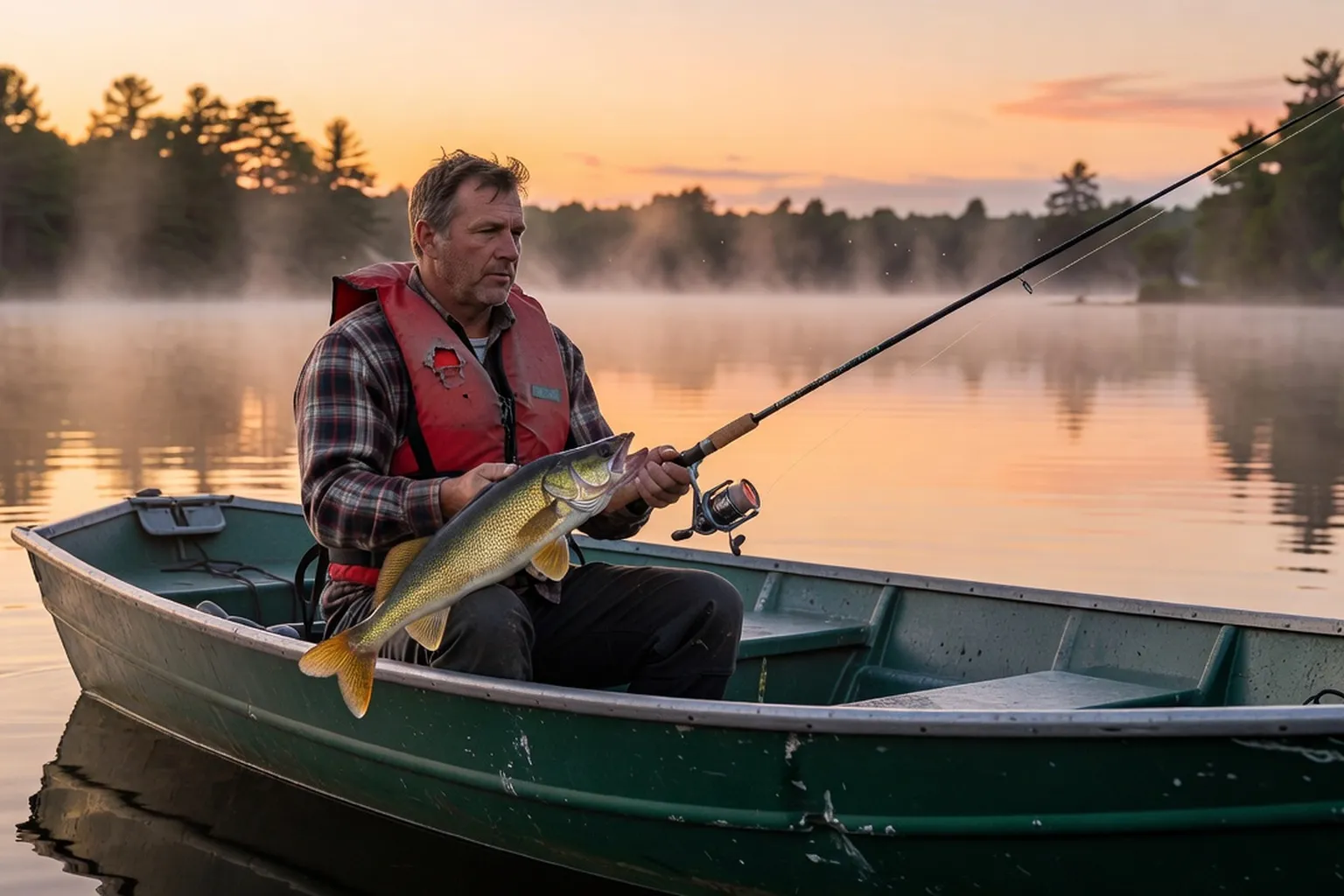
Lake Saint-Pierre, a widening of the St. Lawrence River between Sorel-Tracy and Trois-Rivières, has been recognized as a UNESCO World Biosphere Reserve since 2000. It is heavily frequented for yellow perch, particularly during winter ice fishing (the world capital of ice fishing for yellow perch according to local recreational anglers), and for walleye during the open season. The main access points are in Sorel-Tracy (south shore) and Trois-Rivières (north shore). Yellow perch can also be caught in summer using worms and small lures in the weed beds along the south shore. Quotas have been strict since 2012 to preserve stocks (partial moratorium on yellow perch). Lake Saint-Pierre is also home to 27% of Quebec’s nesting birdlife, an additional attraction for birdwatching anglers.
8. Lac des Sables (Sainte-Agathe-des-Monts) — trout
Lac des Sables, in the Laurentians, is renowned for brook trout and is a Laurentians classic accessible from Montreal in less than an hour and a half. Public access is available from Sainte-Agathe-des-Monts. The season opens in late April and ends in late September. Its depth also allows lake trout fishing in deep water during the warmest months (July-August). Annual brook trout stocking by the Ministère des Forêts, de la Faune et des Parcs supports the population. Its proximity to the municipality (a boat ramp directly downtown) makes it easy to fish in the morning or at the end of the day.
9. Baskatong Reservoir (Outaouais) — walleye, pike
Baskatong Reservoir, with a surface area of 313 km², is a large hydroelectric reservoir on the Gatineau River. It is particularly renowned for walleye (one of the three best bodies of water in Quebec for this species) and northern pike. Access is available from Grand-Remous, Maniwaki, and Bouchette. The season runs from May to October. The bays (particularly Mercier Bay and Eagle Bay), shoals, and tributary mouths are the most heavily frequented areas early in the season. Several outfitters (Pourvoirie Baskatong, Pourvoirie de l’Aigle) offer packages with a cottage, rowboat, and bathymetric map.
10. Lake Aylmer (Eastern Townships) — bass, walleye
Lake Aylmer is located in the Eastern Townships between Disraeli, Stratford, and Beaulac-Garthby. It is home to largemouth bass, smallmouth bass, and walleye. The main access point is in Stratford and at Parc régional du Lac-Aylmer. Bass and walleye seasons follow the Zone 9 rules. Submerged structures (wrecks, shoals, stream mouths) provide good concentration areas. The lake covers an area of 35 km² and has varying depths (up to 38 metres in the central area). Several family fishing camps line the shores.
11. Lake Beauport (Capitale-Nationale) — brook trout
Lake Beauport is a family-friendly lake located 20 minutes from Quebec City. It is stocked annually with brook trout by the ministry and the municipality. Access is easy from Lac-Beauport. The season opens in late April and ends in late September. Its proximity to the city makes it an accessible body of water for anglers in the Quebec City region, who sometimes go there for a morning outing before work. Its modest surface area (2.5 km²) and maximum depth of 20 metres make it suitable for shore or canoe fishing for families with children.
12. Lake Bouchette (Saguenay–Lac-Saint-Jean) — trout, pike
Lake Bouchette is located within the municipality of Lac-Bouchette, in the southwestern part of Saguenay–Lac-Saint-Jean. It contains brook trout and northern pike. Access is available directly from Lac-Bouchette. The season runs from May to September. Anglers can combine surface trout fishing (morning and evening) with pike fishing in warmer water in the middle of the day. The lake is also home to Ermitage Saint-Antoine, a pilgrimage site, which gives the area a particularly contemplative atmosphere for cottage stays.
13. Cascapédia River (Gaspésie) — Atlantic salmon
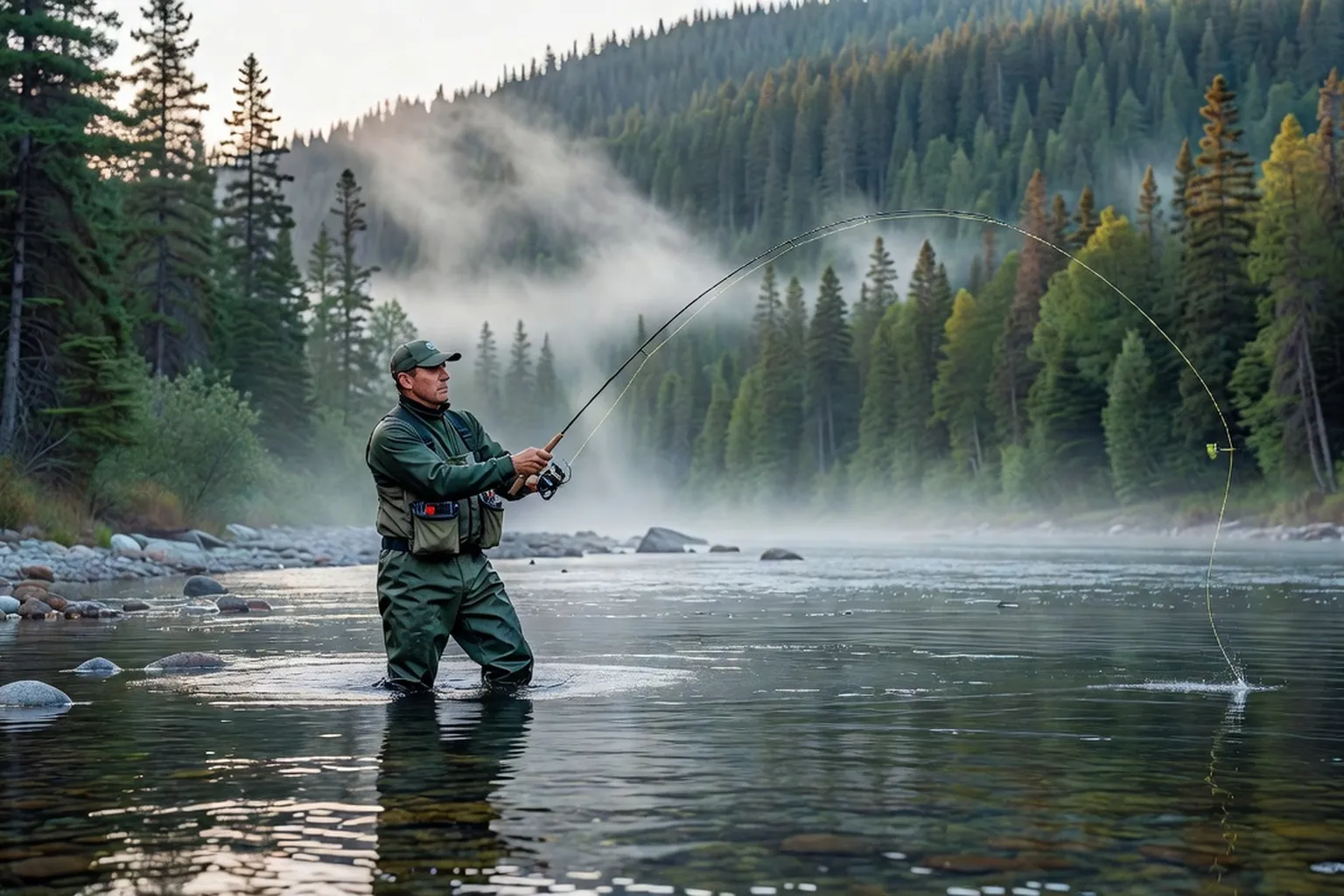
The Cascapédia River (which is divided into the Grande, Petite, and Lac Cascapédia) is among the most prestigious salmon rivers in Quebec and the North Atlantic. It is managed by ZEC Cascapédia with strict quotas (an annual draw for the most sought-after pools). Atlantic salmon fishing is exclusively fly fishing, from June to September. Daily packages range from 600 to 1500 CAD depending on the period, sector, and whether or not a professional guide is included. Only experienced anglers are permitted on certain premium pools. Catches are generally released (catch and release) to preserve salmon populations, which have been subject to a rigorous conservation program since the 1990s.
14. Lake Mégantic (Eastern Townships) — lake trout, rainbow trout
Lake Mégantic is a historic lake in the southern Eastern Townships, near the Maine border. It is home to lake trout and stocked rainbow trout. Public access is available directly from Lac-Mégantic. The season runs from May to September. Deep areas (up to 30 metres in the central sector) are preferred for lake trout during warm periods—trolling with a weighted line is the preferred technique. Rainbow trout are caught at the surface early in the season and along the shoreline after stocking.
15. Manicouagan Reservoir (Côte-Nord) — lake trout
Manicouagan Reservoir forms an almost perfect circle, the remnant of a meteorite impact 215 million years ago. It covers 1,942 km² on the Côte-Nord. It is renowned for its large lake trout (commonly 8-12 pounds, sometimes 20+). Access is via Route 389 to the Manic-5 base, then by floatplane or boat for the remote sections. The season opens in June and ends in September. The very low fishing pressure (due to the difficult access and distance) helps preserve good-sized specimens. Several Côte-Nord outfitters (Pourvoirie de Manic-5, Pourvoirie Toulnustouc) organize structured fishing stays with floatplane transportation included.
Summary table: species x region x fishing period
| Lake/River | Region | Main species | Optimal period |
|---|---|---|---|
| Lac Saint-Jean | Saguenay–Lac-Saint-Jean | Landlocked salmon, whitefish | May-July / July-August |
| Gouin Reservoir | Upper Mauricie | Walleye, pike | May-June, August-September |
| Lake Champlain | Montérégie | Bass, sauger | June-November |
| Lac la Pêche | Outaouais | Pike, walleye | May-October |
| Lake Memphremagog | Eastern Townships | Largemouth bass | June-November |
| Lake Wayagamac | Mauricie | Lake trout, walleye | May-September |
| Lake Saint-Pierre | Mauricie/Centre | Yellow perch, walleye | Year-round (ice) |
| Lac des Sables | Laurentians | Brook trout | Late April-September |
| Baskatong Reservoir | Outaouais | Walleye, pike | May-October |
| Lake Aylmer | Eastern Townships | Bass, walleye | June-October |
| Lake Beauport | Capitale-Nationale | Brook trout | Late April-September |
| Lake Bouchette | Saguenay–Lac-Saint-Jean | Brook trout, pike | May-September |
| Cascapédia River | Gaspésie | Atlantic salmon | June-September |
| Lake Mégantic | Eastern Townships | Lake trout, rainbow trout | May-September |
| Manicouagan Reservoir | Côte-Nord | Lake trout | June-September |
For those combining fishing at Lac la Pêche with a rental cottage, see our Lac à la Pêche cottage in the Outaouais page, which details the features of the partner cottage and access to the lake from the cottage. For those who prefer a guided experience and want to learn from native wildlife, also read our interview with an Outaouais outfitter (25 years of experience)—an outfitter’s field knowledge is irreplaceable for identifying the right seasonal spots.
FAQ
Which Quebec lake is the most renowned for walleye fishing in 2026?
Gouin Reservoir and Baskatong Reservoir are among the most popular bodies of water for walleye. Anglers regularly report catches of a high average size there in May-June (post-spawn) and in September, subject to weather conditions and compliance with quotas. Lake Saint-Pierre is also very productive but experiences greater fishing pressure.
Do non-residents need a fishing licence in Quebec?
Yes. Non-residents must hold a valid fishing licence issued by the Ministère des Forêts, de la Faune et des Parcs. The annual licence costs between 85 and 110 CAD depending on the year. A three-day or seven-day licence is also available at a lower cost for short stays. The licence can be purchased online or through authorized retailers. For additional advice on fishing in Nunavik, see the Soleica blog dedicated to the Far North, which documents boreal territories and fishing traditions.
What is the fishing season in Quebec?
The legal season varies by species and fishing zone (26 zones in total). Brook trout season generally opens in late April, bass season on the fourth Saturday in June, while lake trout and walleye are often permitted from May to September. Ice fishing is allowed on several lakes from December to March. Always consult the official regulations guide for each zone before your outing.
Which lakes are accessible from a rental cottage with a rowboat included?
Cottages located on the shores of Lac Saint-Jean, Baskatong Reservoir, Lac la Pêche in the Outaouais, and Lake Memphremagog frequently offer a rowboat with a 9.9 HP motor. It is recommended that you check the package specifications before booking to confirm the presence of the boat, fuel, and safety equipment.
What are the best lakes for brook trout?
Lac des Sables in the Laurentians, Lake Beauport near Quebec City, and Lake Bouchette in Saguenay–Lac-Saint-Jean are regularly cited for brook trout. These bodies of water are stocked and offer adequate public access. The optimal period runs from late April to September, depending on the water temperature.
Conclusion
Five large lakes (Saint-Jean, Gouin Reservoir, Memphremagog, Mégantic, Manicouagan), five medium-sized lakes (Champlain, Wayagamac, Saint-Pierre, Baskatong, Aylmer), and five more intimate bodies of water (la Pêche, des Sables, Beauport, Bouchette, Cascapédia) cover all regions of Quebec. A seven-day itinerary in Mauricie combining Gouin Reservoir and Lake Wayagamac makes it possible to target walleye and lake trout. A five-day stay in Saguenay–Lac-Saint-Jean around Lac Saint-Jean and the Péribonka River is better suited to landlocked salmon. A Gaspésie itinerary centred on the Cascapédia River is intended for experienced fly anglers. A lakeside cottage should be booked four to eight months in advance for the peak season from June to August. Compliance with ZEC rules, catch limits, and catch-and-release ethics remains essential to the sustainability of Quebec’s fish populations. For practical advice on equipment and seasonal techniques, see our Quebec lake fishing guide: interview with a guide, which complements this list with a practical field-based approach.