
When Marc Tremblay welcomes us into the office of his outfitter’s main lodge, 90 minutes north of Gatineau, the first thing that strikes us is the smell. Freshly cut wood, coffee, lingering smoke from the previous night’s stove. On the solid pine table lies a faded topographic map where blue and red circles mark the locations of satellite camps, spawning grounds, moose crossings, and waterfowl migration corridors. It is the dashboard of a 25-year career.
At 56, Marc Tremblay embodies the generational transition of the outfitting profession in the Outaouais. The son and grandson of hunting and fishing guides, he took over the family business in 2001 and developed it alongside an industry that has undergone three quiet revolutions: professionalization imposed by the ministry, diversification of the clientele (women, families, wildlife watchers), and adaptation to climate change. This interview was conducted in June 2026, a few weeks before the start of the summer season, as part of Soleica’s feature on outfitters in the Outaouais.
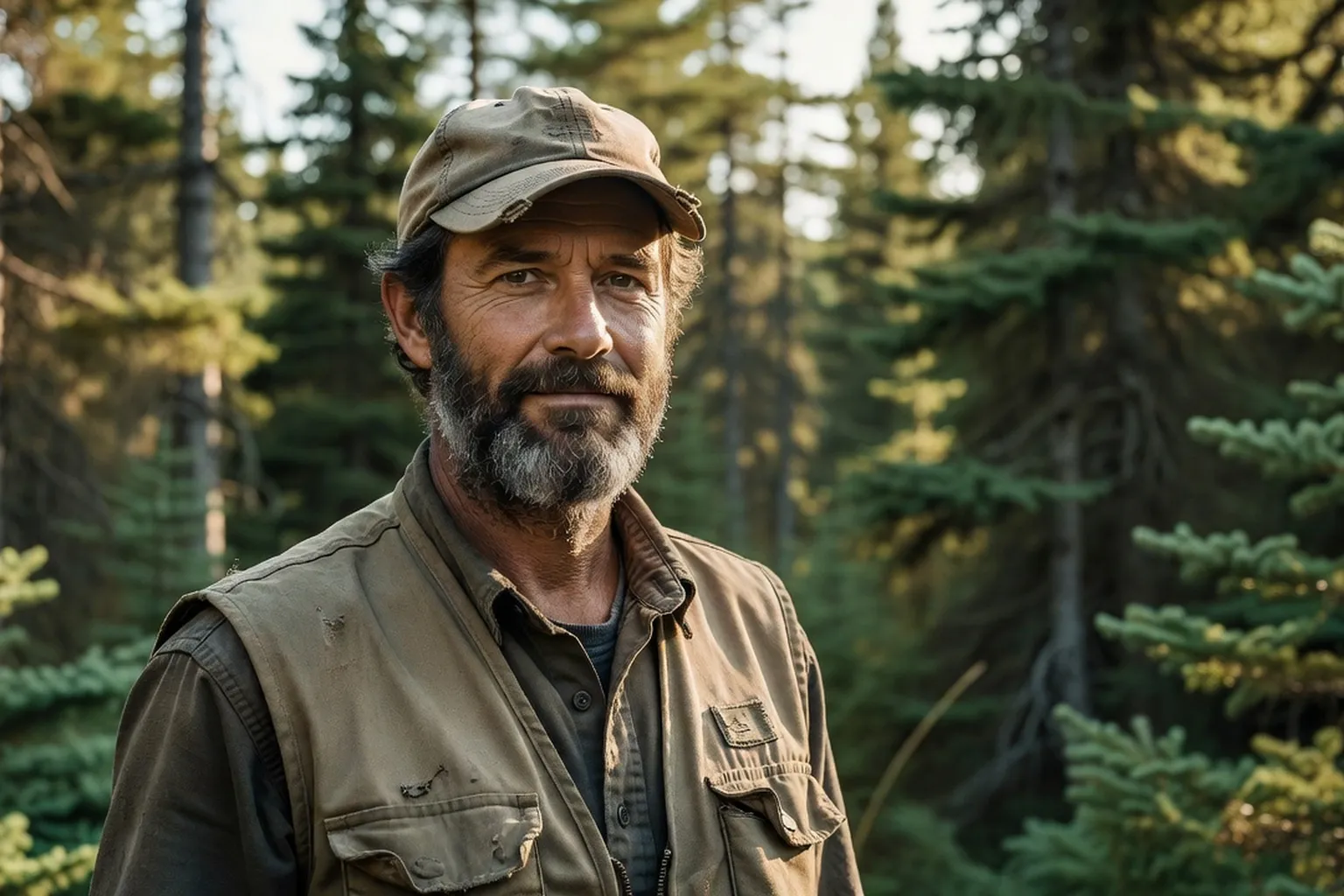
Outfitter in the Outaouais, 25 years of experience
Family-run outfitting operation in the La Vérendrye Wildlife Reserve area. From a third-generation family of guides and outfitters, he welcomes more than 400 guests each season. Based in Gatineau.
What exactly is an outfitter?
**Soleica:** For readers who have never stayed at an outfitter, how would you describe what an outfitter is in 2026?
An outfitter in Quebec is first and foremost a business that holds a ministry permit to provide accommodation, equipment rental, and supervision services for hunting, fishing, or wildlife watching. It is not just a camp in the forest—it is a regulated status with specific obligations: health standards, guide training, harvest records, and a wildlife management plan. When we say outfitter, we mean a legal framework, not an improvised lodge. In the Outaouais, we have around one hundred recognized outfitters, approximately 25% of which have exclusive rights. The others operate in controlled harvesting zones (ZECs) or on open-access lands.In practical terms, for a customer arriving, that means an equipped cabin, generally with a stove, cookware, and sometimes hot water and electricity (but not always), a boat with a motor provided or available as an option, and varying levels of supervision depending on the package (self-guided, half-day guide, full-day guide, or all-inclusive American plan). We are also seeing more and more outfitters offering transportation by ATV or winter snowmobile to remote camps.
**Soleica:** And how did you get into this profession?
Through direct family succession. My grandfather Léopold was a fishing guide for Hydro-Québec in the 1950s, when the dams were being built. My father Roland opened the first version of our outfitting operation in 1976, in an area that no one was operating commercially at the time. I grew up in a logging cabin during the summers and many autumns: I cleaned fish at 8, carried paddles at 10, and guided Americans at 17. When my father died in 2001, I took over at 31. It was not a choice in the sense that I had other options to compare—it was the logical continuation of my life. But what has happened since then has completely transformed what I do, without changing why I do it.To better understand the place of fishing and hunting in Quebec’s cabin landscape, I also recommend our feature on fishing cabins in Quebec—it complements this discussion well.
The three major changes in 25 years
**Soleica:** You mentioned three revolutions. Can you explain them in detail?
The first is professionalization. When I started in 2001, many outfitters in the Outaouais were still run by families who treated the profession as a supplementary seasonal activity. The guides were self-taught and learned on the job. Starting around 2008-2010, the ministry tightened the requirements: guide training, certification, annual management plans, and mandatory records. Many small family-run outfitters closed because they could not keep up. Today, our profession is more like outdoor hospitality than improvised adventure.The second revolution is the transformation of the clientele. In 2001, 95% of my customers were adult men, experienced hunters and anglers. In 2026, it is approximately 60% adult men, 25% women, 10% families with children, and 5% wildlife-watching groups with no intention of harvesting. This diversification has completely changed our services: we have invested in equipped kitchens rather than prepared meals, accessible trails, introductory activities, and shoreline safety.
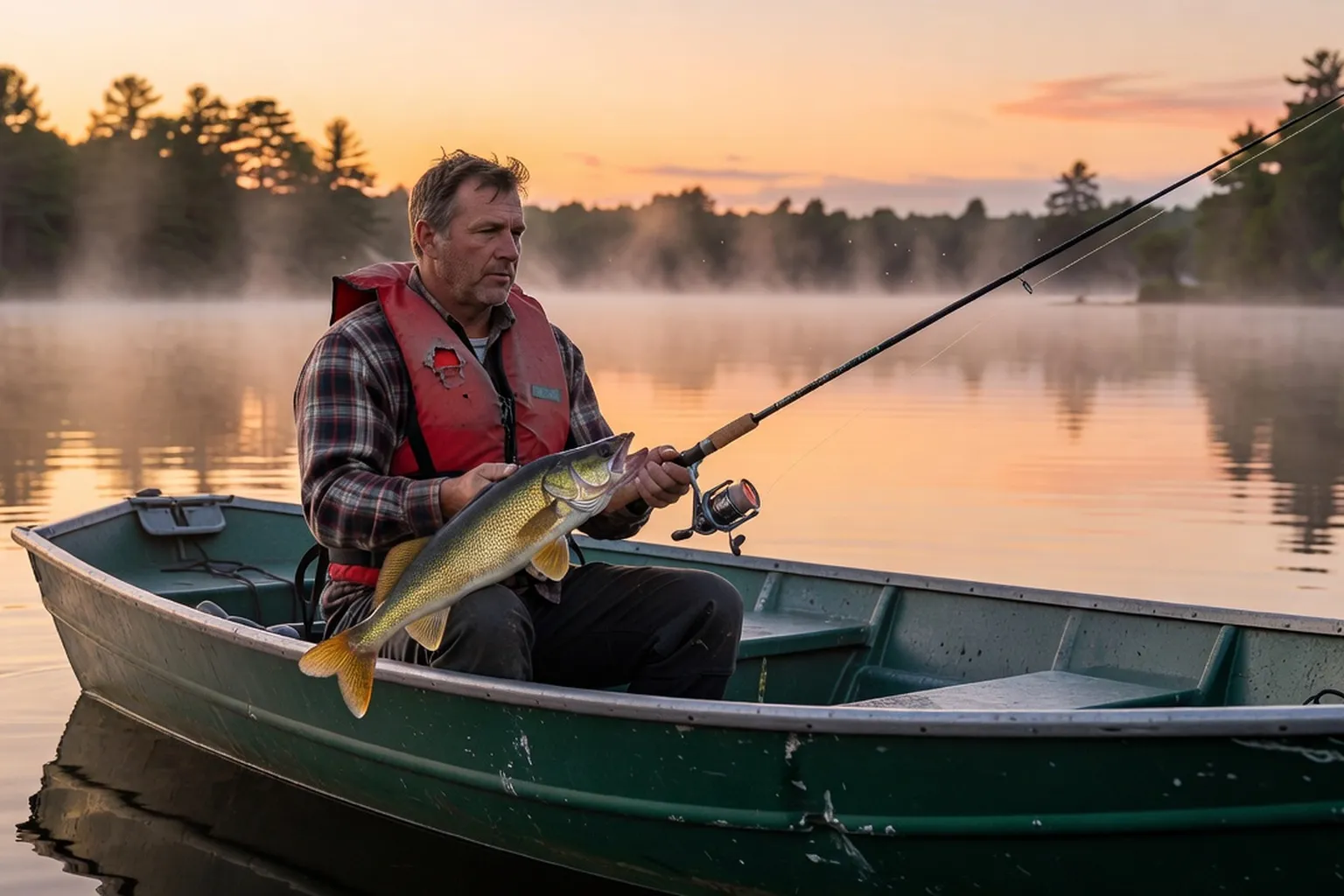
The third, and the most recent, is the impact of climate change. Our seasons are shifting. Spring walleye fishing, which traditionally began in mid-May in the Outaouais, can now start as early as late April in some years. Moose hunting is under pressure from warmer temperatures in September—the animals move less, and success rates decline. And our winters are less predictable: we had disastrous snowmobile seasons in 2023 and 2025. We have to adapt, and that is undoubtedly the most difficult challenge.
Regulations at the heart of the profession
**Soleica:** For a visitor booking an outfitter for the first time, what rules must they absolutely know?
Three essential rules. First, the licence. Everyone over 18 must have a valid licence to fish or hunt in Quebec. Licences can be obtained online from the ministry’s website or from authorized retailers. The outfitter does not issue it—it is your responsibility. Second, the hunter’s certificate. If you hunt (moose, bear, white-tailed deer, waterfowl), you must have completed the Canadian Firearms Safety Course for hunters (the federal CFSC) and the hunter education course (provincial). Without both certifications, I can turn a customer away at the door. Third, quotas and catch limits. Each species has specific rules: daily limit, possession limit, minimum size, and open season. These rules change by zone and by year. I systematically review them upon arrival, and I keep a mandatory record.For moose hunting, which is our flagship activity in September and October, there is also a draw system for obtaining a licence in certain zones. It is a complex system—visitors really need to consult the official website of the Ministry of Forests, Wildlife and Parks before planning.
**Soleica:** And what about international visitors? Do you welcome many Americans and Europeans?
Yes, even more since 2022. Americans still account for 25 to 30% of our clientele for spring black bear hunting and salmon fishing in the rivers—they have a long tradition of visiting Quebec outfitters. Europeans mainly come in summer and autumn: French, Belgians, Swiss, Germans, and more recently Poles. With them, we have to provide more patient guidance because the fishing culture is different, the equipment is not the same, and Quebec regulations can seem complex. But it is also very rewarding—these visitors often take a more contemplative rather than purely practical approach.For international context, I also recommend our feature on Lac à la Pêche in the Outaouais, which presents one of the most beautiful areas accessible to non-Quebecers.
The Outaouais: an exceptional outfitting region
**Soleica:** Why is the Outaouais such a renowned outfitting region?
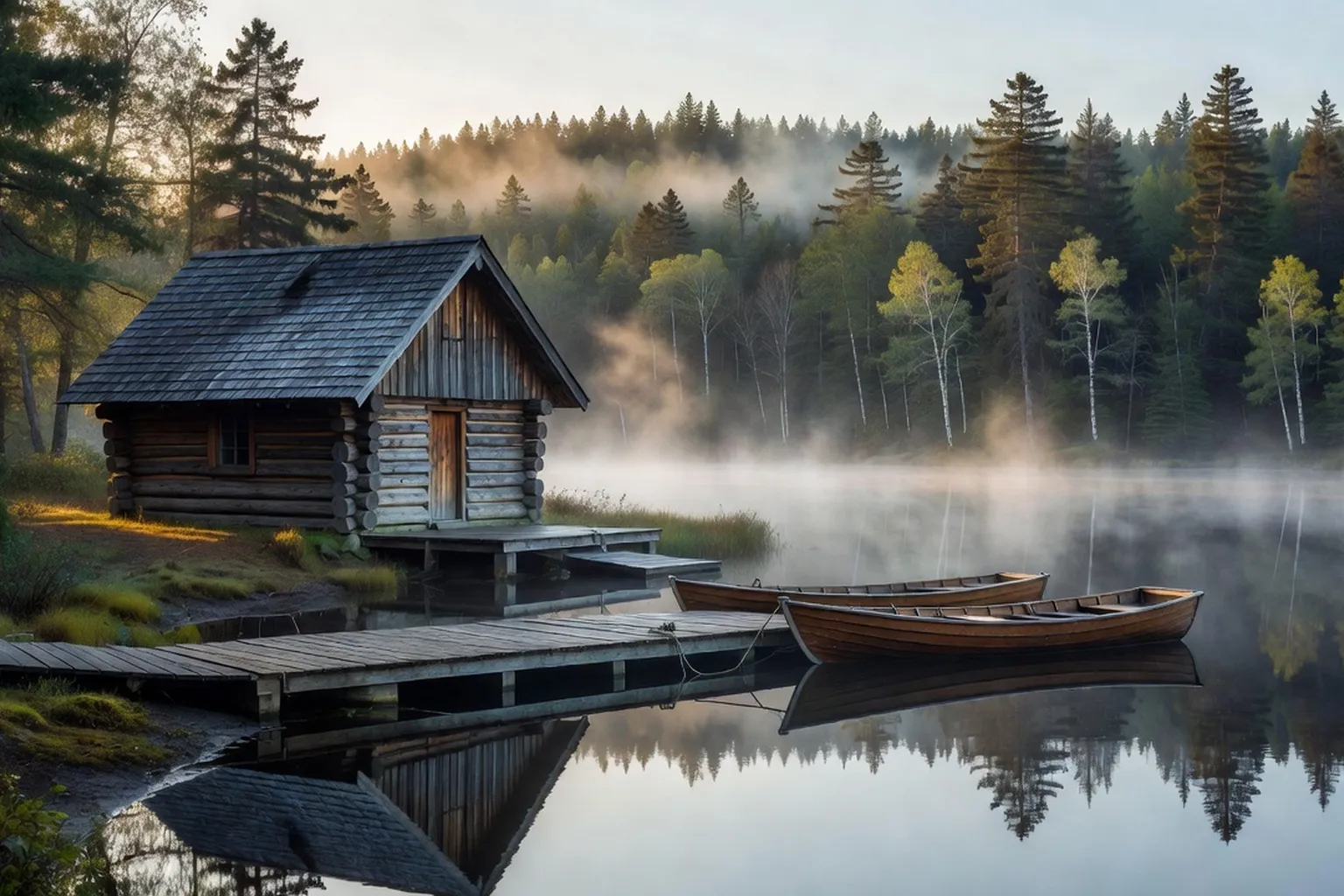
Three reasons. Geography: we have more than 7000 lakes and rivers in the region, including the Cabonga Reservoir, Dozois Reservoir, Lac Pomponne, Lac Roddick, and Grand lac des Loups Marins. That is an exceptional density of waterways. Proximity: 90 minutes from Gatineau and Ottawa, 2 h 30 from Montreal, and 3 h 30 from northern Toronto. It is one of the most accessible regions of Quebec from a major population centre. And biological quality: the La Vérendrye Wildlife Reserve, which covers 13 600 km² (Quebec’s second-largest wildlife reserve after the Laurentides), is home to protected biodiversity that maintains stable populations of moose, walleye, pike, and black bears.For visitors who book, that means excellent fishing conditions (yellow walleye in the Cabonga Reservoir is legendary), moose hunts with a success rate of 35 to 45% depending on the year (very good for Quebec), and the opportunity to watch wildlife (wolves, beavers, bears, moose) with a real chance of encountering animals. The region also shares certain characteristics with encounters among farms and rural communities in Eastern Europe: a local economy connected to the forest and subsistence agriculture—the Outaouais has retained this rural continuity that many regions have lost.
Customer expectations are changing
**Soleica:** You mentioned the diversification of the clientele. In practical terms, what has changed in what visitors expect?
Everything, or almost everything. 25 years ago, my customers wanted a rustic cabin, a good wood stove, lots of fish, and complete peace. No internet, no luxury. Today, my customers still want silence and nature, but they also want hot water for an evening shower, a place to charge their phones (yes, they use them even in the forest for photos), a kitchen where they can prepare a proper meal, a wood stove AND a backup heating system in case of a power outage, and sometimes a Nordic spa. The “rustic” of 2001 drives away the customers of 2026, except for a niche of purists.The other major change is safety expectations. All my guides have wilderness first aid certification, we have a complete first aid kit in every camp, we have satellite communications for areas without network coverage, and we have an evacuation plan. It has become a standard, no longer a premium option. Families would no longer come without it.
**Soleica:** How do you view this evolution?
With a mixture of satisfaction and nostalgia. The satisfaction is that my profession has broadened: I welcome people who would never have set foot in the forest 25 years ago and who leave transformed. A mother discovering walleye fishing with her 12-year-old son for the first time is a scene that never happened in my youth. The nostalgia is that we are losing part of the profession’s soul. When I went to the camps with my father in the 1980s, we had no cell phones, no GPS, no water heater. We lived according to the rhythms of the sun and the fish. That world is gone. I take comfort in telling myself that the forest is still there.
Climate and adaptation: the challenge of the coming years
**Soleica:** You mentioned climate change. How are you adapting in practical terms?
We are diversifying. Before, 70% of my revenue came from moose hunting in September-October, and 25% from spring walleye fishing (May-June). Those were two concentrated seasons; the rest of the year, we operated at a slower pace. Today, my revenue is spread out more evenly, which protects the business against bad years:Revenue breakdown, before/after diversification:
Activity Before (2001) Today (2026) Moose hunting (Sept-Oct) 70% 35% Spring walleye fishing (May-June) 25% 30% Summer fishing (pike, bass) — 15% Wildlife watching / ecotourism — 10% Black bear hunting (spring) 5% 10% The winter season, which we ignored for a long time, is becoming an important source of supplementary revenue with ice fishing, snowmobiling, and snowshoeing.
This diversification protects the business against bad years. In 2024, moose hunting was disastrous because of the September heat—without summer fishing, I would have ended the year in the red. We also invest in continuing education: my guides learn to observe wildlife better without harvesting it, interpret the landscape for urban tourists, and tell the history of the region. The profession is becoming more narrative and less purely extractive.
For visitors discovering the Outaouais for the first time and looking for a base, I also recommend our guide Outaouais: regions, lakes, and activities—it complements the overview I have just given.
Quick questions: misconceptions
**Soleica:** A few common statements—true or false?
**“An outfitter is always expensive.”** False. A self-guided outfitter stay (you arrive with your provisions and manage the fishing yourself) in the low season can cost as little as $120 per person per night in a shared cabin. The rate increases with the services (guide, boat, meals included).“You have to be experienced to stay at an outfitter.” False. Most outfitters welcome beginners with supervision. We teach, lend equipment, and accompany them. A guided fishing trip is one of the best introductions possible.
“Walleye fishing is boring.” False for anyone who appreciates subtlety. It is a fish that requires finesse, an ability to read the water, and patience. Once you understand its habits, you become hooked.
“An outfitter is necessarily isolated from the world.” True, but that is a feature, not a drawback. That is precisely what 90% of my customers are looking for: disconnecting to reconnect with something else.
“Women do not like hunting.” False, and it is a stereotype that is collapsing. I have seen the number of female hunters double in 10 years. They often start with fishing, then explore deer or moose hunting. They are sometimes my most dedicated customers.
“Children get bored at outfitters.” False. Children aged 6 to 12 love it if the right activities are planned: fishing for yellow perch from the dock, wildlife-watching trails, campfires, and stargazing. It is the ideal age to introduce them to it.
“You can catch unlimited quantities of anything.” False. Each species has a daily and possession limit. For walleye, it is generally 6 per day with a minimum size. For pike, it is also 6, but with a size that varies by zone. Overharvesting is penalized.
The three things to remember
- First, choose your outfitter according to your actual objective. If you want to catch plenty of walleye, target outfitters with exclusive rights in the Cabonga or Dozois area. If you want to introduce children, target outfitters with safe shorelines and organized activities. If you want moose, ask about the historical success rate before booking. A reputable outfitter will give you clear figures.
- Second, understand the regulations before arriving. Licences, certificates, quotas, seasons. It is your responsibility, not the outfitter’s. The ministry and outfitter associations publish clear guides online.
- Third, accept that nature sets the pace. An honest outfitter will tell you that they cannot guarantee success—they can guarantee conditions, equipment, and expertise, but fishing, hunting, and wildlife watching remain activities where luck and patience matter. Those who arrive with that humility most often leave fulfilled. Those who arrive expecting a guarantee leave disappointed. That, I think, is the greatest lesson this profession has taught me.
Conclusion
The interview with Marc Tremblay sheds light on an industry undergoing major transformation, professionalizing without turning its back on its family and artisanal roots. For anyone wishing to experience an outfitter in the Outaouais, this guide reiterates the essentials: choose according to your objective, understand the regulations, and accept the pace of the land. To identify the most fish-filled bodies of water in the Outaouais and prepare for your fishing season, also see our top 15 fish-filled lakes in Quebec—a natural complement to this interview. And for the practical guide to lake fishing techniques in Quebec, Soleica has published a complementary interview feature.
FAQ
What is the difference between an outfitter with exclusive rights and one without exclusive rights?
An outfitter with exclusive rights holds the hunting and fishing rights to a defined territory, which guarantees low harvesting pressure and a higher-quality experience. An outfitter without exclusive rights operates on open-access lands—the potential varies and depends on visitor numbers. In the Outaouais, most premium outfitters have exclusive rights under leases signed with the ministry.
Do you need a licence to hunt or fish at an outfitter in Quebec?
Yes. All hunters and anglers over 18 must hold a valid licence from the Ministry of Forests, Wildlife and Parks (MFFP). For hunting, a hunter’s certificate is also mandatory. The outfitter itself does not issue these licences: it welcomes you in compliance with the regulatory framework that you must satisfy beforehand.
How much does a fishing trip at an Outaouais outfitter cost in 2026?
For a 4-day/3-night cabin stay, expect to pay between $650 and $1200 per person, depending on the standard of the cabin, whether the boat and motor are included, and the package (self-guided or with a guide). All-inclusive American-plan packages with a daily guide start at around $1500 for 4 days.
What species can you fish for in the Outaouais?
The Outaouais offers remarkable fish biodiversity: yellow and black walleye, northern pike, smallmouth and largemouth bass, muskellunge, lake trout (grey trout) in certain deep lakes, brook trout in headwater lakes, and yellow perch. The Ottawa River and its tributaries also offer lake sturgeon (mandatory catch and release).
Will the outfitting profession survive climate change?
Yes, but by transforming. Outfitters that adapt through diversification (wildlife watching, ecotourism, four-season stays) will navigate the transition better. Those that depend solely on the moose quota and spring fishing are the most exposed. Several outfitters in the Outaouais have already expanded their offerings.