
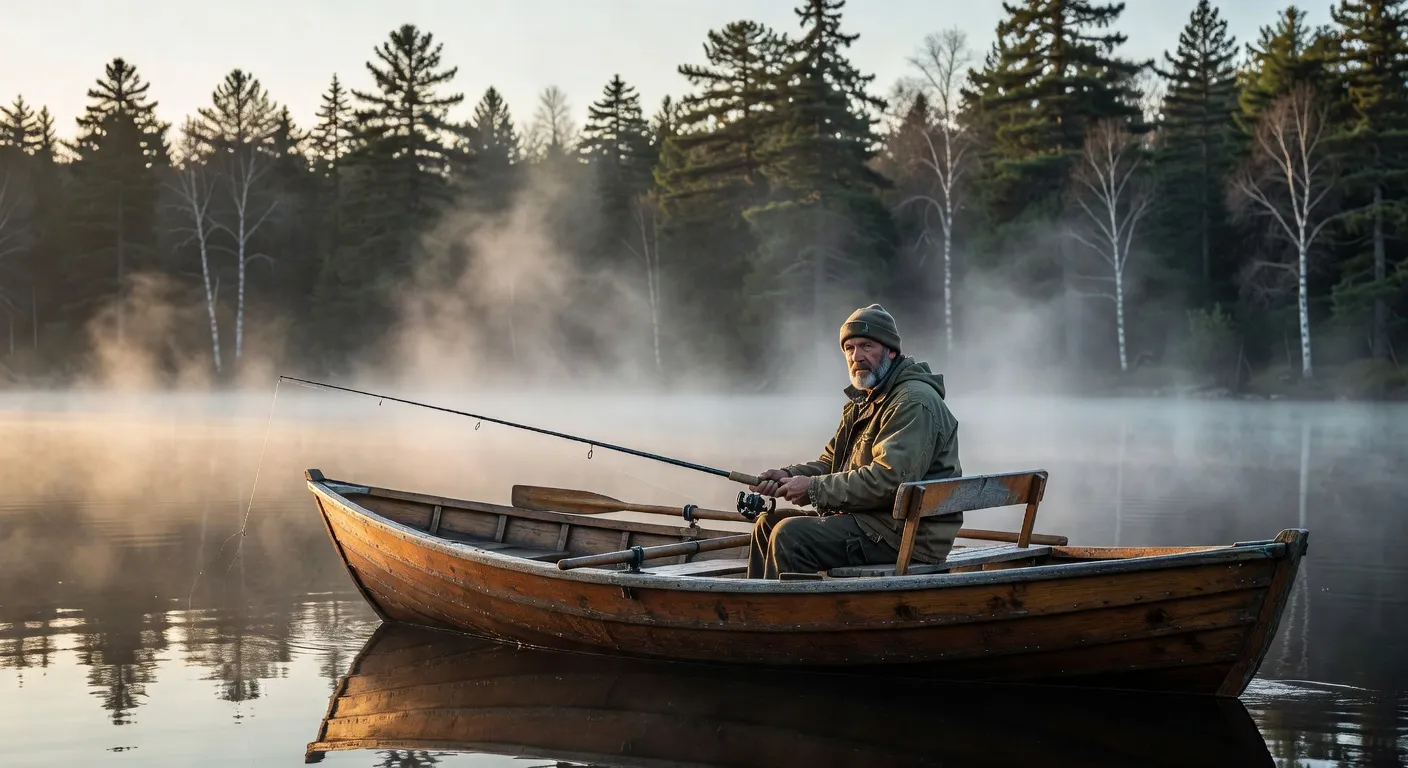
It is on the edge of a wooden dock in Lac-des-Plages, in the Outaouais, that we meet Jean-François Pelletier. At 6 a.m. he has already prepared his boat, checked his bait and looked at the weather for the next 48 hours. “Fishing is not a matter of luck. It is prepared,” he says straight away. An experienced guide, he has accompanied thousands of beginner and seasoned anglers on the lakes of the Outaouais and Mauricie.
This meeting is not a fishing lesson. It is the perspective of a man who has spent his working life understanding Quebec’s fish and introducing them to patient humans. For those who want to pair their next fishing chalet stay in Quebec with expert advice, here is what Jean-François has to say.
Reading time: about 15 minutes. Interview by Marie-Ève Champagne for Soleica Chalets.
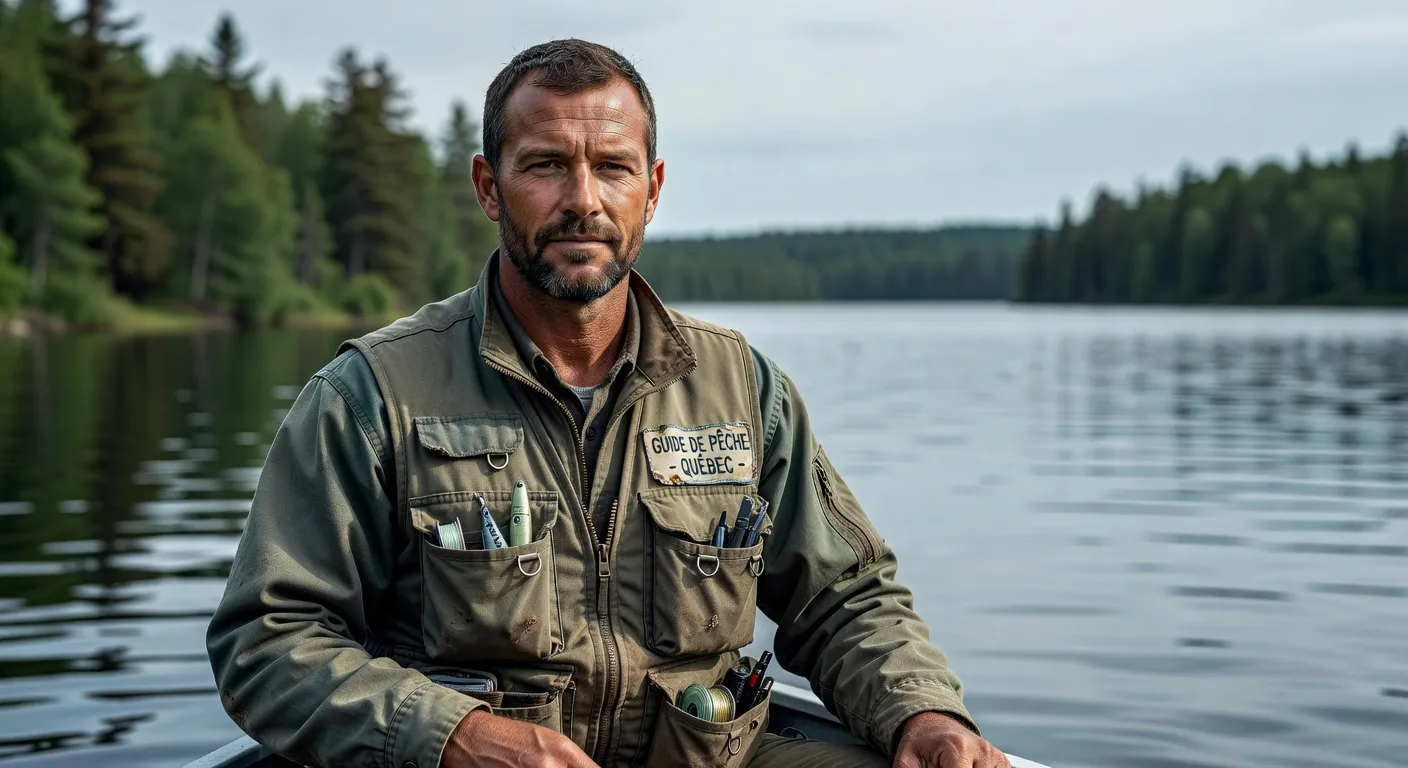
Sport fishing guide, Lac-des-Plages, Outaouais
Many years of experience, specialising in brook trout and walleye in Quebec. He guides for outfitters in the Outaouais and Mauricie.
How do you become a fishing guide in Quebec?
Marie-Ève Champagne: Jean-François, how do you go from Sunday angler to professional guide on the lakes of the Outaouais?
Jean-François Pelletier: Fishing has been in my blood since childhood. My grandfather put a rod in my hands at age 7 on Lac des Deux Montagnes, and since that day I have never really done anything else. As a teenager I informally guided my neighbours and uncles to the good spots. At 25, I decided to make it my profession.
Becoming a sport fishing guide is serious: boating safety, knowledge of Quebec’s aquatic fauna, fishing regulations, first aid, guiding basics and customer service. I did my training, and I started working for an Outaouais outfitter the same year.
Today I work for myself. I have my regular clients, families who come back year after year, and corporate groups on team-building retreats. Fishing is universal: a CEO with a walleye on the end of his line instantly rediscovers his inner child.
My favourite kinds of lakes for a fishing chalet
Marie-Ève Champagne: If you had to recommend lakes for a first fishing chalet stay, which would you choose?
Jean-François Pelletier: I will talk about types of lakes rather than precise names, because the quality of a lake fluctuates with the years, fishing pressure and weather. What was an exceptional spot five years ago may have changed.
What I look for: a medium-sized lake, deep in its main zone, with healthy aquatic vegetation along its shores, since weed beds are fish nurseries. Brook trout prefer cold, oxygenated lakes. Walleye are found in warmer, deeper lakes of the plains.
In Mauricie, Lac à la Pêche is one of those well-balanced lakes: easy access from Saint-Mathieu-du-Parc, a private dock and a boat included with the chalet. For wilder spots with less pressure, back-country lakes need a local guide, or a lot of experimentation.
Brook trout versus walleye: how to choose by season
Marie-Ève Champagne: For someone planning a fishing stay, how do you choose between targeting trout or walleye depending on the time of year?
Jean-François Pelletier: Brook trout, the speckled trout, is king in Quebec. It is the symbol fish, the one you eat grilled over the fire that same evening with butter and lemon. Its golden season is spring, mid-May to mid-June, just after ice-out. The water is cool, the trout rise toward the surface and feed actively. It is the perfect time for fly fishing or worm fishing.
In summer (July-August), trout go deep to find cooler water, so you have to fish deep, trolling or with a heavy spoon. It is less spectacular, but it works.
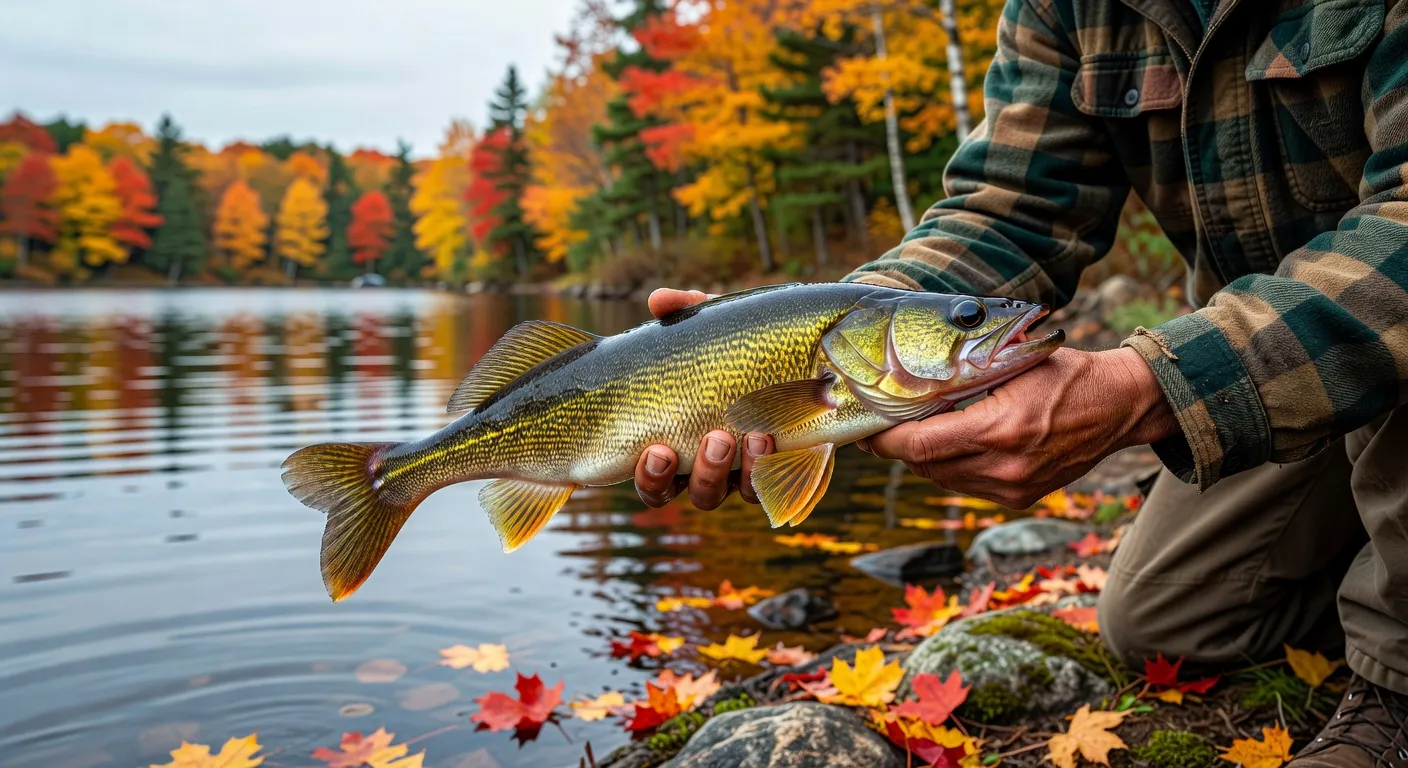
Walleye are excellent in September and October. Cool nights make them active again, and catches are generally bigger. For ice fishing from January to March, walleye and perch are the target species.
Mistakes beginners make when fishing from a chalet
Marie-Ève Champagne: What classic mistakes do you see among beginner anglers arriving at the chalet?
Jean-François Pelletier: Mistake number one is noise. People arrive with their boat, start the motor at full power, talk loudly, throw the anchor in with a big splash, and then wonder why they catch nothing. Fish feel vibrations through the water. Approach spots by oar, talk quietly and set the anchor down gently. Five minutes of silence before casting can completely change the day.
Mistake number two is using a line that is too visible. In clear water, a 6 lb fluorocarbon line is practically invisible. With a thick, brightly coloured braided line, trout can see it from far away. Go down in diameter and your catches will go up.
Mistake number three is neglecting the time of day. Trout and walleye feed mainly at dawn (6 a.m. to 9 a.m.) and dusk (6 p.m. to 9 p.m.). Going out at noon in full summer sun is difficult, with a few exceptions. The best anglers I guide are up before sunrise, without exception.
Licence and regulations 2026: what you need to know
Marie-Ève Champagne: Are there new things in the 2026 fishing regulations that visitors should know about?
Jean-François Pelletier: Two important reminders for 2026. First, preventing invasive species: it is strongly discouraged, and sometimes prohibited, to move water, live bait or wet gear from one body of water to another. Clean your boat and your equipment between two lakes.
Second, the rules vary by fishing zone and can change from one year to the next (quotas, sizes, seasons). Always check the ministry’s fishing regulations for your specific lake before you leave.
On the positive side, licences are bought online on the government platform “Mon dossier chasse et pêche” and can be downloaded on a phone or printed.
The best time of day to fish in Quebec
Marie-Ève Champagne: If you only had one hour to fish in a day, which would you choose?
Jean-François Pelletier: Without hesitation: from half an hour before sunrise to an hour after. That is what we call the blue hour. The light is soft, the water surface is calm, insects are emerging and fish are in full feeding mode. Brook trout in particular are almost impossible to miss between 5:30 and 7:30 a.m. in May and June on a good lake.
Dusk (6 p.m. to 9 p.m.) is my second choice. For walleye, it is often the most productive window of the day, as they move up to the shallows in the fading light.
To avoid completely: between 11 a.m. and 3 p.m. in midsummer, especially under a clear sky. The fish are in deep, cold layers, inactive and digesting. Use that time for lunch, kayaking or exploring the area.
Essential gear for a fishing stay at a chalet
Marie-Ève Champagne: What is your minimum gear list for a three-night fishing chalet stay?
Jean-François Pelletier: I divide gear into two categories: what is essential for safety and what is essential for fishing.
For safety: an approved life jacket or flotation vest in the right size for each person aboard (a legal requirement, not negotiable), a waterproof flashlight and spare battery, a first-aid kit, a horn or whistle, and a charged phone. Never go out in a boat without a flotation vest, even for 15 minutes.
For fishing: a light to medium rod (6 feet, fast action) for trout, a spinning reel with 6 lb fluorocarbon line, a box of assorted lures (gold spoons, small soft lures such as nymphs), single and treble hooks in sizes 8 to 12, a landing net to bring the fish in without hurting it, a small knife and an insulated container with ice to keep your catch. Most serious fishing chalets provide the boat and oars, so check before you leave.
Ice fishing versus summer fishing: which do you prefer?
Marie-Ève Champagne: Do you prefer summer fishing or ice fishing?
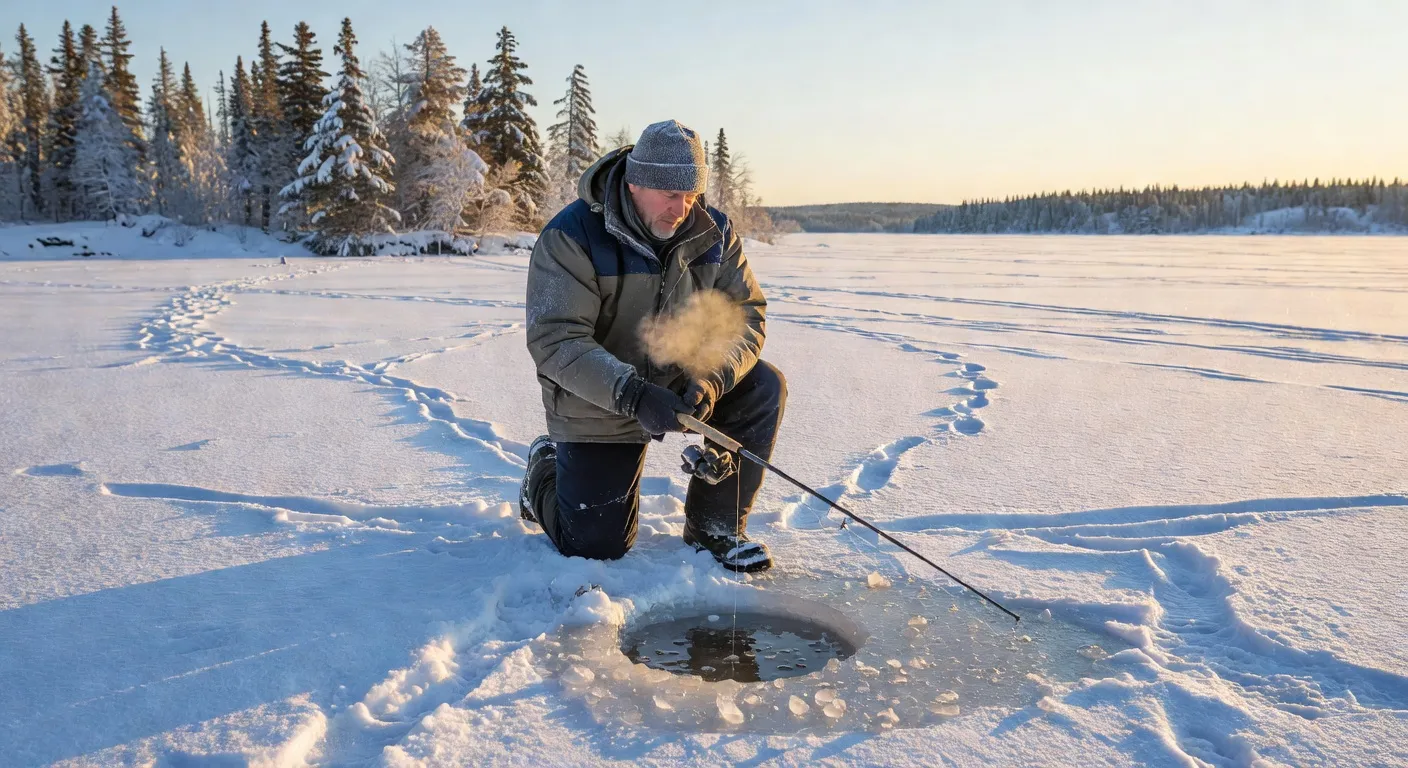
Jean-François Pelletier: The heart says summer: the nature, the sunrises on the water, the trout jumping. The head says ice: the intensity of the concentration, the absolute silence of the frozen lake and above all the catches. Ice fishing often produces much better numbers because fish are grouped at depth and move less.
Technically, ice fishing is accessible to many more people: you settle into a heated hut (rentable on most Quebec lakes), drill a 20 cm hole, lower your line and wait. No complex knots, no casting to master. To introduce children or non-anglers, it is perfect.
For a combined fishing chalet, I recommend stays in late November and early December (before the ice) and in January to March (ice fishing). The Lac Marsan area in the Upper Laurentians is excellent for both, with good results on walleye and perch in winter.
Tips for families with children who want to fish
Marie-Ève Champagne: Any specific advice for families with young children who want to try fishing at the chalet?
Jean-François Pelletier: First tip: drop your own catch goals as soon as you fish with children. Your only goal is their enjoyment, not your tally. If fish are biting and the kids want to stop to play in the water, stop. If nothing is biting and they want to keep going, keep going. Be available, not competitive.
Second tip: choose easy species. Perch and rainbow trout in managed lakes (where stocks are maintained) bite quickly and often. A perch pulling on the line of an eight-year-old is unforgettable. A walleye lake with no action for three hours is discouraging for life.
Third tip: suitable gear. A light telescopic rod of 4 feet for children aged 5 to 10, with a barbless or crimped-barb hook (to make unhooking easier), a bright float and a worm. Simple, effective, memorable. For a rental chalet with fishing equipment included, ask the owner whether they have children’s gear.
Quick questions: 7 myths about fishing in Quebec
Marie-Ève Champagne: To finish, a few myths about fishing in Quebec: true or false?
Jean-François Pelletier:
“Fish do not bite in cloudy weather.” False. On the contrary, cloudy days with light rain are often the best for trout. Diffuse light makes them less wary.
“The more expensive the gear, the more you catch.” False. A 15-cent hook with a good worm often beats a 40-dollar lure in the hands of an impatient angler.
“Earthworms are the best bait.” True for most species. The dung worm remains the most effective, accessible and cheap universal bait.
“Fishing is forbidden on Sundays.” Completely false. There is no general ban on fishing on Sundays: the rules depend on the zone, the body of water, the species and the period, and a valid licence is generally required.
“The moon influences fish.” Partly true. The full moon and the new moon seem associated with increased feeding activity in some species, walleye in particular. But it is one factor among others.
“You can eat every fish you catch.” With precautions. Fish from lakes near industrial areas can contain contaminants (mercury, PCBs). Check the official fish consumption advisories for your lake.
“Fishing is a solitary sport.” One hundred percent false. Fishing is one of the few sports where you can sit side by side for four hours without saying anything and leave feeling you shared everything.
Conclusion: the 3 things to remember for a successful fishing stay
Jean-François Pelletier:
1. Read the lake before you cast. Observe the shores, spot the weed beds, the shaded spots and the shallow zones that warm quickly in the sun. Fish are where the food is. Take 10 minutes to observe before fishing; they are the most profitable 10 minutes of your stay.
2. Respect the regulations and release what you will not eat. Sport fishing in Quebec is a privilege, and healthy stocks require responsible practices. Practise catch-and-release with barbless hooks on the fish you will not keep.
3. Fish at the right time. Early morning is always better than the middle of the day. Get up before the sun at least once during your stay; you will never regret it.
To find the ideal fishing chalet in the Outaouais or Mauricie, explore our complete guide to fishing chalets in Quebec 2026. And to book directly with an experienced guide, contact the Soleica team to book a fishing chalet with a guide in Quebec.
FAQ: Fishing from a chalet in Quebec
What licence do you need to fish in Quebec in 2026?
A valid fishing licence is generally mandatory. In 2026, the annual resident licence (under 65) costs $26.73 and the 7-day non-resident licence $57.67, taxes included. Anglers under 18 may fish under the supervision of a licence holder. Buy online on the Quebec government’s “Mon dossier chasse et pêche” platform.
What is the best season to fish from a chalet in Quebec?
Mid-May to the end of June for brook trout (cool water, active fish). July-August for walleye and bass. September-October for large walleye. January-March for ice fishing.
Can you fish at night in Quebec?
Night fishing is generally allowed, with time restrictions in some zones, and some protected areas may have specific rules. Night is excellent for walleye.
How many fish can you keep per day in Quebec?
Quotas vary by species, zone and body of water. Check the ministry’s fishing regulations for your specific lake.
Which fish species are found in Laurentian lakes?
Mainly brook trout, lake trout, walleye, sauger, northern pike, bass and yellow perch. The species present depend on the depth and temperature of the lake.