
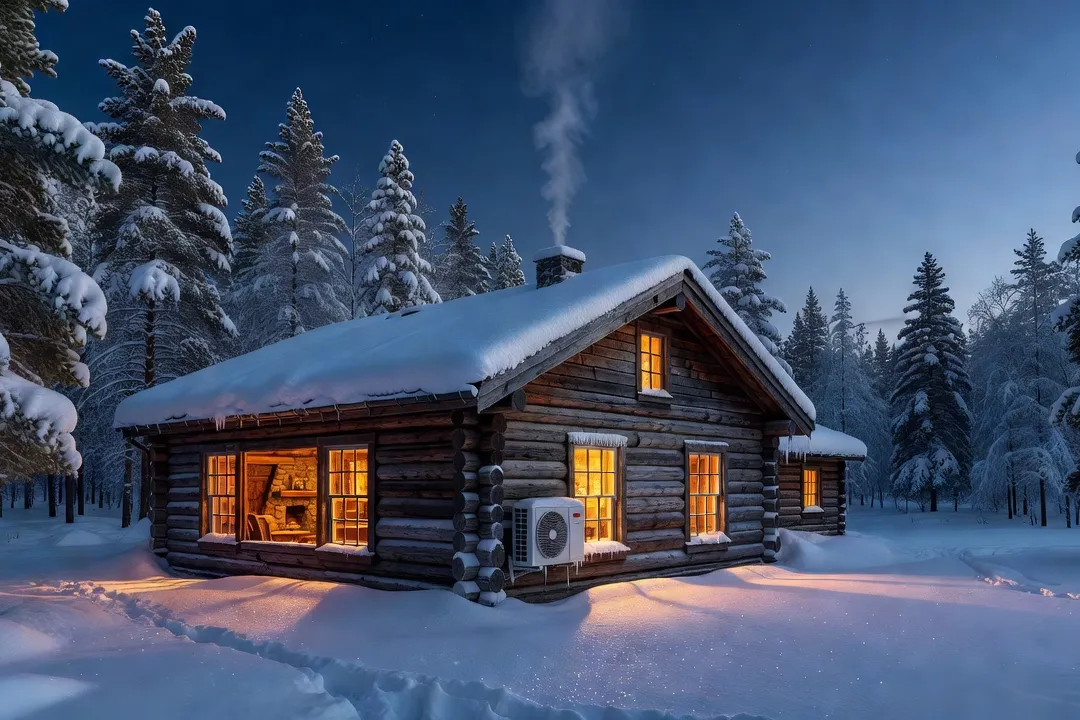
One Friday in January, a group of friends arrives at a chalet in the Laurentians around 9 p.m. The thermostat reads 8 °C. Outside, it is -27 °C. The baseboards all start heating at once, and it will take several hours before the main room becomes comfortable.
This scenario sums up the problem of heating a chalet in winter when nobody lives there full time: the building stays cold during the week, then has to climb back up in temperature all at once, often during the coldest nights. Before thinking about the restart, you also need to have thought about winterizing the chalet and the period you choose to book, two steps that determine how easy winter heating will be.
The problem has three parts. The first is freeze protection. The second is the restart before the occupants arrive. The third concerns the equipment, which does not all deliver the same output in extreme cold.
Heating a Chalet in Winter Under Two Regimes
A chalet occupied intermittently lives under two regimes. While it is empty, the heating serves only to protect the plumbing and the building. During a stay, it has to deliver the comfort of a home.
For the period of absence, insurers generally recommend not turning the main heating off completely, and lowering the thermostat while keeping a minimum temperature to protect the plumbing from freezing. The exact threshold to respect varies from one policy to another and must be confirmed with your own insurer before you leave.
For the stay, CAA-Québec puts a comfortable indoor temperature between 20 and 22 °C. The gap to close therefore runs from 10 to 17 °C, in a building whose walls, floors and furniture have had time to cool down.
The climate makes this gap hard to close. In Sherbrooke, in the Eastern Townships, Environment Canada’s 1991-2020 climate normals give an average minimum temperature of -16.5 °C in January. The station averages 30 nights per year below -20 °C and 4 nights below -30 °C. The record for the series is -41.2 °C, on January 15, 2004.
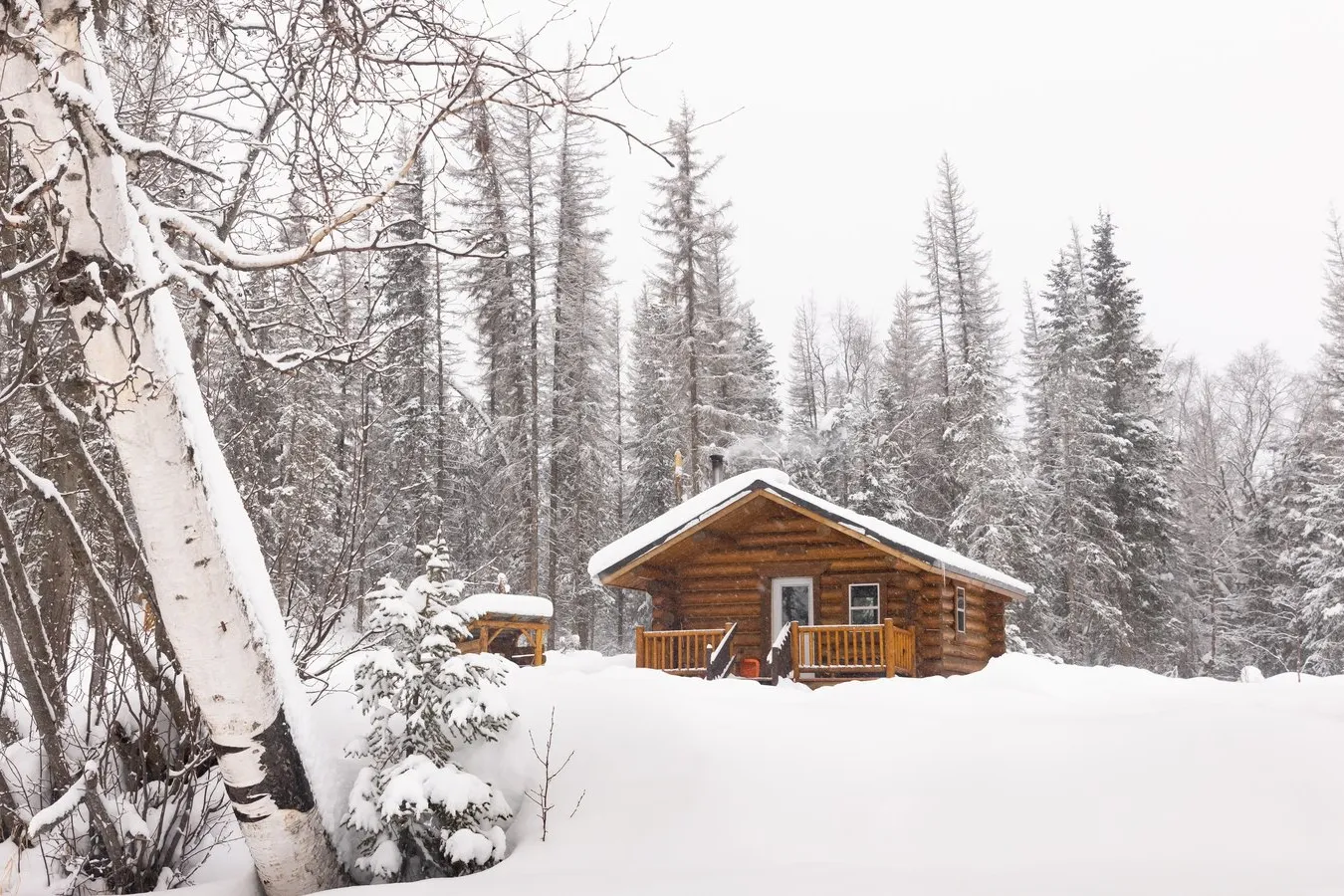
Baseboards and Wall-Mounted Heat Pumps in Extreme Cold
Most Quebec chalets are heated with electric baseboards. They are simple, inexpensive to buy and work in any cold. A baseboard turns every kilowatt-hour consumed into one kilowatt-hour of heat.
Hydro-Québec states that a heat pump can be up to three times more efficient than baseboards during the cold season. A wall-mounted heat pump moves heat from the outdoor air to the inside instead of producing it. It also cools in summer, a useful feature for a chalet rented in July. Installers who fit wall-mounted and central heat pumps in the Laurentians and Lanaudière, such as Confort Prestige, start with an on-site assessment. The capacity is chosen according to the building’s heat loss and the outdoor temperature in the area.
The limit appears in extreme cold. According to Hydro-Québec, most recent air-source heat pumps have a minimum operating temperature ranging from -15 °C to -25 °C. Below that threshold, a backup system has to supply all the heating. ENERGY STAR “cold climate” models still deliver a good amount of heat at -20 °C.
For a chalet, the most common combination pairs a wall-mounted heat pump with the existing baseboards, which take over on the coldest nights.
| Electric baseboards | Wall-mounted heat pump | |
|---|---|---|
| Efficiency in the cold season | 1 kWh consumed = 1 kWh of heat | Up to 3 times more efficient, according to Hydro-Québec |
| Performance in extreme cold | Works in any cold | Reduced capacity below -15 °C to -25 °C depending on the model |
| Summer cooling | No | Yes |
| Best-suited role | Backup for the coldest nights | Main heating and freeze protection |
Freeze protection suits a heat pump well. Keeping a minimum temperature takes little power, and the heat pump is enough on its own as long as the outdoor temperature stays above its operating threshold.
Baseboards need particular attention while the chalet is empty: clear space in front of each unit and nothing stored against them reduce the risk of fire, a vigilance that echoes the habits presented in our guide to firewood and campfires at the chalet.
Restarting the Heat Before Arrival
The restart is where the problem shows. A chalet at 8 °C takes time to warm up, even with a properly sized unit.
Wi-Fi connected thermostats and heat pumps let you start the restart remotely, several hours before leaving the city. They also send an alert if the indoor temperature falls below a threshold set by the owner.
For a rental chalet, this feature simplifies management between two bookings. The owner keeps the building in freeze-protection mode and brings it up the day before the renters arrive.
Power Outages and Snow
An outage lasting several hours while the chalet is empty exposes it to freezing. Without heating, the indoor temperature can drop to the point where pipes freeze, and water damage is among the costliest claims in home insurance.
A connected thermostat’s temperature alert serves here as a first signal, as long as the chalet’s internet connection is working. For an absence of several weeks, shutting off the water and draining the plumbing remains the safest precaution against freezing.
A heat pump’s outdoor unit must stay out of the snow. It is mounted on a wall bracket or a raised base, away from where snow slides off the roof, with free drainage for defrost water. A chalet cleared of snow only when the occupants arrive requires a higher mounting height than a house cleared every week.
LogisVert and the Chalet
The participation guide for Hydro-Québec’s LogisVert program names the “chalet-type” home among the dwellings eligible for the Heat Pump measure. The dwelling must be located in Quebec, be residential in use and be habitable year-round. A three-season chalet does not meet this last criterion.
The unit must be new and ENERGY STAR certified, with an outdoor unit of at least 12,000 BTU/h in cooling mode. The assistance reaches $50 per 1,000 BTU/h measured at -8 °C, or $120 for a “cold climate” model. The installation must be done by a company holding a Régie du bâtiment du Québec licence and belonging to the corporation for its trade.
To heat a chalet in winter when it is only occupied on weekends, the choice therefore comes down to three points: a holding temperature of 5 to 10 °C, a wall-mounted heat pump able to heat in extreme cold with the baseboards as backup, and a remote control for the restart and alerts.
FAQ
What temperature should a chalet be kept at while empty in winter?
Insurers generally recommend not turning the main heating off completely and keeping a minimum temperature, often around 10 °C to 15 °C, while you are away, to protect the plumbing from freezing. The exact threshold varies by policy and should be checked with your insurer. For the stay itself, CAA-Québec puts indoor comfort between 20 and 22 °C.
Heat pump or electric baseboards for a chalet in Quebec?
Hydro-Québec states that a heat pump can be up to three times more efficient than baseboards during the cold season. Its limit is extreme cold: most recent models have a minimum operating temperature between -15 °C and -25 °C, below which a backup system must take over. The most common combination pairs a wall-mounted heat pump with existing baseboards for the coldest nights.
How do I restart a chalet’s heating before arriving?
A Wi-Fi connected thermostat or heat pump lets you start the restart remotely several hours before leaving the city, and send an alert if the indoor temperature falls below a threshold set by the owner. A chalet at 8 °C takes time to warm up, even with a properly sized unit.
What is the LogisVert program for a chalet heat pump?
LogisVert, Hydro-Québec’s program, accepts the “chalet-type” home under its Heat Pump measure if the dwelling is located in Quebec, is residential in use and can be lived in year-round (a three-season chalet is not eligible). The unit must be new and ENERGY STAR certified, with an outdoor unit of at least 12,000 BTU/h in cooling mode. The assistance reaches $50 per 1,000 BTU/h measured at -8 °C, or $120 for a “cold climate” model, installed by a company holding a Régie du bâtiment du Québec licence.
Where should the outdoor unit of a heat pump go for a chalet that is rarely plowed?
The outdoor unit must stay out of the snow, mounted on a wall bracket or a raised base, away from where snow slides off the roof, with free drainage for defrost water. A chalet cleared of snow only when the occupants arrive requires a higher mounting height than a house cleared every week.