
Reading time: 16 minutes — Interview by Marie-Claude Lemire for Soleica Chalets
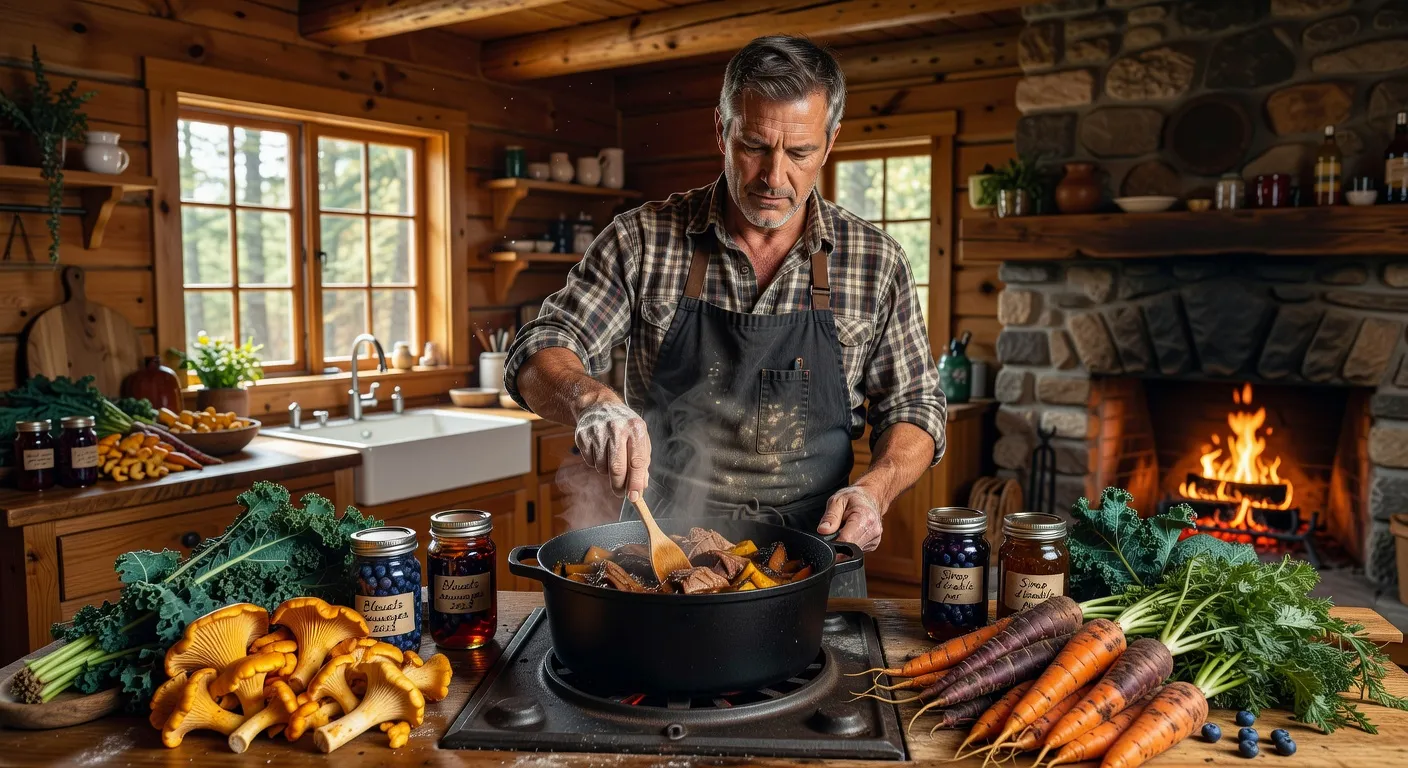
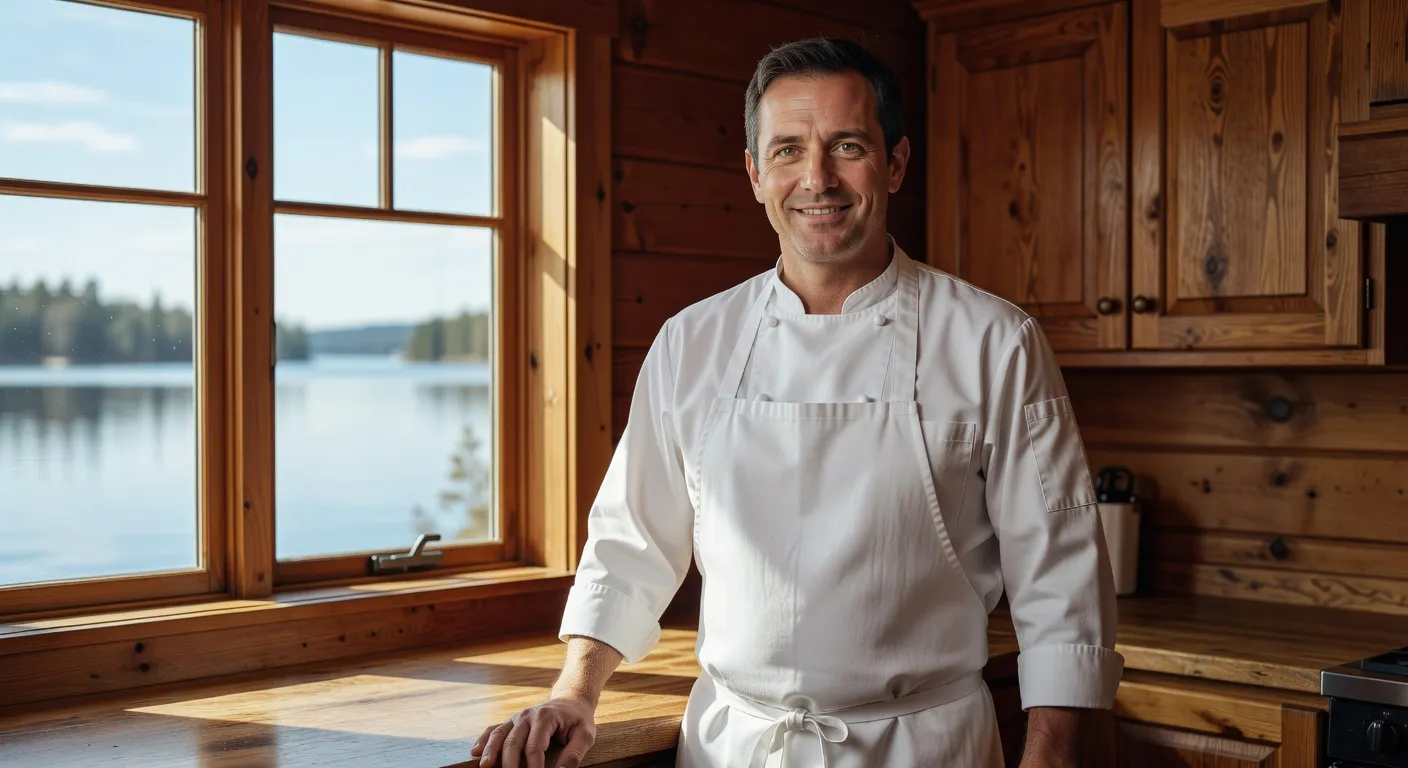
We meet Thomas Beaupré in the kitchen of his own cottage in Saint-Sauveur, on the shore of a private lake. A cast-iron Dutch oven simmers on the wood stove. Dried Laurentian herbs hang from the ceiling. The smell of braise and cedar blend into something indefinable, something that smells like Quebec. For those who want to combine their next fishing cottage stay in Quebec with a gastronomic experience worthy of the name, here is what Thomas has to share.
Background: from family cooking to professional Quebec regional cuisine
Marie-Claude Lemire: Thomas, how does one go from a passion for cottage cooking to a career as a chef specializing in Quebec regional cuisine?
Thomas Beaupré:It all started in my parents' cottage in the Laurentians. At 8 years old, I watched my mother prepare her traditional Quebec boiled dinner (root vegetables from the garden, salt pork, herbs from the garden) on an old wood stove. That dish had a flavour that restaurants in Montréal could never reproduce. It took me 20 years to understand why: it was the combination of the wood fire, the local ingredients and the pure Laurentian air.
The ITHQ gave me the techniques. But cottage cooking gave me the philosophy: use what is local, simple, in season. Do not overcomplicate. Let the ingredients speak. It is ironic: the great French cooking techniques I learned all end up coming back to that same philosophy.
What makes cottage cooking different from restaurant cooking
Marie-Claude Lemire: What fundamentally changes when you cook at the cottage compared with a restaurant?
Thomas Beaupré:Three things. First, the diner. At the cottage, people already eat in a state of well-being: they have walked, fished, skied, breathed. Their palate is more open, their expectations are different. They do not want to be impressed, they want to be fed. In a sense, that is more demanding.
Second, the constraints. You do not have your kitchen brigade, your usual utensils, sometimes just two burners and a knife. That forces you back to the essentials. And the essentials in cooking are always the quality of the ingredients and the understanding of heat.
Third, the context. A braise eaten in a restaurant in Montréal is good. The same braise eaten after a day of skiing or fishing, on the shore of a lake, with snow falling outside is transcendent. The cottage turns every meal into a memorable experience.
The Quebec regional ingredients you absolutely must bring to the cottage
Marie-Claude Lemire: If you had to put together a list of essential Quebec ingredients for a week at the cottage, what would it contain?
Thomas Beaupré:My personal list, in order of priority:
Maple syrup: the Swiss army knife of Quebec cooking. A glaze for salmon, an improvised caramel, a salad dressing, a sweetener for the morning pancakes. Take a dark syrup: more character, better for cooking.
Aged Quebec cheeses: Le Migneron de Charlevoix, a good sharp cheddar or a firm cheese for an improvised raclette on the wood stove. Aged Quebec cheeses travel well.
Vacuum-packed meat: A leg of lamb or a venison roast vacuum-packed travels perfectly. They cook slowly while you ski or fish, and the cottage smells divine when you return.
Local dried herbs: savory, wild thyme, bay leaf. Fine-food shops in the Laurentians sell excellent ones. They give an aromatic depth that supermarket herbs cannot reproduce.
Ice cider: For cooking (deglazing, marinating), for sipping with dessert, for making a reduction with raspberries. One bottle is enough to transform several dishes.
Signature recipe: venison braise at the cottage
Marie-Claude Lemire: Your venison braise recipe has a great reputation. How do you adapt it for a cottage kitchen?
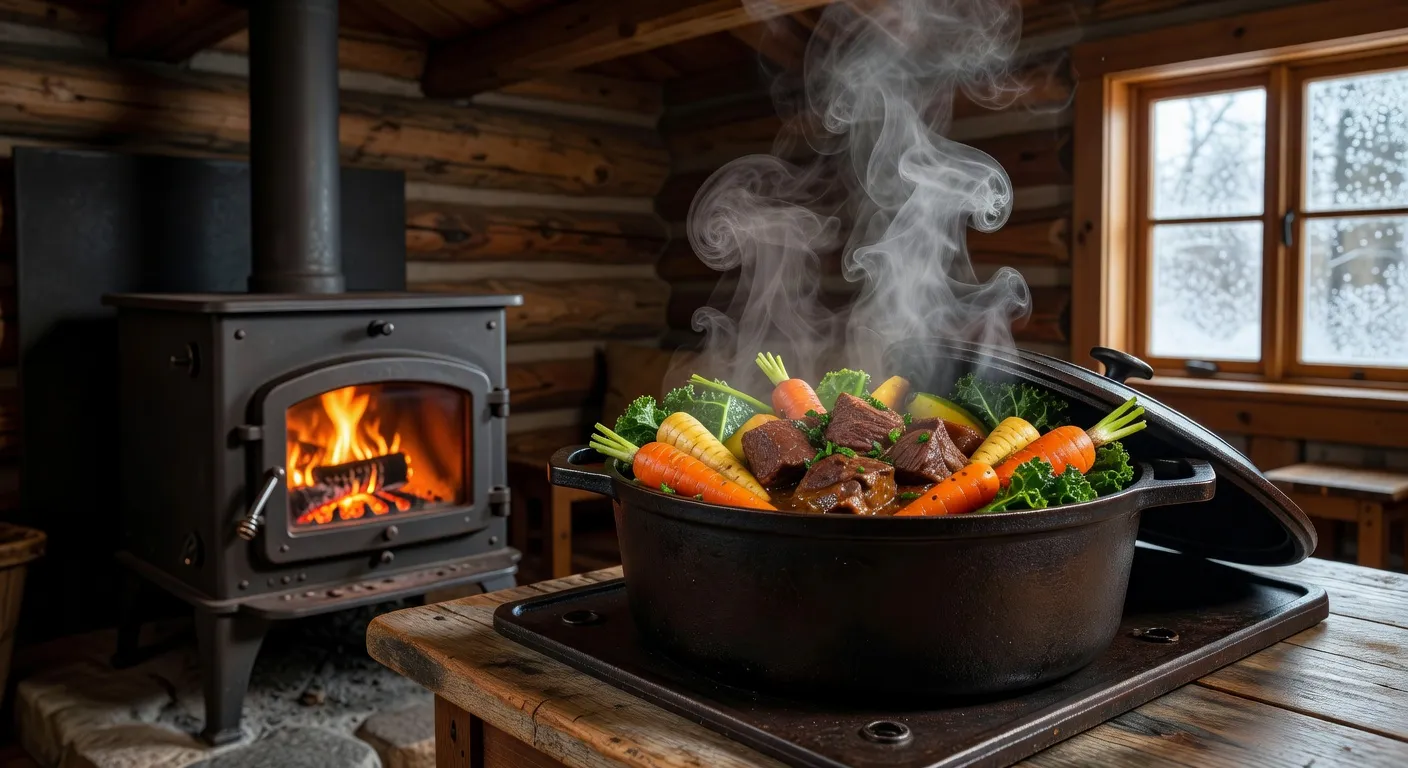
Thomas Beaupré:It is the perfect recipe for the cottage because it needs little active attention but a lot of passive time. Here is my simplified version:
The ingredients (6 people): 1.5 kg of venison shoulder (or braising beef), 2 onions, 3 carrots, 3 celery stalks, 4 cloves of garlic, 1 bottle of ice cider or full-bodied red wine, brown stock (powdered if you do not make your own), bouquet garni, salt, pepper, oil.
The method: Sear the pieces of meat over very high heat in the Dutch oven. The brown colour you get is called the Maillard reaction, and it contributes strongly to the final flavour. Deglaze with the cider or wine. Add all the roughly chopped vegetables, the bouquet garni, the diluted brown stock. Cover tightly. In the oven at 160°C (or on the wood stove at very low heat): several hours, until the meat is very tender. You can go skiing.
The secret: open the lid as little as possible. The internal steam creates a perfect cooking environment.
Cooking freshly caught walleye and trout from the lake
Marie-Claude Lemire: You have fished in Quebec all your life. What is the best way to cook fresh walleye or trout at the cottage?
Thomas Beaupré:Rule number one: do not spoil the freshness. A fish caught in the morning and eaten in the evening is one of the best things you can eat in Quebec. A fish caught yesterday, less so.
For walleye: fillets, salt and pepper, a very hot pan with clarified butter (or oil if you prefer). A few minutes on the skin side, a little less on the flesh side. Deglaze with a little apple cider and finish with a knob of cold butter. Walleye is a delicate fish: overcooking it by one minute makes it rubbery.
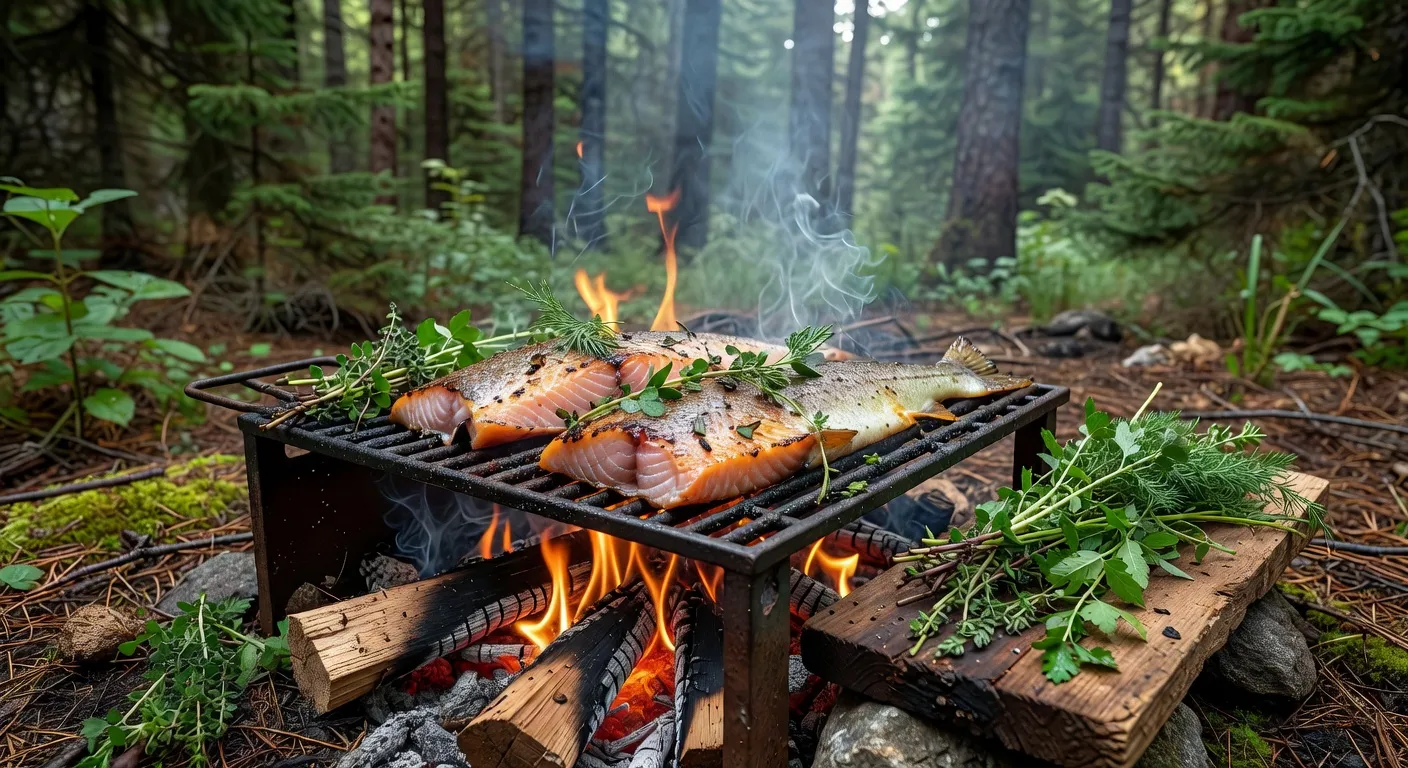
For lake trout: if you have a nice-sized whole trout, a very good method is the campfire. Seasoned with fresh herbs and a slice of lemon inside, wrapped in aluminum foil with a drizzle of oil. Cook over moderate embers until the flesh comes away easily. The flesh lifts cleanly off the bones.
Quebec cheese fondue: the cottage version
Marie-Claude Lemire: Fondue at the cottage is a classic. What is your version with Quebec cheeses?
Thomas Beaupré:My favourite base: two thirds Migneron de Charlevoix (mild, melting) and one third grated extra-sharp cheddar (for character). Rub the fondue pot (or a saucepan if you do not have one) with a clove of garlic. Melt the cheeses over very low heat in 200 ml of dry Quebec cider. Thicken with 1 tablespoon of cornstarch diluted in a little cold cider.
For dipping at the cottage: crusty bread, cooked root vegetables (carrots, potatoes), Quebec charcuterie, apples. Avoid sandwich bread: too soft, it falls apart in the fondue.
Reheating a cooled fondue: never over high heat. Always a double boiler, and whisk constantly.
The Quebec cottage breakfast according to Thomas
Marie-Claude Lemire: Breakfast is often the most memorable meal at the cottage. What is your ideal menu?
Thomas Beaupré:The Quebec cottage breakfast has its own logic: it must be generous (you are going to do something physical afterwards), it must be comforting (autumn and winter mornings call for comfort), and it must smell good (coffee and bacon sizzling wake sleepers better than an alarm clock).
My program in three acts. Act 1: Quebec buckwheat pancakes with dark maple syrup and wild blueberries or field strawberries (fresh in summer, frozen in winter). Act 2: scrambled eggs with cream and butter (no milk, since cream gives a luscious texture) with fines herbes. Act 3: local charcuterie (maple-smoked sausage, Canadian back bacon) and toasted sourdough bread with butter.
The absolute rule: prepare everything to order, not in advance. A cottage breakfast is eaten hot, together, in pyjamas, with warm feet.
Wood-fire versus wood-stove cooking: tips for beginners
Marie-Claude Lemire: Many cottage renters are afraid of cooking on a wood stove. What are your tips to demystify it?
Thomas Beaupré:The main fear is not being able to control the temperature. And that is justified: a wood stove is not adjusted with a knob. But the good news is that most cottage recipes are precisely designed to tolerate temperature variations. To go deeper, read our guide Interview with an artisan producer from the Eastern Townships.
Three practical tips. One: Learn to tell embers from flames. Flames cook fast and unevenly, so use them for grilling only. Embers cook slowly and evenly, so use them for everything else (braises, Dutch-oven dishes, fish stews). Two: Use a meat thermometer. It is the only way to know whether a braise is cooked through without constantly opening it. Three: Do not fight excessive heat; move the pot to the side of the stove. Old cottages have stoves with varying heat zones, and that is your advantage.
Pairing Quebec wines and ciders with cottage cooking
Marie-Claude Lemire: Quebec has developed a remarkable wine and cider industry. How do you pair it with cottage cooking?
Thomas Beaupré:The general rule I teach: Quebec products naturally go well together. A Quebec lake fish with a Quebec apple cider always works. Quebec game with a Charlevoix red always works. The terroir has an internal coherence.
My favourite pairings for a romantic cottage stay. Our article on the romantic weekend at a cottage in Quebec covers the best ideas. For the cooking: Lake fish + dry or sparkling Quebec cider. Braised game + Pinot Noir red from the Coteau Rougemont or Clos Saint-Denis vineyards. Cheeses + ice cider (Quebec's essential pairing). Fondue + light white or slightly fizzy dry cider.
Cooking for a large group at the cottage without stress
Marie-Claude Lemire: A large group at the cottage, whether family or friends, is often stressful for whoever cooks. What is your strategy?
Thomas Beaupré:Two absolute principles. One: Never cook alone. The cottage meal is collective. Hand out the tasks: one person chops the vegetables, one watches the fire, one prepares the desserts. Cooking is a social activity before it is a technical one. Two: Prepare the bases in Montréal. Chopped vegetables, marinades made, sauce stocks reduced in airtight containers. At the cottage, all that is left is to assemble and cook.
For big tables, my favourite recipes: pork hock stew (ragoût de pattes), which feeds a large group with a single pressure cooker. Venison or beef chili: prepare the base in Montréal, add the beans at the cottage. Upgraded fish stew with lake fish: use what you caught, and complete it with shrimp or mussels.
Cottage cooking trends for 2026
Marie-Claude Lemire: You watch gastronomic trends at the cottage. What is emerging in 2026?
Thomas Beaupré:Three trends I see among the high-end clientele of Laurentian cottages. The return of slow cooking: sous vide, slow cooker, 8-hour braises. People are rediscovering that patience is a culinary technique. At the cottage you have time: use it. Radical zero waste: fish bones and carcasses for stocks, peelings for dehydrated chips, stale bread for croutons. Cottage gardening: more and more cottage owners have a small vegetable garden with herbs, squash and cherry tomatoes. Cooking with vegetables from the cottage garden is the ultimate gourmet experience.
Quick questions: common misconceptions about cottage cooking
"At the cottage, you only eat hot dogs and hamburgers." — Myth. A braise, a fondue, buckwheat pancakes require little equipment and few techniques. The level can be as high as you want.
"Cooking on a wood stove is too complicated." — Myth. Braises and Dutch-oven dishes are designed for it. Once started, the cooking takes care of itself.
"Lake fish must be cleaned and prepared on site immediately." — True for optimal quality, but a gutted fish keeps for 8 to 12 hours in a cool place without any problem.
"Quebec wines are too expensive or not good enough for cooking." — False. Affordable dry Quebec ciders are perfect for deglazing and cooking, and delicious to drink.
"Cooking for 10 at the cottage is reserved for pros." — False. With a giant braise prepared in advance and a few simple side dishes, an amateur can feed 12 people without stress.
"You need specialized equipment to cook at the cottage." — False. A cast-iron Dutch oven, a good knife, a cutting board and a meat thermometer are enough for 90% of cottage recipes.
Conclusion: 3 habits to turn your cottage stay into a gourmet experience
Thomas Beaupré concludes with three concrete steps, applicable from your next trip:
1. Plan a "signature" meal: Choose an ambitious recipe (a braise, a fondue, a stew) and build the afternoon around its preparation. The cooking process becomes an activity in itself.
2. Buy one premium local ingredient: An aged cheese from the region, local game, ice cider. A single exceptional ingredient can transform an ordinary meal.
3. Cook together: The real cottage meal is everyone in the kitchen, glass in hand, taking part in their own way. For group or family stays, our guide to renting a chalet in Quebec in 2026 offers the best cottage options with large equipped kitchens for cooking together.