
Domaine Beaudoin-Sutton is located a few minutes from the village of Sutton, on a plateau overlooking the valley. When we arrive in the late morning, Geneviève Beaudoin is in the processing shed: she is sorting the apples that the local cooperative delivered the day before—this is the final step before the press starts running for the autumn must. On the light wood walls, framed labels recall the farm’s distinctions: a silver medal at the Coupe des Nations in Rouyn-Noranda in 2022, a mention in the Guide des saveurs 2024, and Ecocert organic certification since 2014.
At 47, Geneviève Beaudoin embodies a generation of artisan producers who chose to return to the land out of conviction rather than inheritance. A graduate of the Institut de tourisme et d’hôtellerie du Québec (ITHQ), she spent a decade working in Montreal’s restaurant industry before founding Domaine Beaudoin-Sutton with her partner Antoine in 2008. This interview was conducted in June 2026, at the dawn of the farm’s 18th production season, as part of Soleica’s feature on producers in the Eastern Townships.
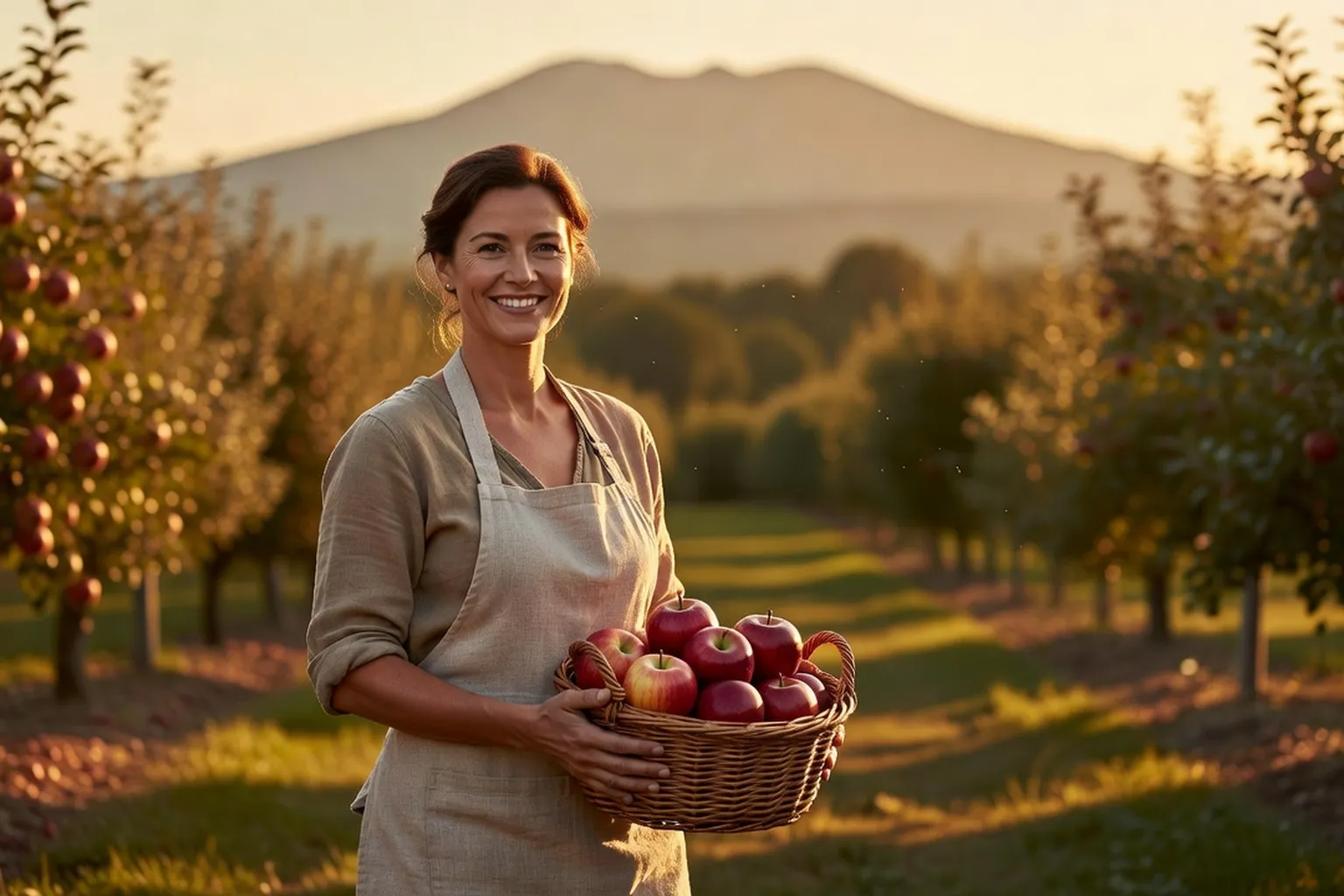
Artisan producer (cider and maple syrup) in Sutton—18 years of experience
Co-manages Domaine Beaudoin-Sutton with her partner Antoine, a 28-hectare farm in the foothills of Mont Sutton. Production of ice cider, certified organic maple syrup, and small fruits. Member of the Board of Directors of the Route des Saveurs des Cantons since 2018.
The story of an estate: from restaurants to the land
**Soleica:** How do you go from a restaurant career in Montreal to founding a farm in Sutton?
In slow stages, and with a great deal of doubt. I grew up in Saint-Jérôme in a family of civil servants—no connection to agriculture, apart from Sunday visits to my grandparents’ farm in Beauce. I attended the ITHQ because I loved cooking, and I worked for ten years in restaurants in Montreal, eventually at Au Pied de Cochon, where I was sous-chef for three years. That is where everything changed. Martin Picard introduced me to Quebec terroir in a different way: the producers he knew, the cheesemakers, livestock farmers, and winegrowers. I saw people doing work that seemed infinitely more rooted than mine. Antoine, my partner, was an environmental engineer and had grown up in Bromont. When our two sources of dissatisfaction converged in 2007, we began looking for land.It took us two years to find and buy the current estate. It was an old dairy farm that had been abandoned for fifteen years, twenty-eight hectares that were partly wooded, with buildings requiring complete renovation. The neighbours looked at us sceptically—two urban forty-somethings showing up. Today, eighteen years later, we are one of the farms featured in the region’s agritourism guides. But it took a long time, and there were years when we seriously questioned the project.
**Soleica:** Why did you choose Sutton specifically?
Sutton has several converging advantages. First, the microclimate: the slopes of Mont Sutton benefit from a southwestern exposure and cold-air drainage that delays winter dormancy—it is ideal for ice cider, which requires long autumns and stable winters. Then there is the human environment: Sutton is a village that has managed to maintain its balance between rural life and cultural openness. There are artisans, artists, ambitious restaurateurs, and urban tourists who come to buy local. It is a commercially viable ecosystem for an artisan farm. Finally, accessibility: 90 minutes from Montreal, 3 hours from Boston, 2 hours from Burlington. This proximity to affluent markets makes all the difference between surviving and thriving.For anyone wishing to discover Sutton and combine visits to producers with a chalet stay, I always recommend the Mont-Sutton area featured among Soleica’s chalets—it is the ideal base from which to explore the region.
What is the terroir of the Eastern Townships?
**Soleica:** The word “terroir” has become a catch-all term. What does it mean for you in practical terms in the Eastern Townships?
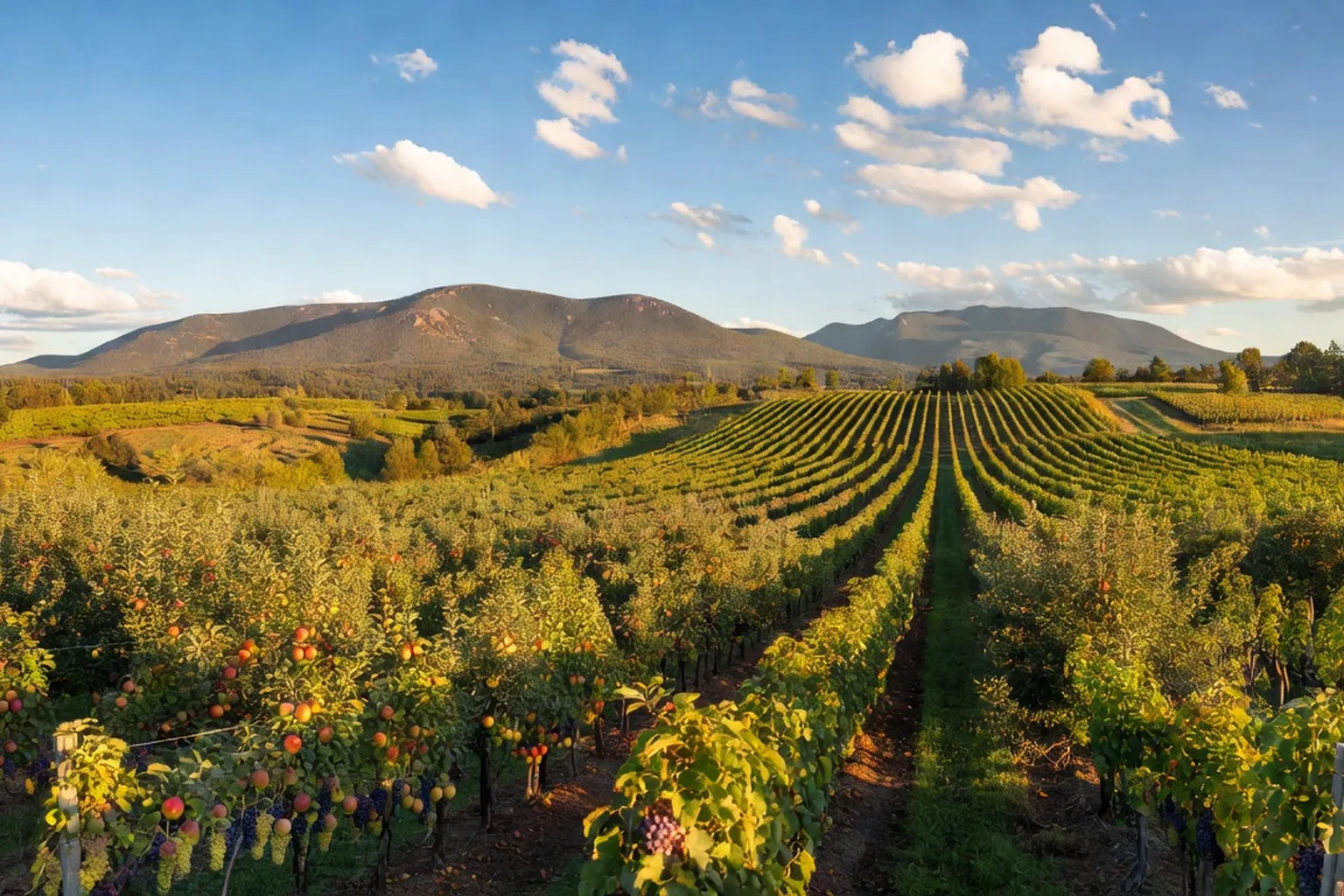
For me, terroir is the combination of three things: a physical environment (soils, climate, hydrography), inherited know-how (techniques, cultivated varieties, livestock farming), and a human community that validates and develops that knowledge. In the Townships, we have all three.First, the physical environment. The Eastern Townships rest on a varied geological foundation—an ancient Appalachian range, deep valleys carved by the Wisconsin glaciers, and fertile moraine deposits in the valley bottoms. The topographical diversity (from 200 to 1100 metres in elevation over 50 km) creates radically different microclimates: the orchards of Frelighsburg are nothing like the maple groves of Coaticook, which are themselves different from the vineyards around Lac Brome. This diversity is an asset—each subregion has its own natural speciality.
Next, the know-how. The Townships have had a continuous agricultural tradition since the 19th century, with a British influence (Loyalists who settled after the American Revolution) that introduced livestock and crop-farming practices distinct from those found elsewhere in Quebec. This dual French and Anglo-Saxon heritage can still be seen in the diversity of products: we have English-inspired cheeses (Cheddar de l’Abbaye), Norman-inspired ciders, and German- and Alsatian-inspired wines made from certain grape varieties.
Finally, the human community. The Townships have a remarkable density of associations and cooperatives: the Route des Vins (created in 1996), the Route des Saveurs (which has brought together around forty producers since 1998), public markets in almost every village, and food festivals. This infrastructure supports the terroir and gives it commercial visibility.
The real economics of a small farm
**Soleica:** You mentioned the economic challenges. In practical terms, how do you keep a 28-hectare artisan farm running in 2026?
Three pillars allow us to keep going. First, diversification: we have four main products (ice cider, maple syrup, small fruits, and a small organic market-garden operation). This diversification spreads income throughout the year (ice cider is mainly sold from October to December, maple syrup in spring, and small fruits in summer), and protects us against bad years—when the apple orchard suffered from spring frost in 2022, the maple syrup saved the financial year.Next, direct sales. More than 70% of our revenue comes from sales at the farm: the on-site shop, public markets, and direct e-commerce. It is very time-consuming, but it allows us to retain the full margin. When we sell through grocery stores, the intermediary takes 35 to 45%—that is often the difference between profitability and a loss.
Finally, agritourism. We welcome around 6000 visitors a year for guided tours and tastings, as well as 12 weddings and 8 corporate events. This income now represents 25% of our overall revenue, and it has a hidden benefit: it converts visitors into repeat customers who subsequently order remotely. A wedding here adds 80 to 100 new names to our mailing list.
The estate’s 3 economic pillars:
Pillar Share of revenue Details Direct sales at the farm 70% Shop, public markets, e-commerce Agritourism 25% 6000 visitors/year, 12 weddings, 8 events Grocery-store distribution ≈5% Reduced margin (intermediary takes 35-45%) To place this trend in a broader context, I recommend reading another Soleica feature on cooking in a Quebec chalet—it addresses the question of showcasing terroir in home cooking, with recipes that highlight our products.
**Soleica:** What about costs?
The number-one challenge is labour. An organic orchard, which cannot use systemic pesticides, requires intensive maintenance: pruning, monitoring, preventive organic treatments, and mechanical pest control. We need 2 permanent employees, plus 6 seasonal workers between August and November. Total labour costs represent 38% of our revenue. That is enormous. Qualified seasonal labour is increasingly scarce and expensive—we are competing directly with vineyards and commercial orchards.The second challenge is capital investment. A hydraulic press, stainless-steel tanks, a pasteurisation system, an industrial freezer: each item costs $15,000 to $80,000. We replaced 60% of our equipment between 2019 and 2024—without agricultural subsidies and organic investment assistance programmes, we could not have done it. For an additional regional reference, I recommend consulting the Route des Saveurs des Cantons-de-l’Est portal, which lists the region’s artisan producers and agritourism routes.
Agritourism: a model for the future?
**Soleica:** You described agritourism as a pillar. Is it a model for the future for artisan farms?
For many of us, it has become essential. But it is not a miracle solution: it requires skills that do not come naturally to a producer. Welcoming the public means managing a site (safety, cleanliness, signage), managing a team (trained guides, shop staff), and managing an experience (a coherent narrative, educational tastings, sales without pressure). We learn by doing, and we make many mistakes at first.Agritourism also profoundly changes our relationship with the profession. Originally, I was a producer. Today, I am 50% producer, 30% visitor services and sales, and 20% management and administration. It is a different life. Some of my colleagues did not want this change—and their farms remained smaller and more precarious. Others shifted entirely into events and no longer have time to produce. Finding the right balance is the essential question.
The context of the Eastern Townships is particularly favourable because the region has a long agritourism tradition, well-structured themed routes, and an affluent and loyal clientele. To discover the complete ecosystem, I recommend consulting the programme of the Route des Saveurs des Cantons-de-l’Est—it has become a benchmark for Quebec agritourism.
Best practices for visiting in 2026
**Soleica:** For a visitor booking a chalet in the Townships who wants to explore the terroir, where should they begin?
- **Book.** Many producers no longer accept walk-in visitors—October weekends reach capacity. We limit attendance to 80 visitors per day to preserve the quality of the experience. Book two to four weeks in advance for autumn weekends. - **Plan short routes.** Visiting 5 producers in one day condemns you to mechanical tasting. It is better to have 2 in-depth visits (90 minutes each) with a meal at a fine-dining restaurant in between. The Route des Saveurs offers coherent routes with 3 or 4 stops—it is an excellent starting point. - **Combine a producer and a restaurant.** The best restaurants in the Townships (Auberge Sutton Brouërie, Auberge West Brome, La Manne, Bouillon Saint-Jérôme) work directly with local producers. Booking a meal after visiting a producer allows you to understand in practical terms how terroir becomes cuisine. - **Respect seasonality.** In May-June, you can see the orchards in bloom and taste the first chilled ciders. In September-October, it is harvest time and the first ice-cider tastings. In December-February, the maple grove is being prepared. To plan your stay as effectively as possible, also see our feature on [winter chalet activities without skiing in Quebec](/activites-hiver-chalet-quebec-sans-ski-2026-motoneige-raquettes/), which includes several winter agritourism suggestions. - **Buy on site.** It is the simplest way to support the local economy, and it generally costs 15 to 25% less than at a speciality grocery store in Montreal. Bring a cooler in the car for refrigerated products.
Quick questions: misconceptions
**Soleica:** A few common claims—true or false?
**“Ice cider has more alcohol than ice wine.”** Generally false. Ice cider contains 7 to 12% alcohol, while ice wine is usually 8 to 13%. The residual sugar content is similar, but the aromatic profile is very different.“Everything organic costs 30% more.” False in the Eastern Townships. At the farm, the difference is often 10 to 15%, comparable to an equivalent conventional product. Larger differences appear mainly in urban grocery stores.
“The Eastern Townships are mainly about wine.” False. Wines are highly visible, but they represent only around 12% of agritourism in the Eastern Townships. Cheeses, ciders, syrups, and market-garden products are at least as important.
“A visit to a producer takes all day.” False. Allow 60 to 90 minutes for a standard visit with tasting. A full day allows you to combine 2 to 3 visits with a meal.
“Artisan producers get rich from agritourism.” False. Most of us earn modest incomes—agritourism mainly allows us to remain viable, not to become rich. The profession remains as much a lifestyle choice as an economic venture.
“You can produce ice cider anywhere in Quebec.” False. Ice cider requires a specific climate: long autumns without destructive frost, and stable winters that keep the must frozen without repeated thaws. The Eastern Townships, certain parts of the Lower Laurentians, and Montérégie are suitable; elsewhere, it is risky.
“Maple syrup is the same everywhere.” Radically false. The soils, the species growing near the maple trees, the length of the sap run, and the reduction technique all have a profound influence on flavour. Syrup from the Townships is nothing like syrup from Beauce or Charlevoix—there is genuine terroir diversity.
The three things to remember
**First**, take your time. The terroir of the Eastern Townships does not reveal itself to visitors in a hurry. Book in-depth visits rather than making brief stops. An hour and a half with a producer is enough to truly understand; thirty minutes is too little for anything other than a quick tasting.Second, go beyond the classics. Many visitors stop only at producers who are already famous. That is a shame. More discreet farms (the cheesemakers of Compton, the orchards of Frelighsburg, the lamb farmers of Cleveland) often offer the most memorable encounters and the most distinctive products. The Route des Saveurs and public markets are excellent starting points for discovering this diversity.
Third, provide economic support. Buying directly from the farm is the most useful step you can take to sustain the terroir. A customer who returns to buy $200 worth of products each year matters as much as a one-time visitor who spends $50. Building a long-term relationship with one or two favourite producers is the best way to contribute to the survival of artisan agriculture, which will otherwise gradually disappear in the face of agro-industrial consolidation.
Conclusion
Geneviève Beaudoin’s interview sheds light on an agricultural reality that is changing rapidly in the Eastern Townships: locally rooted artisan production, agritourism as an economic pillar, and the constant challenge of balancing the profession with welcoming visitors. To prepare for a visit, keep these simple principles in mind: book, plan short routes, combine a producer with a restaurant, respect seasonality, and buy on site. For a logistical framework suited to exploring the terroir of the Eastern Townships, our feature on winter in the Eastern Townships usefully complements the agritourism considerations discussed here.
FAQ
What distinguishes the terroir of the Eastern Townships from other agricultural regions of Quebec?
Three characteristics: a milder microclimate than the Quebec average (due to the proximity of Lake Champlain and the rolling terrain), rich moraine soils inherited from glacial retreat, and topographical diversity that allows for a wide variety of crops and farming activities (vineyards, orchards, maple groves, livestock farming). The Townships are one of the few regions in Quebec where wine grapes can be grown commercially.
What is the difference between ice cider and traditional cider?
Ice cider is an internationally recognised Quebec innovation: the apples are harvested when ripe (October), pressed, and then the must is left to freeze naturally outdoors in winter, which concentrates the sugars and flavours. Traditional cider is made by directly fermenting the pressed must without this cryoconcentration stage. Ice cider generally contains 8 to 12% alcohol, compared with 5 to 7% for traditional cider.
How do you visit a producer in the Eastern Townships?
Most producers offer guided tours by reservation, often with a tasting included. The themed routes (Route des Vins, Route des Saveurs, Chemin des Cantons) make it easier to organise an itinerary. The main tourist season runs from May to October, with a peak in September-October for the autumn colours and grape harvest.
Do artisan producers in the Townships survive economically?
It depends on the model. Producers who combine artisan production + short supply chains (direct sales at the farm) + agritourism generally manage to keep going. Those who depend solely on grocery-store distribution face constant difficulties due to massive imports. The integrated vertical model remains the most viable.
Which products should you bring home from a visit to the Eastern Townships?
The essential classics: ice cider (Pinnacle, Domaine Pinnacle, La Face Cachée de la Pomme), wines (Brome-Missisquoi vineyards), cheeses from Compton (L’Abbaye Saint-Benoît-du-Lac), fine-grocery-quality maple syrup, terrines and fine charcuterie, processed small fruits (jams from Sutton and Knowlton).