
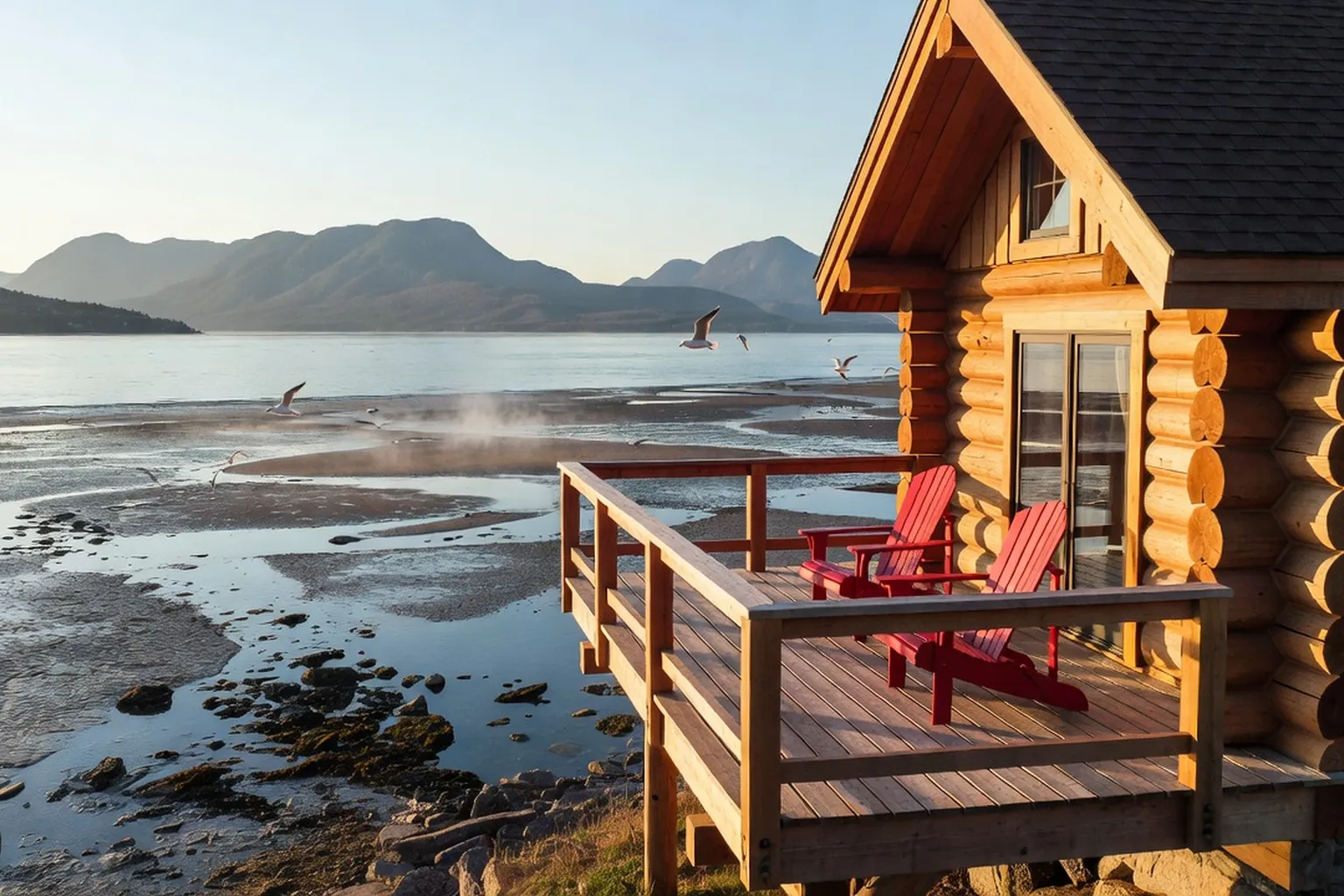
Renting a cottage on the shores of the St. Lawrence River in 2026 offers a distinctive experience for anyone seeking the slow pace of a maritime shoreline without leaving Quebec. The river, the true backbone of the province, is lined with contrasting landscapes, preserved villages, and marine wildlife present from April to November. Whether you are drawn to the changing tides, beluga watching, or the independence of a self-sufficient stay, this region offers a rare combination. In 2026, the market for riverside cottages is evolving: the Lower St. Lawrence has seen its rental inventory grow by approximately 15% since 2024, while the Gaspé Peninsula is experiencing a slight post-pandemic contraction. Demand for cottages with a “guaranteed river view” certified by photo and GPS coordinates continues to rise as travellers become more discerning about the gap between marketing promises and the reality of their stay. This guide explores the three key subregions along the St. Lawrence shoreline—Lower St. Lawrence, Charlevoix, and the Gaspé Peninsula—to help you choose the area that suits your plans.
Why rent a cottage overlooking the St. Lawrence River in 2026?
Renting a cottage overlooking the St. Lawrence River in 2026 offers several notable advantages. First, the rhythm of the tides, which alternate approximately every six hours, constantly transforms the landscape: the foreshore appears and disappears, currents change direction, and birds follow schools of fish. This dynamic is generating growing interest in riverside stays, with a notable increase in rentals, particularly in the Lower St. Lawrence, where the rental inventory has risen by 15% since 2024. Second, whale watching is a major attraction. The region is home to a resident beluga population estimated at between 800 and 900 individuals, a species officially listed as endangered since 2014 and protected by a mandatory observation distance of 400 metres. Several other species (fin whale, minke whale, harbour porpoise, Atlantic white-sided dolphin) frequent the estuary from June to October. Third, the possibility of complete independence appeals to travellers looking to disconnect: cottages along the river allow guests to immerse themselves fully in nature, far from the urban bustle. If you are still considering an inland stay, compare it with our complete guide to lakeside cottages in Quebec, which details the advantages of a lakeshore—the experience is radically different.
Lower St. Lawrence: Kamouraska, Rivière-du-Loup, Trois-Pistoles
The Lower St. Lawrence, with iconic villages such as Kamouraska, Rivière-du-Loup, and Trois-Pistoles, is a popular destination for riverside cottage enthusiasts. Kamouraska, known for its preserved village charm and weekly public market during the summer season, offers inns and cottages along the estuary—an area where low tides create tidal flats that extend for hundreds of metres. Rental prices range from $220 to $450 per night in high season, with premium “guaranteed river view” cottages exceeding $550. Rivière-du-Loup stands out as a gateway to the Lower St. Lawrence islands and the Saguenay: the ferry to Saint-Siméon takes approximately one hour and five minutes and is an observation activity in itself. Accommodations there range from $280 to $550 per night. Trois-Pistoles, farther east, serves as an intermediate hub with its St. Lawrence observatory and generally calmer waters thanks to the partial protection provided by Île aux Basques. This village offers perfect tranquillity for those looking to recharge on a coastal shoreline while remaining 20 minutes from Rivière-du-Loup and 1 h 15 from Rimouski.
Charlevoix: Petite-Rivière-Saint-François, Baie-Saint-Paul, La Malbaie
The Charlevoix region, with its mountainous landscapes plunging into the river and its proximity to the St. Lawrence, is a prime destination for outdoor and art enthusiasts. Petite-Rivière-Saint-François is renowned for Le Massif, a ski resort overlooking the river directly and offering a ski-in/ski-out experience unique in Quebec. Luxury cottages in the area (Domaine des Vagues, Cap Maillard, Hameau Saint-François) charge rates ranging from $600 to $1500 during the winter high season. Panoramic views of the estuary from the terraces add to the destination’s appeal. Baie-Saint-Paul, with its enclosed valley and artistic shoreline, is a haven for culture lovers thanks to its 25 art galleries and preserved heritage district. Backcountry cottages are available there at prices ranging from $280 to $700 per night. La Malbaie, farther east, stands out for its premium properties in Cap-à-l’Aigle, where rates can reach $650 to $1200. This locality is also known for its complementary attractions: the Casino, the Manoir Richelieu golf course, and a heritage equestrian trail. To turn your stay into a getaway for two, compare the options with our feature on a romantic cottage weekend in Quebec, which details the specifics of a short stay overlooking the river.
The Gaspé Peninsula: Carleton-sur-Mer, Percé, Sainte-Anne-des-Monts
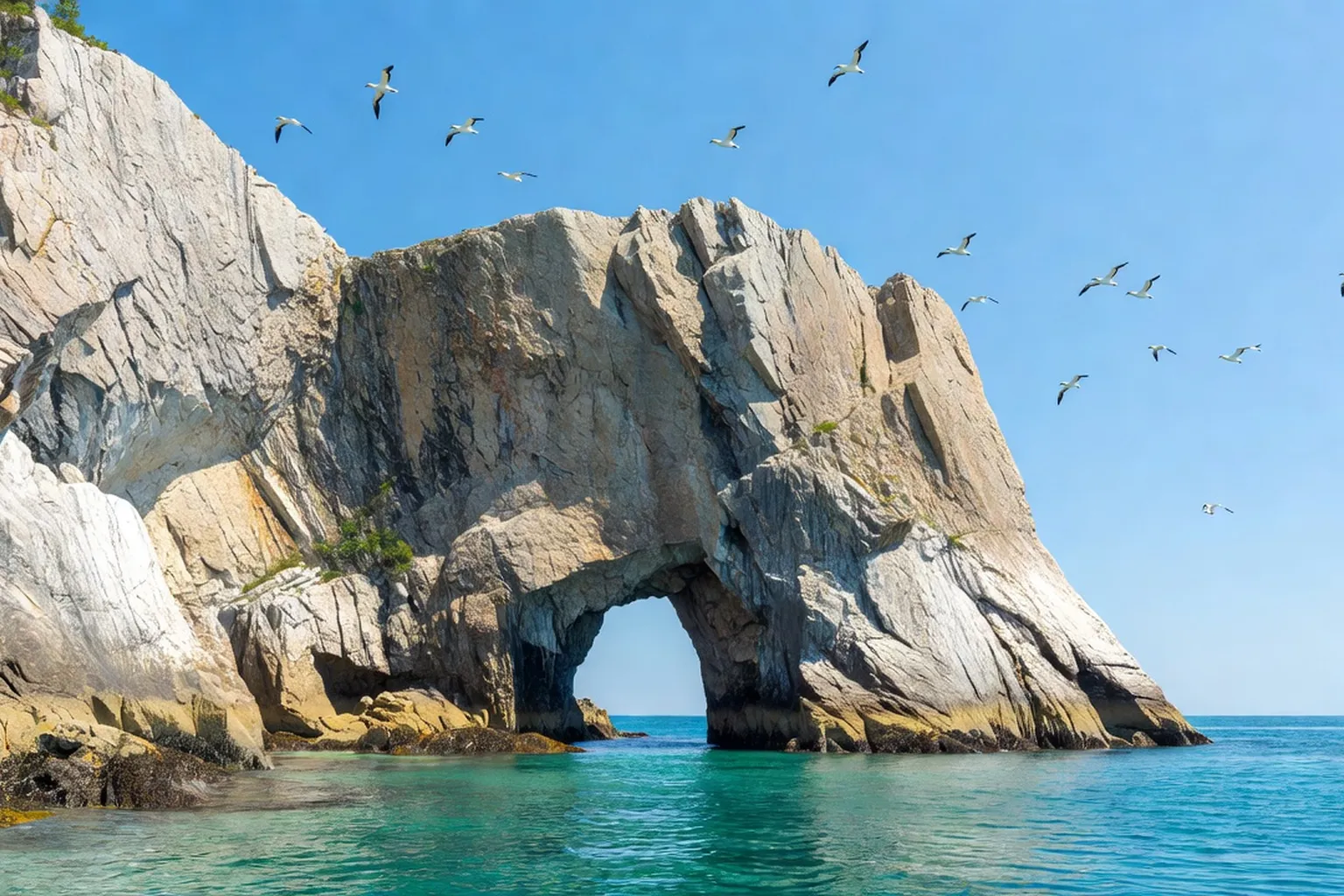
The Gaspé Peninsula, with its spectacular coastal landscapes, is an iconic region for lovers of nature and maritime tradition. Carleton-sur-Mer, located on Chaleur Bay, has the warmest waters in maritime Quebec, reaching up to 22 °C in August. Cottages in this region are affordable, with prices ranging from $180 to $380 per night, and swimming is genuinely possible—which is rare along the St. Lawrence. Percé, famous for its iconic rock and Bonaventure Island (home to one of the world’s largest northern gannet colonies, approximately 110,000 birds in season), offers clifftop cottages with spectacular views of the natural arch. Rates range from $350 to $700. Sainte-Anne-des-Monts, as the gateway to Gaspésie National Park, is a favourite destination for landlocked salmon and salmon fishing in the Sainte-Anne River and Cap-Chat River. Cottages there rent for between $220 and $450, offering privileged access to preserved landscapes. For anyone travelling with a four-season plan, our guide to four-season cottages in Quebec in 2026 details the specifics of a cottage designed for extended winter use—an essential criterion on the Gaspé coast, where winters are harsh.
The tide: understanding the river’s rhythm from your cottage
Understanding the rhythm of the tides is essential to making the most of a riverside stay. Tidal ranges vary considerably by area: 4 to 5 metres in Kamouraska, up to 7 metres in La Malbaie (where the funnel effect of the middle estuary amplifies the tidal range), and only 1 to 2 metres in Chaleur Bay at Carleton, which is technically a gulf and not part of the estuary. The cycle lasts approximately 6 h 14 between high tide and low tide, shifting tide times by approximately 50 minutes each day. Essential tools for planning your activities are the official tides.gc.ca website (which provides exact schedules by station) and the MarineTraffic app for tracking commercial shipping on the river. The practical impact of the tide is multifaceted: kayaking trips should depart and return on a rising tide to avoid paddling against the ebb current, pier fishing is optimal at mid-tide toward the end of the ebb, and landscape photography produces better results at low tide when the vast tidal flats are exposed. Also be aware of a real risk for dogs and children: the current is very fast during the incoming tide after a major low tide, and walkers have previously been caught far from shore while exploring the foreshore without monitoring the tide time.
Activities from the cottage: kayaking, beluga watching, cruises
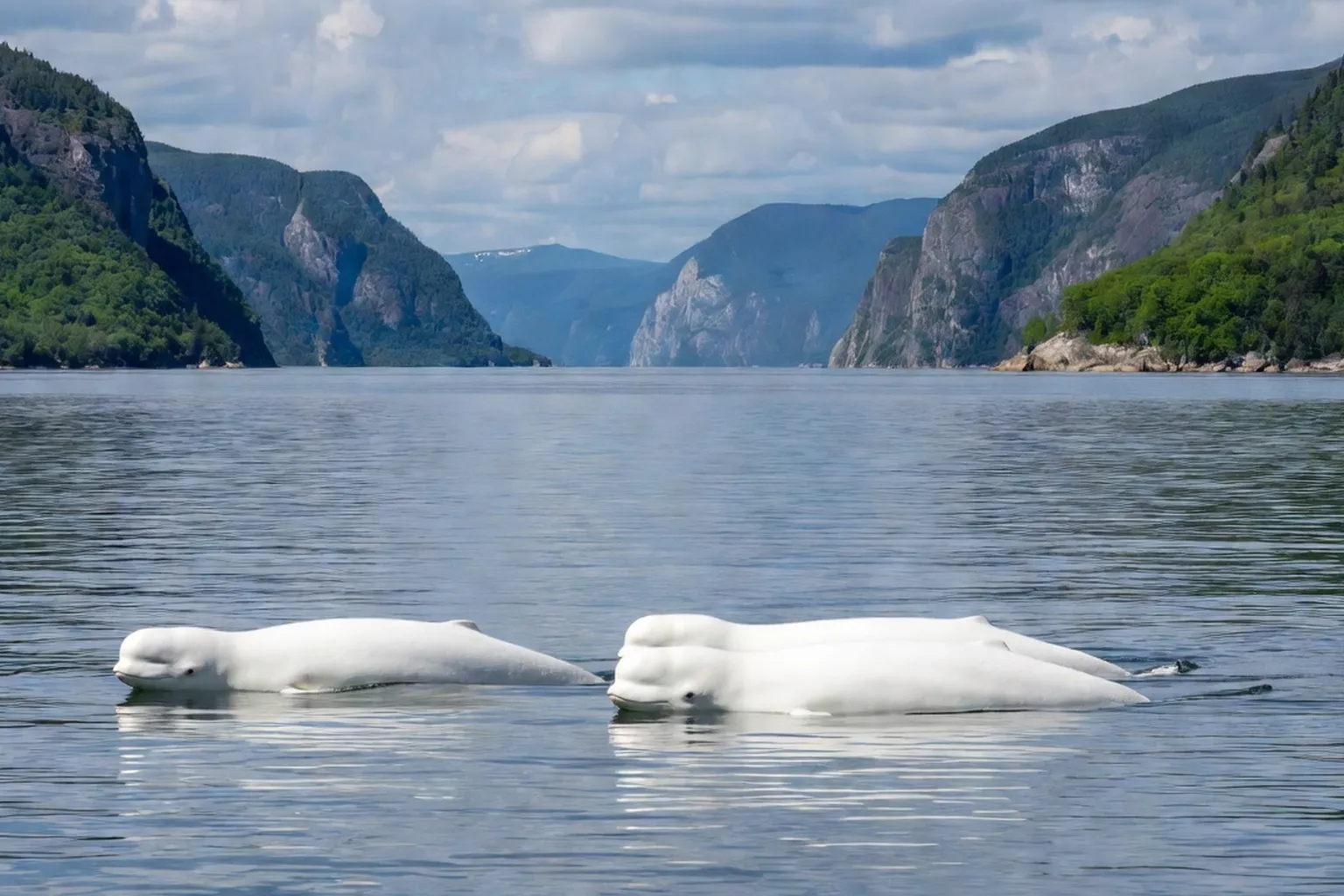
Activities from a cottage overlooking the river centre on marine wildlife and water sports. Beluga watching is probably the most iconic experience. The resident St. Lawrence population is estimated at 800-900 individuals, a species officially listed as endangered since 2014. Observation from a motorized vessel is prohibited within 400 metres, and only cruises certified by Parks Canada may supervise a respectful observation approach. Four main sites organize whale-watching cruises: Tadoussac (June-October season, the busiest), Rivière-du-Loup (heritage cruises), Baie-Sainte-Catherine, and Percé for marine observation in the Gaspé Peninsula. The cetacean-watching potential is remarkable: twelve species can be observed depending on the season (beluga, fin whale, minke whale, harbour porpoise, Atlantic white-sided dolphin, white-beaked dolphin, humpback whale, increasingly rare North Atlantic right whale). Sea kayaking is another flagship activity: rentals cost approximately $60-80 per day for a solo kayak, but supervision by a professional guide is mandatory for trips in open bays. Several schools in Kamouraska and Saint-Siméon offer introductory courses. For landscape photography, the late-afternoon light on the north shore as seen from Kamouraska is world-renowned among photographers—a phenomenon linked to the combination of the sun’s elevation in autumn and the river’s reflection.
Average 2026 prices by subregion
The table below summarizes price ranges by subarea for a 4-6-person cottage in 2026. “Guaranteed river view” cottages with direct shoreline access constitute a premium category that adds an average of $200 per night. Always verify the reality of the promise (actual distance to the shore, elevation change along the access trail, winter snow clearing on the private road).
| Subregion | Low season (Nov-April) | Shoulder season (May-June, Sept-Oct) | High season (July-August) | Dogs allowed |
|---|---|---|---|---|
| Kamouraska | $180-280 | $280-380 | $380-550 | Often |
| Rivière-du-Loup | $200-300 | $280-400 | $400-550 | Varies |
| Trois-Pistoles | $160-260 | $240-360 | $360-500 | Often |
| Petite-Rivière-Saint-François | $350-600 | $500-800 | $800-1500 | Rarely |
| Baie-Saint-Paul (river view) | $280-450 | $400-650 | $600-1100 | Varies |
| La Malbaie / Cap-à-l’Aigle | $320-500 | $500-750 | $750-1200 | Rarely |
| Carleton-sur-Mer | $180-280 | $240-380 | $320-580 | Often |
| Percé | $250-400 | $350-550 | $480-850 | Varies |
| Sainte-Anne-des-Monts | $220-320 | $300-450 | $380-580 | Often |
Rates exclude taxes (5% GST + 9.975% QST + 3.5% lodging tax) and cleaning fees ($60-150). The winter high season (Christmas holidays and March break) in Petite-Rivière-Saint-François has prices comparable to the summer high season due to skiing at Le Massif.
5 remarkable cottages overlooking the river
1. Le Belvédère de Kamouraska. Traditional log frame, panoramic terrace overlooking the middle estuary, 4 bedrooms, accommodates 6 people, $380-650 per night in high season. Suitable for families with children due to moderate visitor numbers and the Kamouraska market 5 minutes away.
2. L’Anse aux Bélugas (Saint-Siméon). Architect-designed cottage with a commanding view of the Saguenay Fjord and the mouth where the Saguenay meets the St. Lawrence—one of the most active areas for shore-based whale watching. 4 bedrooms, 8 people, $550-950 per night. Whale-watching corridor accessible on foot from the terrace.
3. Le Domaine Cap-à-l’Aigle (La Malbaie). Architect-designed cottage with a central stone fireplace, outdoor Nordic spa on a panoramic deck, 2-acre property with cliff access via a secure trail. 5 bedrooms, 10 people, $850-1500 per night. Premium location 7 minutes from the Casino de Charlevoix and 15 minutes from the Manoir Richelieu.
4. Le Refuge de Percé. Facing the iconic rock, covered terrace with a direct view of the natural arch (and a glowing red sunset over the limestone), 3 bedrooms, 6 people, $480-850 per night. Within walking distance of the village centre and the departure pier for cruises to Bonaventure Island.
5. L’Hermitage de Carleton. Warm Chaleur Bay water along a semi-sheltered cove, directly accessible sandy beach, 4 bedrooms, 8 people, $320-580 per night. One of the few options in Quebec where swimming without a wetsuit is possible between late July and late August. For those wishing to explore Charlevoix afterward, also see our complete guide to renting a cottage in Charlevoix in 2026, which details the three subareas on the north shore of the St. Lawrence.
FAQ
What is the difference between a “river-view” cottage and a “riverside” cottage?
A “river-view” cottage offers a panoramic view of the river, often from a hill or elevated position. A “riverside” cottage is located directly by the water, with immediate access to the shore, making it ideal for water activities. Always check the actual distance to the shore in the cottage listing—many owners use the term “view” quite broadly, and some elevated cottages require a 20- to 30-minute descent along a trail to reach the water.
Can you swim in the St. Lawrence River from a cottage in summer?
Yes, but only in certain regions such as Chaleur Bay at Carleton-sur-Mer, where the water can reach 22 °C in August. On the north shore of Charlevoix or in the middle estuary of the Lower St. Lawrence, the water remains cold (10-14 °C) in summer, and tide-related currents can be treacherous. Learn about local conditions before swimming. To better understand the hydrography and conditions of the St. Lawrence, the Wikipedia entry on the St. Lawrence River documents the estuarine system, salinity, and tidal regimes.
Which riverside cottages allow dogs?
Approximately 30 to 35% of the rental inventory allows pets, with additional fees of $30 to $80 per stay. The most welcoming areas are Kamouraska, Carleton-sur-Mer, and Sainte-Anne-des-Monts. Always check with the owner before booking—some listings state “no pets allowed” while permitting small dogs by special exemption, and vice versa.
How much does a 5-night riverside stay cost on average in high season?
In high season (July-August), a five-night stay in a riverside cottage costs an average of between $1750 and $4500 for a 4-6-person cottage, depending on the subarea. The lower end corresponds to Carleton and the inland Lower St. Lawrence, while the upper end corresponds to premium cottages in Petite-Rivière-Saint-François, La Malbaie, and Cap-à-l’Aigle. Add $60-150 for cleaning and taxes (GST+QST+lodging tax).
When should you book for the riverside high season (July-August)?
Book four to six months before the high season for riverside cottages. For premium cottages with direct shoreline access and certified “guaranteed views,” six to eight months are necessary in high-demand areas (Cap-à-l’Aigle, Cap-aux-Corbeaux, Percé). The construction holidays (last two weeks of July) are the most competitive period. For Petite-Rivière-Saint-François, also allow eight months for the winter high season (Christmas holidays and March break).
Conclusion
The choice of a cottage on the St. Lawrence River largely depends on your preferences and planned activities. Whether for culinary and cultural experiences in the Lower St. Lawrence (Kamouraska, Rivière-du-Loup), a luxury and ski stay in Charlevoix (Petite-Rivière, La Malbaie), or an immersion in wildlife and maritime tradition in the Gaspé Peninsula (Carleton, Percé), each subregion offers unique advantages. It is essential to verify the reality of a “guaranteed view,” book early, and not underestimate the travel time on Route 132 between Rivière-du-Loup and Gaspé (between 6 h 30 and 7 h without stops, longer if you stop at the lookouts). The riverside is a living heritage that must be respected by avoiding disturbance to bird colonies and preserving the habitats of endangered species—particularly the St. Lawrence belugas, whose survival depends on strict compliance with the 400-metre observation distance and underwater acoustic silence.