
Reading time: 16 minutes — Interview by Julien Labrecque for Soleica Chalets
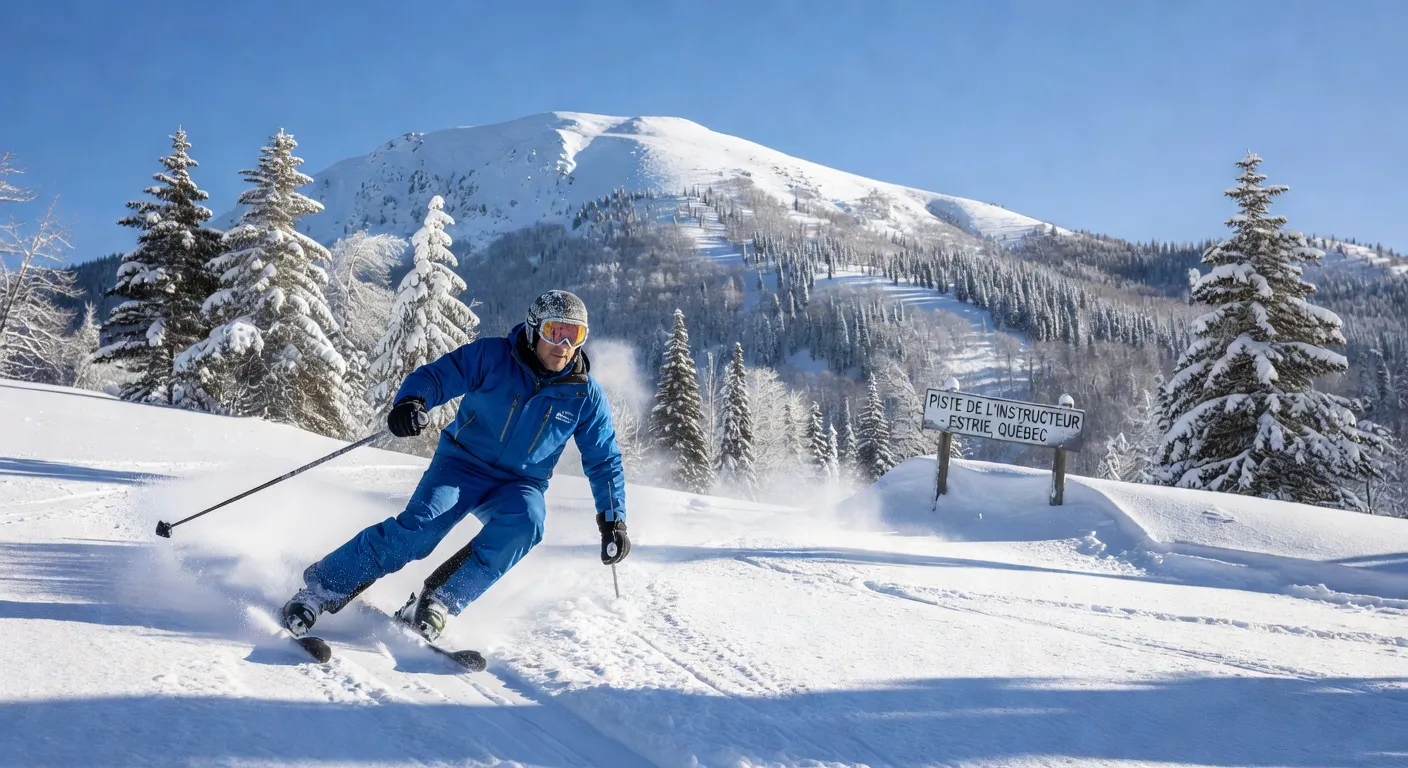
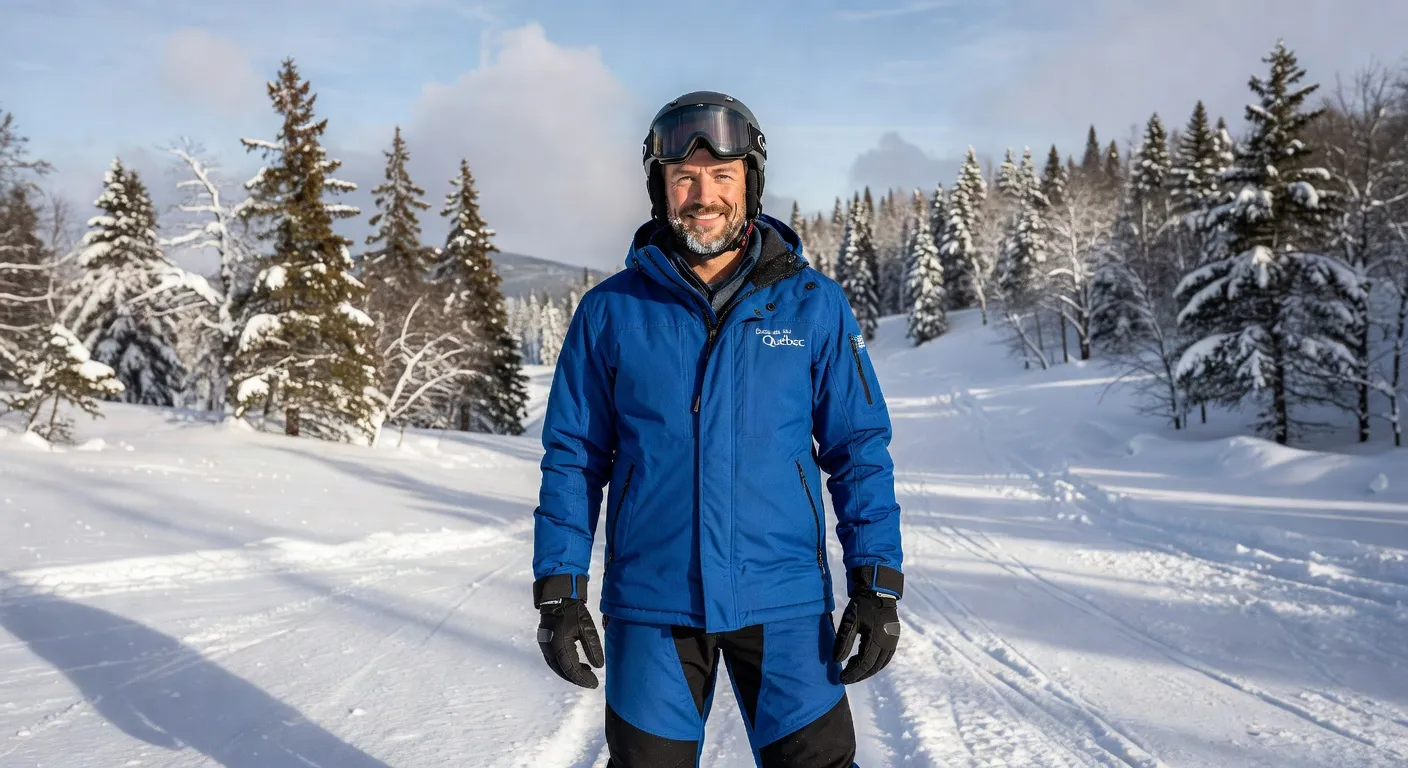
Alexis Gagnon meets us at the top of the Côte Brûlée run on a cold January morning. He arrives skiing out of the forest — an entrance that says everything about his relationship with the mountain. In 9 years of teaching at Mont Sutton, he has seen thousands of skiers progress, fall, start again and improve. He has also seen the mountain evolve, ski trends change, and hosts come to understand that the private chalet is now the preferred formula for families and groups of friends. For your next stay, discover our private chalet at Mont Sutton — 300 m from the runs, 4 guests, available all of the 2026 season.
Alexis Gagnon and Mont Sutton: a love story with a unique mountain
Julien Labrecque: Alexis, what brought you to settle in Sutton and make it your mountain of the heart?
Alexis Gagnon:Mont Sutton is a happy anomaly in the Quebec skiing landscape. Most Quebec resorts are family resorts with wide, well-groomed, predictable runs. Sutton is different. The mountain has a personality. The trees are dense, the snow accumulates differently in the glades, and there are corridors that even skiers who have been coming for 10 years are still discovering. It's a mountain that rewards curiosity.
I skied here for the first time at 16 with my father, and I felt something that the other resorts in the region had never given me. I took the instructor training, earned my level 4 certification, and I haven't left Sutton since. I live here year-round now — I teach skiing in winter, and I mountain bike in summer in the same forests.
Mont Sutton versus other Quebec resorts: what makes it unique
Julien Labrecque: If you had to explain to someone who has never skied in Sutton what sets it apart from other Quebec resorts, what would you say?
Alexis Gagnon:Three things. First, the forest. 60% of Mont Sutton's runs are in the glades or lined with trees. It's an immersive skiing experience in nature, not just going down a corridor of snow between two orange fences. The feeling of gliding between trees covered in fresh snow, sheltered from the wind, is incomparable.
Second, the elevation. At 968 m at the summit, Sutton is among the highest mountains in the Eastern Townships. That translates into cooler temperatures, snow that holds better and longer, and a season that generally runs until mid-April.
Third, the atmosphere. Sutton isn't Tremblant: no big pedestrian village at the foot of the runs, a more family-oriented and intimate vibe. It's a mountain of skiers, for skiers. People who come to Sutton come to ski, not to be seen.
The beginner runs you recommend first
Julien Labrecque: For someone taking their first steps on skis, or coming back after a long break, which runs do you recommend at Mont Sutton?
Alexis Gagnon:I always start my beginner students in the Pomme d'Api area — a very gentle green run at the foot of the mountain, ideal for the first hours of learning. That's where you find the fundamentals: stance, edge engagement, snowplough braking, controlled stops.
As soon as they're comfortable with a stable snowplough, I take them to the Érable run. It's an easy blue that offers a bit more vertical drop and variety, but with no surprises or technical difficulty. 80% of my adult beginner students are able to ski down the Érable on their own after 2 days of lessons.
One tip for adult beginners: take group lessons in the morning, then ski on your own in the afternoon to consolidate. Independent repetition after active learning speeds up progression dramatically.
Your favourite runs for intermediate skiers
Julien Labrecque: For intermediate skiers — those who have mastered the blues and are starting to venture onto the blacks — which runs are must-skis in Sutton?
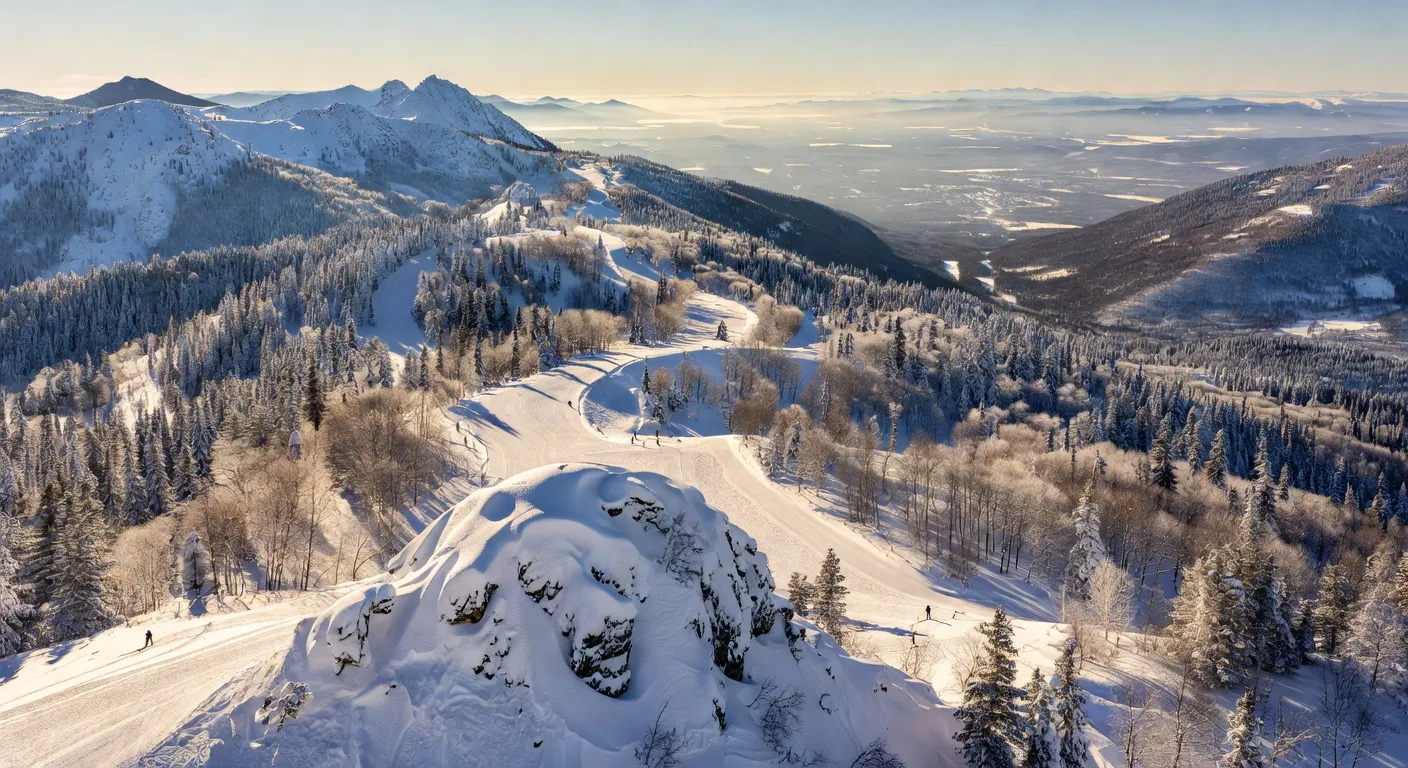
Alexis Gagnon:The Lynx run is my number one recommendation for intermediates. It's an accessible black, well exposed, with a gradual vertical drop and a comfortable width. The view from the top is spectacular — you can see the whole Sutton valley and the Eastern Townships all the way to Vermont. It's a run that gives you confidence.
For intermediates who want to challenge themselves, the Côte Brûlée is the next step. A few sections with a 35-40° slope, but with possible escape routes if it gets too difficult. It's the perfect transition between intermediate and advanced.
And for the glade experience, the Forêt-Verte corridor: not technical, but immersive. The snow there is always untouched two days after a snowfall, the trees filter the wind, and you feel like you're skiing in an old-growth forest.
Off-piste at Mont Sutton: who is it for?
Julien Labrecque: Mont Sutton has a reputation as a glade skiing destination. Who can really enjoy it?
Alexis Gagnon:Glade skiing at Mont Sutton is accessible to solid intermediate skiers — those who have mastered parallel turns on the blacks and who are comfortable with unpredictable changes of rhythm. You don't need to be an expert to enjoy it, but you do need to be able to react quickly and brake in tight spaces.
For beginners and intermediates who are still developing, I recommend staying on the marked runs and waiting until you have a solid base. Glades without good technique are dangerous — not because the mountain is hostile, but because trees don't forgive mistakes.
The ideal preparation for glades: 2-3 seasons on regular blacks, then a day with an instructor who introduces you to the specific techniques (absorbing bumps, reducing speed in narrow passages, reading the terrain between the trees). After that, you'll have the keys to explore Sutton at your own pace.
Snow conditions in Sutton: when to come for the best snow?
Julien Labrecque: Sutton has a reputation for the quality of its snow. What is the best time for optimal conditions, in your experience?
Alexis Gagnon:The best natural snow of the season generally falls between late January and mid-February. The Eastern Townships sit in a climatic transition zone that catches weather systems from the southeast (Great Lakes lake effect) and storms from the northeast. The result: regular snowfalls, often 30-40 cm in 48 hours, which create the powder conditions skiers dream of.
For spring corn snow conditions (shiny crust in the morning, softened snow in the afternoon), March is excellent in Sutton. The elevation keeps nighttime temperatures low enough for the snow to refreeze, and the long sunny days of March make for very pleasant spring skiing.
What I advise first-timers: avoid the Christmas–New Year period (crowded, high prices, mostly artificial snow) and target January–February for natural snow, or March for spring skiing and gentler prices. For the full seasonal details, our guide to skiing Mont Sutton and lodging 2026 covers the best booking periods.
Your advice for families with children who want to learn to ski
Julien Labrecque: You teach all age groups. Do you have specific advice for families with children coming to Mont Sutton?
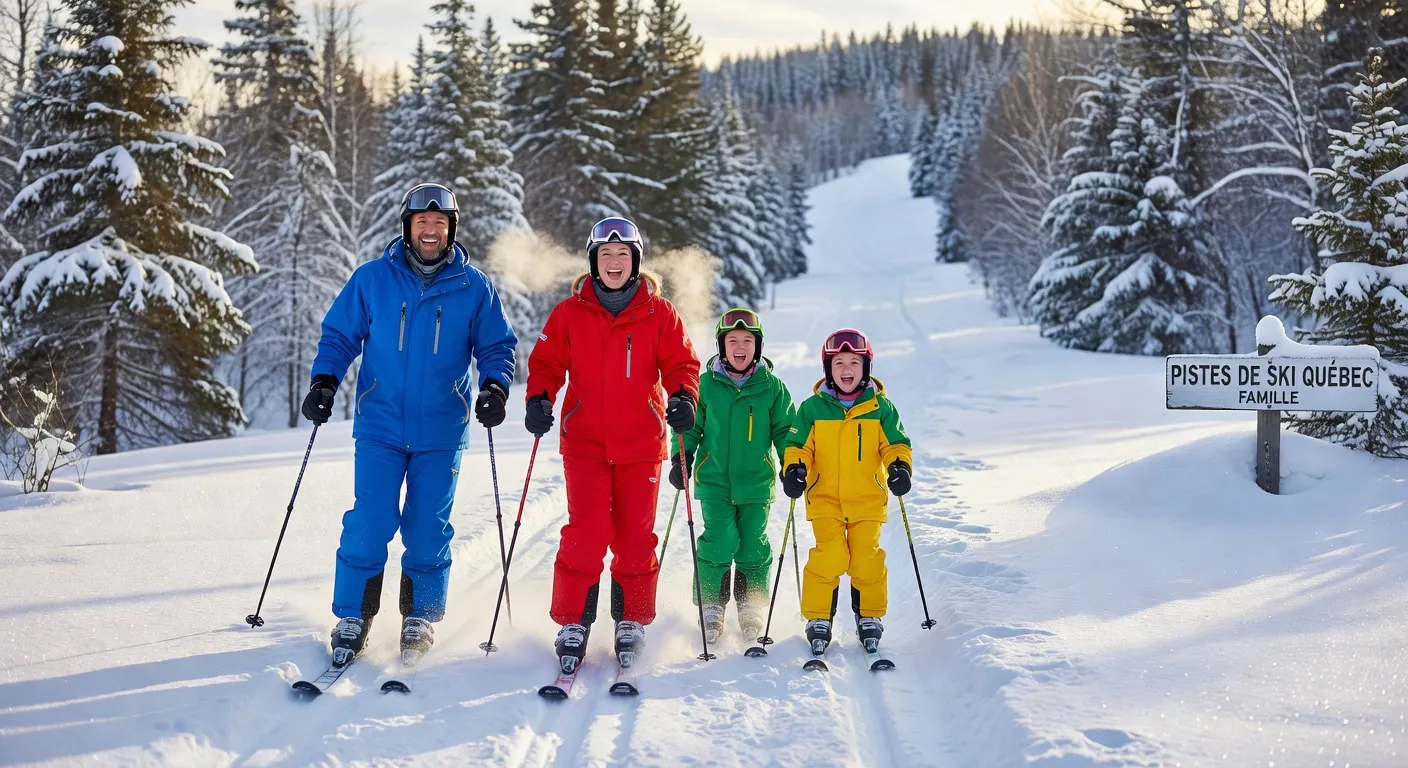
Alexis Gagnon:Children learn to ski faster than adults — their centre of gravity is lower, they're less afraid of falling, and their bodies adapt to proprioception more easily. At 4-5 years old, some children are already on skis with specialized instructors. The ideal age to start, in my experience, is 5-7.
A few rules for a successful family day. One: Don't force it. A child who doesn't feel like being on skis won't progress. If they want to play in the snow beside the run, let them play. Come back to the skis tomorrow. Two: The group lessons for children at the Sutton Ski School are very effective — in an age group, children challenge each other and progress faster than with their parents. Three: End the day on a good note. The last run should be on a trail the child masters well — not the hardest run of the day. The last memory shapes the desire to come back.
Chalet in Sutton vs resort: the advantage of a chalet near the runs
Julien Labrecque: Many visitors hesitate between resort lodging and a private chalet in Sutton. What's your view as a local?
Alexis Gagnon:For a couple on a 2-day weekend who want to ski intensely from morning to night, slopeside lodging at the resort can make sense. But for any other context — family, group of friends, stay of 3+ nights — the private chalet is an incomparably better experience.
The reasons are simple. At the resort, you go back to a hotel room or an inn room. In a private chalet in Sutton, you go back to a house with a fireplace, a fully equipped kitchen, maybe a sauna or a spa, and room to spread out after a physical day. After 6 hours of skiing, the space and comfort of your own chalet are worth infinitely more than being close to a chairlift.
I always recommend that groups of 4 or more look for a chalet. For skiers who want a private chalet 300 m from the Mont Sutton runs with a view, a fireplace and full amenities for 4 guests, the chalet with a spa in Quebec is an option to consider to maximize après-ski with a Nordic bath and sauna.
Ski equipment 2026: rent or buy?
Julien Labrecque: For a skier who comes 3-5 times a season to Sutton, is it better to rent or to invest in their own equipment?
Alexis Gagnon:The break-even point between buying and renting depends on the number of ski days per season. For just a few days, renting is economically more advantageous (and gives you access to recent equipment without storage). Beyond that, buying pays for itself quickly.
But the real question isn't financial — it's a question of performance. A skier who is progressing quickly benefits from equipment suited to their current level. Rental skis are entry-level skis, calibrated for beginners and intermediates. An advanced skier who wants to progress in the Sutton glades needs wider, more responsive skis than standard rentals.
My advice for 2026: if you ski 4+ times a season, buy boots (they're the point of contact with the ski — a boot that fits you makes an enormous difference) and rent the skis and poles for 1-2 more seasons, long enough to identify precisely what type of ski suits you.
Ski trends 2026 at Mont Sutton: skinning, fat skis, new runs
Julien Labrecque: What trends are you seeing at Mont Sutton and in Quebec skiing in general for 2026?
Alexis Gagnon:Three strong trends. Skinning and alpine touring: more and more skiers come to Sutton before the lifts open (from 7 a.m.) to climb on leg power with climbing skins and ski back down. It's an intense physical effort, but the experience of the silent mountain at dawn is exceptional. Mont Sutton is one of the few Quebec resorts that tolerates this practice. Fat skis: wide skis are becoming more and more popular for glade skiing. They forgive terrain irregularities and float better in powder. I now put all my advanced students on them when I introduce them to the forest corridors. Multigenerational skiing: I'm seeing more and more three-generation groups — grandparents, parents, children — coming to ski together. Sutton lends itself well to that because the run levels let everyone find their own level.
Quick questions: myths about skiing at Mont Sutton
"Sutton is an advanced resort, not for beginners." — Myth. 20% of the runs are rated beginner, and the Mont Sutton ski school is known for the quality of its teaching to beginners.
"You have to be an expert to enjoy the Sutton glades." — Myth. The marked glade corridors are accessible to solid intermediates, not only to experts.
"The lift lines are unbearable on weekends." — Partly true for the holiday-season weekends. In January-February, the wait at the main lifts generally remains reasonable.
"Sutton is too far from Montréal for a weekend." — False. It's 1 h 15 from Montréal via Highway 10.
"There's nothing to do after skiing in Sutton." — False. The village of Sutton has restaurants, bars, microbreweries and art galleries. And from a private chalet, the après-ski program (sauna, fireplace, home-cooked meals) is already complete.
"Artificial snow dominates in Sutton." — Less true than at other resorts. Sutton receives on average 5-6 metres of natural snow per season. Snowmaking supplements it in the starting areas and on strategic runs, but the natural snow is topped up by snowmaking to offer a great season.
"You have to book a lesson well in advance." — True for high-season weekends (January-February). On weekdays, private lessons are available at shorter notice.
Conclusion: 3 reasons Mont Sutton is worth the trip in 2026
Alexis Gagnon concludes with three decisive arguments for skiing at Mont Sutton this season:
1. The most nature-driven ski experience in Quebec: A quiet atmosphere, without crowding — just the mountain, the trees, the snow and the skiing. An experience that is increasingly rare in the age of entertainment resort complexes.
2. A natural level of progression: Sutton is a mountain where you can start out and become an expert without ever changing resorts. The levels coexist, qualified instructors are available, and the mountain itself teaches if you listen to it.
3. The ski + Eastern Townships combination: Sutton is 10 minutes from vineyards, farmers' markets, thermal spas and remarkable local cuisine. A stay in Sutton means skiing in the morning and the pleasures of the Eastern Townships après-ski — a combination few Quebec resorts can offer. For the Eastern Townships in winter beyond skiing, our guide to the Eastern Townships in winter covers all the region's activities and lodging.
To book a chalet near Mont Sutton, Soleica's chalet rental services in Quebec offer selected properties in the Eastern Townships. For news on nature tourism and skiing in Quebec, also follow Le Peuple Actu, which regularly covers nature tourism news in Canada.